Roof Valley Clearing in Tacoma: What the Job Involves
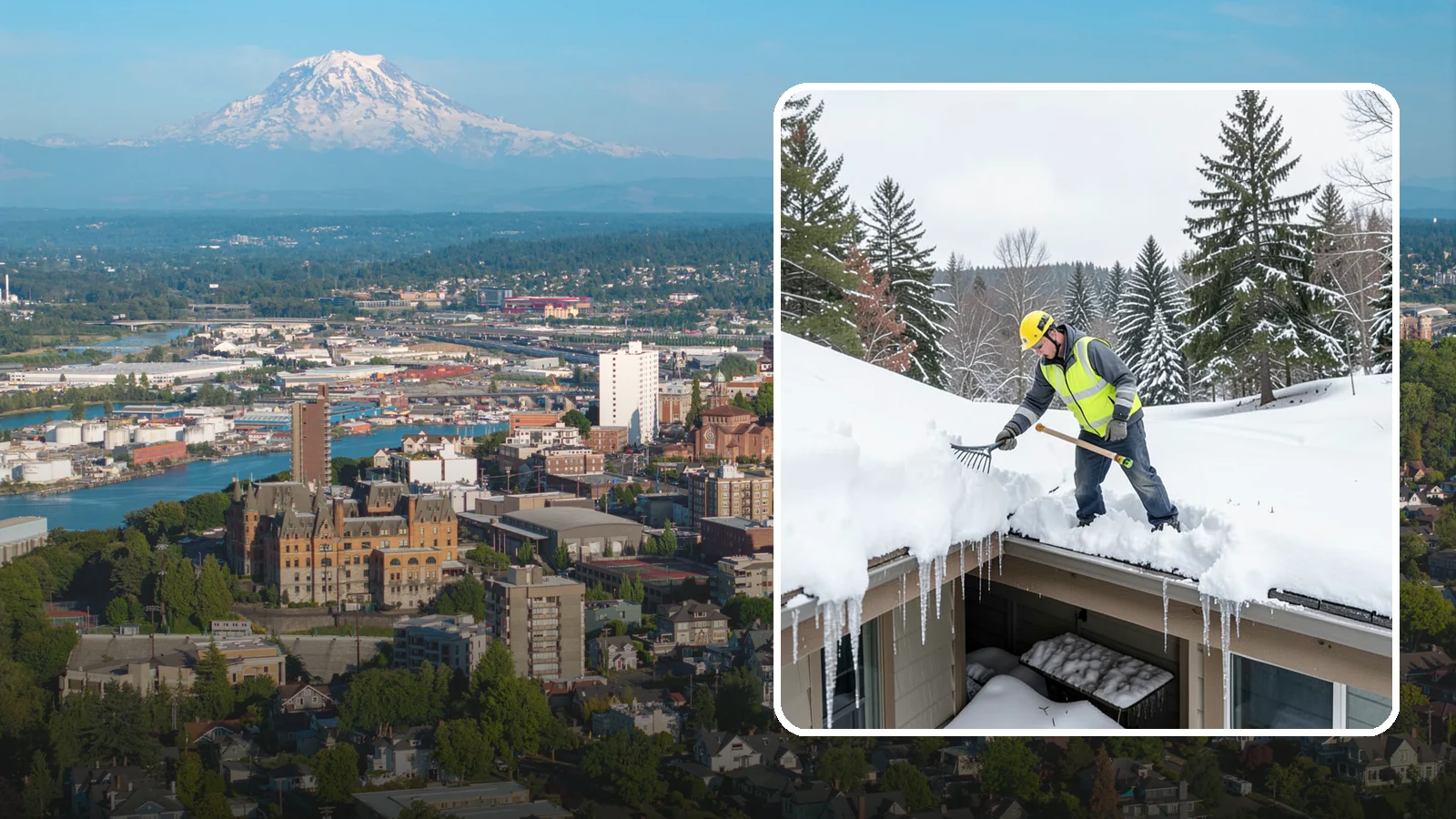
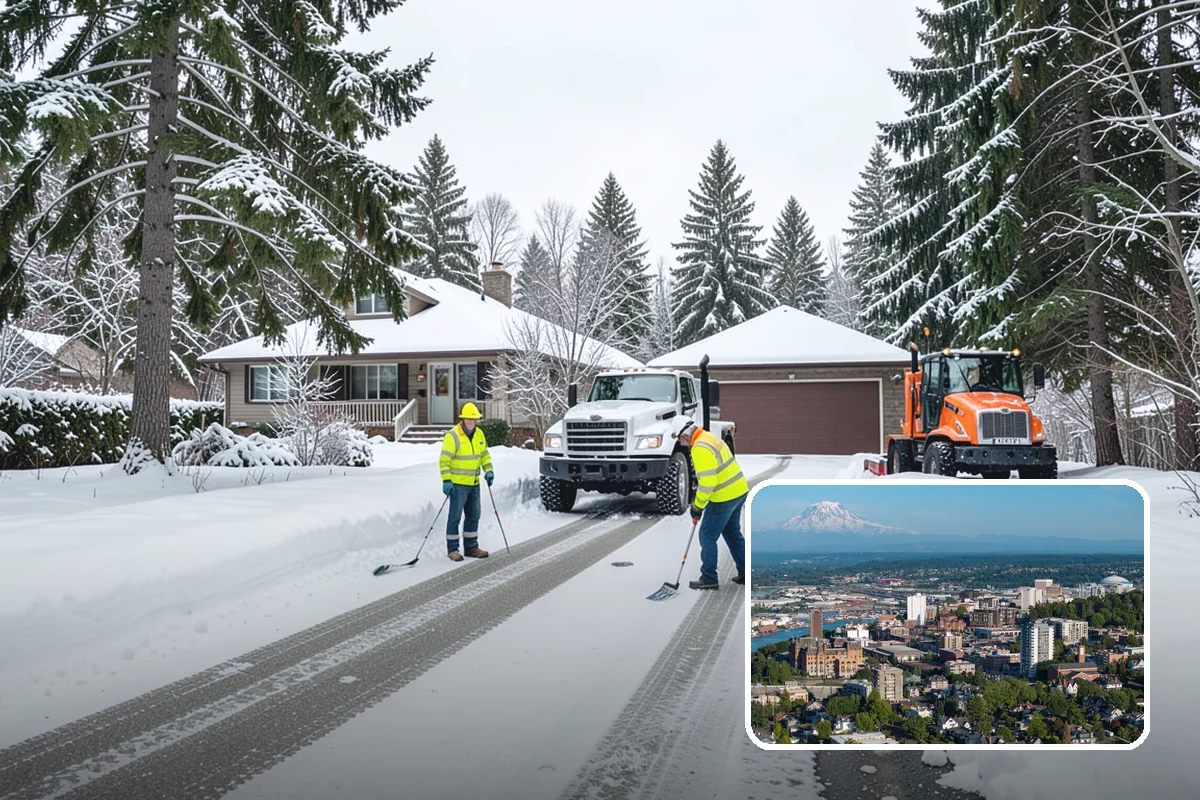
A roof valley is the inside angle where two slopes join. Snow slides toward it from both sides and piles up. Ice then forms along the bottom, and water has nowhere easy to go. Our crew removes the snow by hand and works to avoid damaging shingles, flashing or gutters.
Tacoma averages 5.6 inches of snow per season and sees 1 in or more on about 1.6 days a year. Heavy-snow days of 4 inches or more are rare, at 0.38 a year. That makes the work occasional, but the storms that do arrive can be large. Since 2005 the biggest was Feb 12–15, 2021, with 11.0 inches in total. The biggest single day was 7.2 inches, during Feb 5–7, 2017.
Freezing nights matter as much as snowfall. Tacoma has 31 freezing nights from October to April. Snow that melts by day can refreeze in a valley overnight and form ice that is harder to remove.
- Crew member, shoveling and hand work: $110 per person-hour
- Trip charge for Tacoma (zone C): $350 per dispatch
Because Tacoma is 73 minutes from our Bothell yard, the trip charge applies to each dispatch.