Keeping You Moving. Beyond Expectations.

University Place Hydrant Snow Clearing
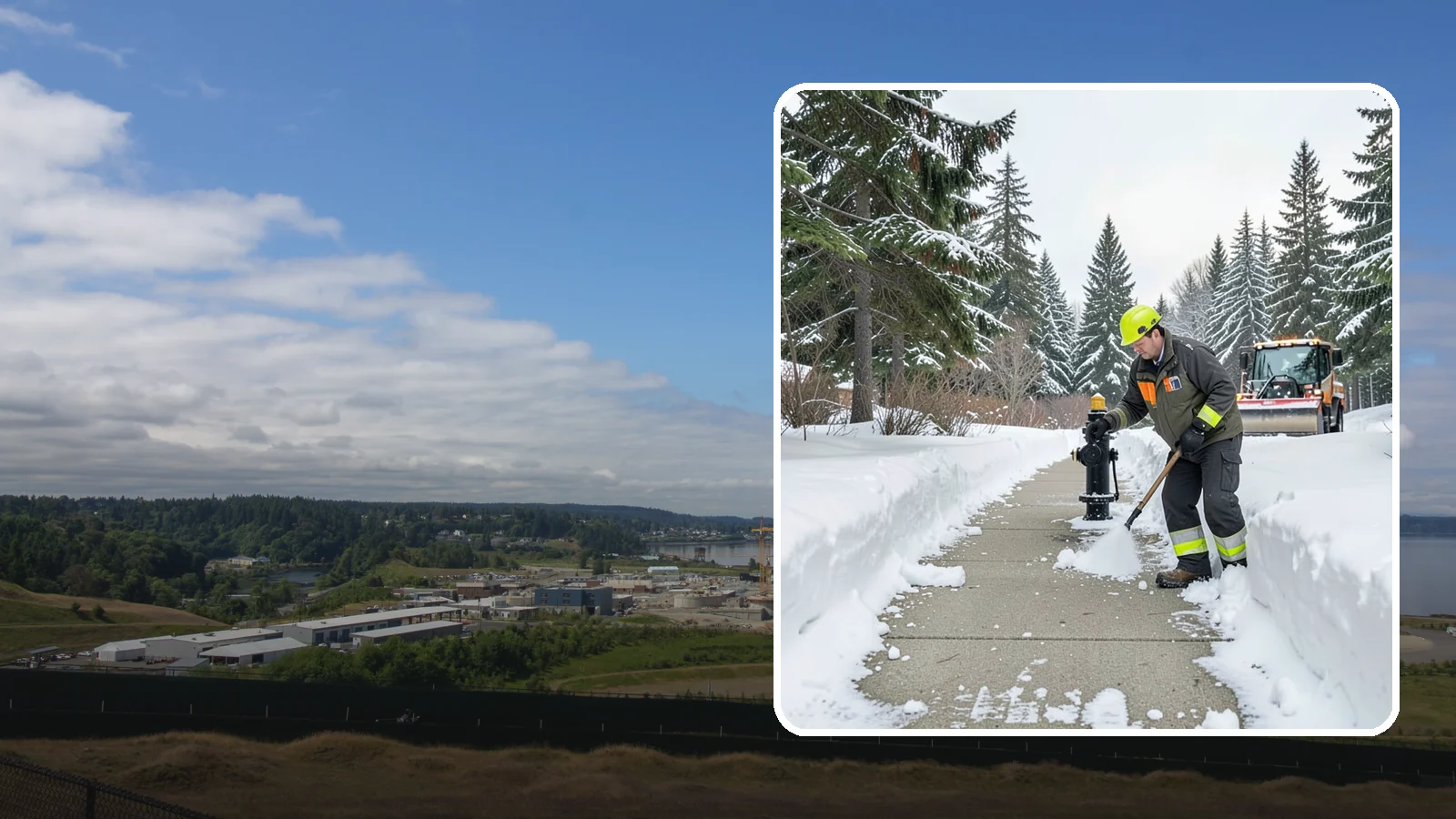
We clear snow and ice from fire hydrants so crews can connect without delay in an emergency.
Hydrant Snow Clearing in University Place means digging out fire hydrants so crews can find and reach them. The city has 1538 mapped fire hydrants, and each one sits near lots, walks or entrances that need to stay clear. Washington Snow Removal is licensed, bonded and insured.
Snow here is not frequent. University Place averages 5.4 in per season and sees 1.5 days a year with 1 in or more. But 58% of winters have at least one 1-inch day, and there are 36 freezing nights from Oct to Apr. Call 206-809-9669 to schedule.
Why University Place walkways freeze
Average snowfall by month in University Place
Freezing rain and sleet reports near University Place
- Jan 17, 2024: Freezing Rain reported at 2 ENE Fox Island
- Dec 23, 2022: Freezing Rain reported at Lakewood and 1 N University Place
- Jan 19, 2012: Freezing Rain reported at 3 NW Lake City and 5 N Fort Lewis
Sources: NOAA and National Weather Service records for University Place, 2005–2026.
Hydrant Snow Clearing in University Place, WA: What It Involves
We shovel by hand around the hydrant and clear a path to it from the street or walk. The work is small but exact. The hydrant, its caps and the approach all need to be open and easy to see.
With only 1.5 days a year at 1 in or more, most clearings follow a short, sudden event. Light snow is more common than deep snow. University Place averages 2.84 light-snow days a year that need deicing. Meltwater can refreeze on 36 freezing nights between Oct and Apr. Freezing rain has also been reported nearby, including Lakewood on Dec 23, 2022 and 2 Ene Fox Island on Jan 17, 2024. Ice around a hydrant base can be harder to remove than snow, so we may bring bagged ice melt.
Our yard is in Bothell, 82 minutes from University Place. Pricing reflects that distance and the work involved:
- Crew member: $110 per person-hour
- Ice melt, bagged: $45 per 50 lb bag
- Trip charge for University Place (zone C): $350 per dispatch
- Compact track loader with operator (Kubota SCL1000): $175 per hour, if a site needs it
Each dispatch has a 2-hour minimum. Grouping several hydrants on one visit makes the best use of that time.
Prices in University Place
Billed by the hour for the crew and equipment on site, plus materials.
| Crew member (shoveling, sidewalks, hand work) | $110 / person-hour |
| Compact track loader with operator (Kubota SCL1000) | $175 / hour |
| Ice melt, bagged | $45 / 50 lb bag |
| Trip charge for University Place (zone C) | $350 / dispatch |
- 2-hour minimum per dispatch.
- University Place is 82 minutes from our Bothell yard.
Prices approved Oct 2026.
Mapped fire hydrants in University Place
University Place has 1538 mapped fire hydrants on the map, each with lots, walks or entrances to keep clear.
Source: OpenStreetMap contributors, Oct 2026. Named sites are examples of local facilities, not customers.
Service Area
University Place
Benefits
Keeps hydrants visible and reachable for responding crews; Helps property owners meet fire-access clearance rules; Clears plow wash that often reburies hydrants; Maintains a safe working zone around connection points