Keeping You Moving. Beyond Expectations.

Woodinville Beet Juice Deicer Application
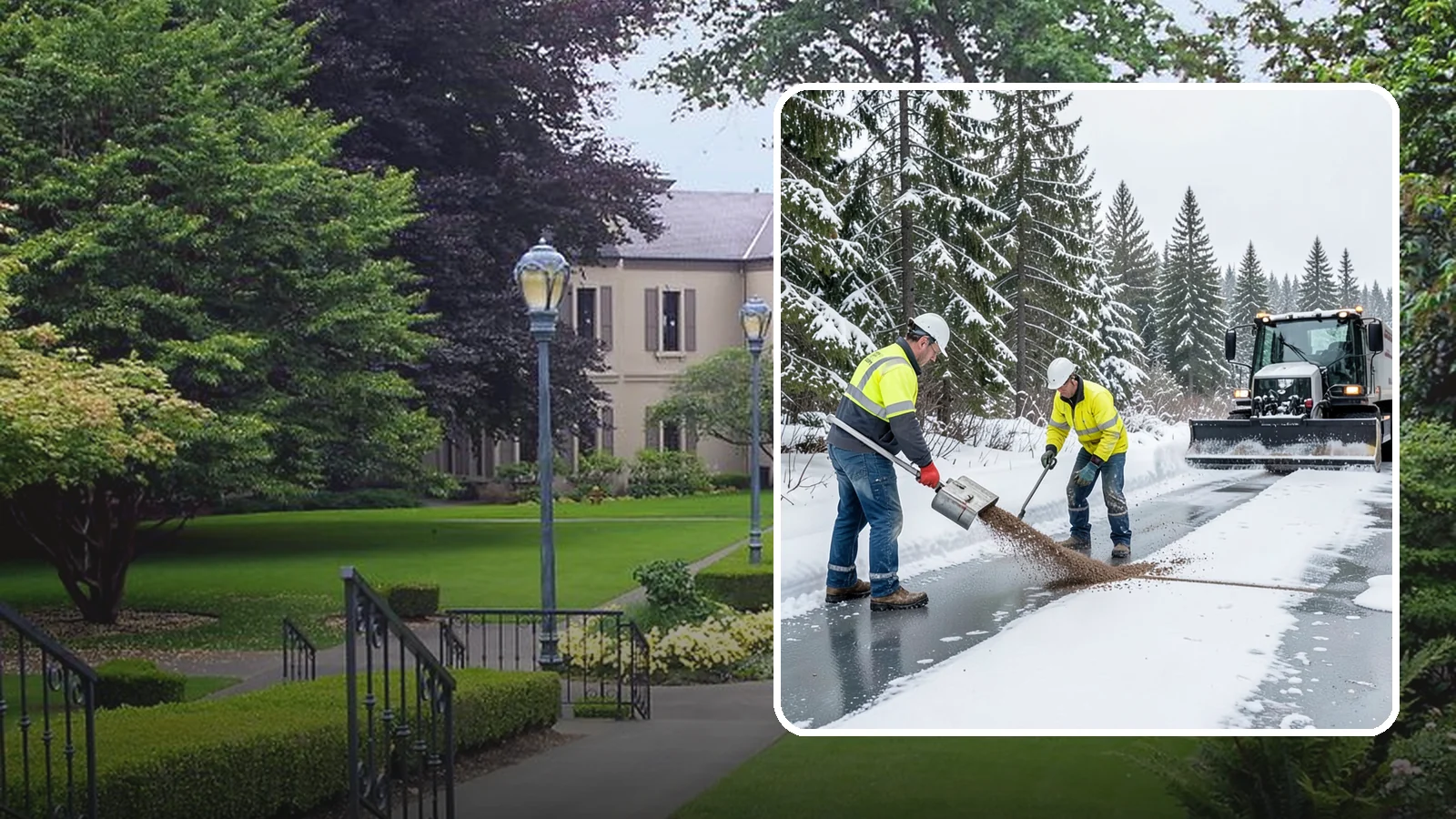
Beet juice deicer application blends an agricultural byproduct with brine to melt ice at colder temperatures using less salt.
Beet juice deicer is a liquid applied before a freeze. It helps keep ice from bonding to pavement. Washington Snow Removal applies it at Woodinville properties from our Bothell yard, which is 17 minutes away. We are licensed, bonded and insured.
Woodinville sees 32 freezing nights from Oct to Apr, and about 3.1 light-snow days a year that need deicing. Those are the conditions where a pre-treatment makes the most sense. Call 206-809-9669 to talk through your lot, walkways and entries.
How often Woodinville pavement freezes
Average snowfall by month in Woodinville
Ice storms and freezing rain near Woodinville
- Dec 23, 2022: Ice Storm; Freezing Rain reported at 2 NW Woodinville; Freezing Rain reported at Kenmore; Freezing Rain reported at 1 NE Bothell; Freezing Rain reported at 1 NNE Bothell; Freezing Rain reported at Woodinville
Sources: NOAA and National Weather Service records for Woodinville, 2005–2026.
Beet Juice Deicer Application in Woodinville, WA
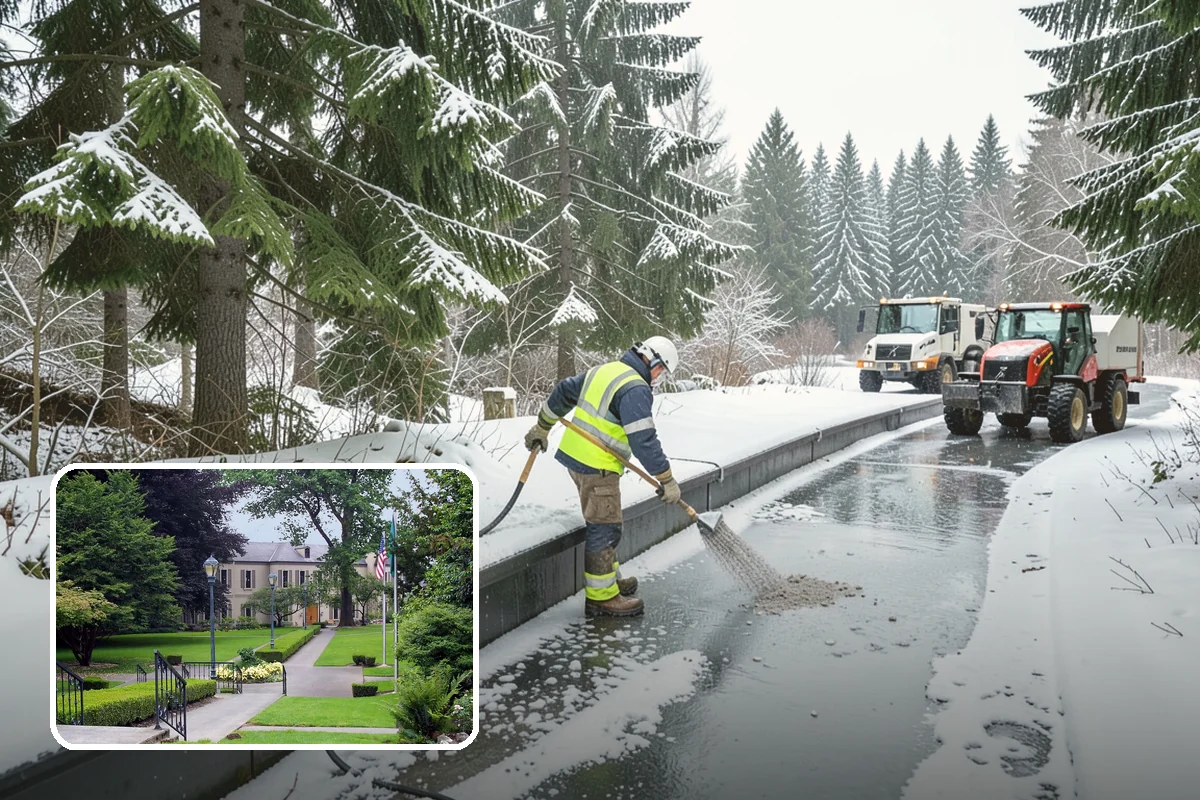
Beet juice deicer is sprayed on pavement ahead of a storm or a hard freeze. It keeps ice from locking onto the surface, so later clearing is easier. We use it on parking lots, entry drives, walkways and stairs.
Woodinville's pattern suits this kind of work. The area averages 8.8 in of snow per season, with snow on the ground only 7 days a year and 1 in or more on about 2.7 days. Most of the winter trouble is thin ice from the 32 freezing nights between Oct and Apr. Ice can also come without much snow. On Dec 23, 2022, an ice storm hit, and freezing rain was reported 2 NW of Woodinville and in Kenmore.
Property owners here also carry a duty. Woodinville code WMC 12.06.020 says the owner of property abutting a public sidewalk must keep it safe at all times, free of obstructions or defects, including ice and snow. The deadline is at all times, so treating ahead of a freeze can matter.
- Trip charge for Woodinville (zone A): $200 per dispatch
- 2-hour minimum per dispatch
- Crew member for sidewalks and hand work: $110 per person-hour
- Bulk salt, applied: $300 per ton
Call 206-809-9669 to set up an application.
Prices in Woodinville
Billed by the hour for the crew and equipment on site, plus materials.
| Plow and spreader truck with driver (Ram 5500) | $325 / hour |
| Ice melt, bagged | $45 / 50 lb bag |
| Bulk salt, applied | $300 / ton |
| Crew member (shoveling, sidewalks, hand work) | $110 / person-hour |
| Trip charge for Woodinville (zone A) | $200 / dispatch |
- 2-hour minimum per dispatch.
- Woodinville is 17 minutes from our Bothell yard.
Prices approved Oct 2026.
Service Area
Woodinville
Benefits
Extends brine’s effective range into colder temperatures; Cuts total chloride use by improving salt performance; Sticks to pavement better, resisting wash-off from drizzle; Draws on a renewable agricultural byproduct