Keeping You Moving. Beyond Expectations.

Woodinville Industrial Facility Parking Lot Snow Removal
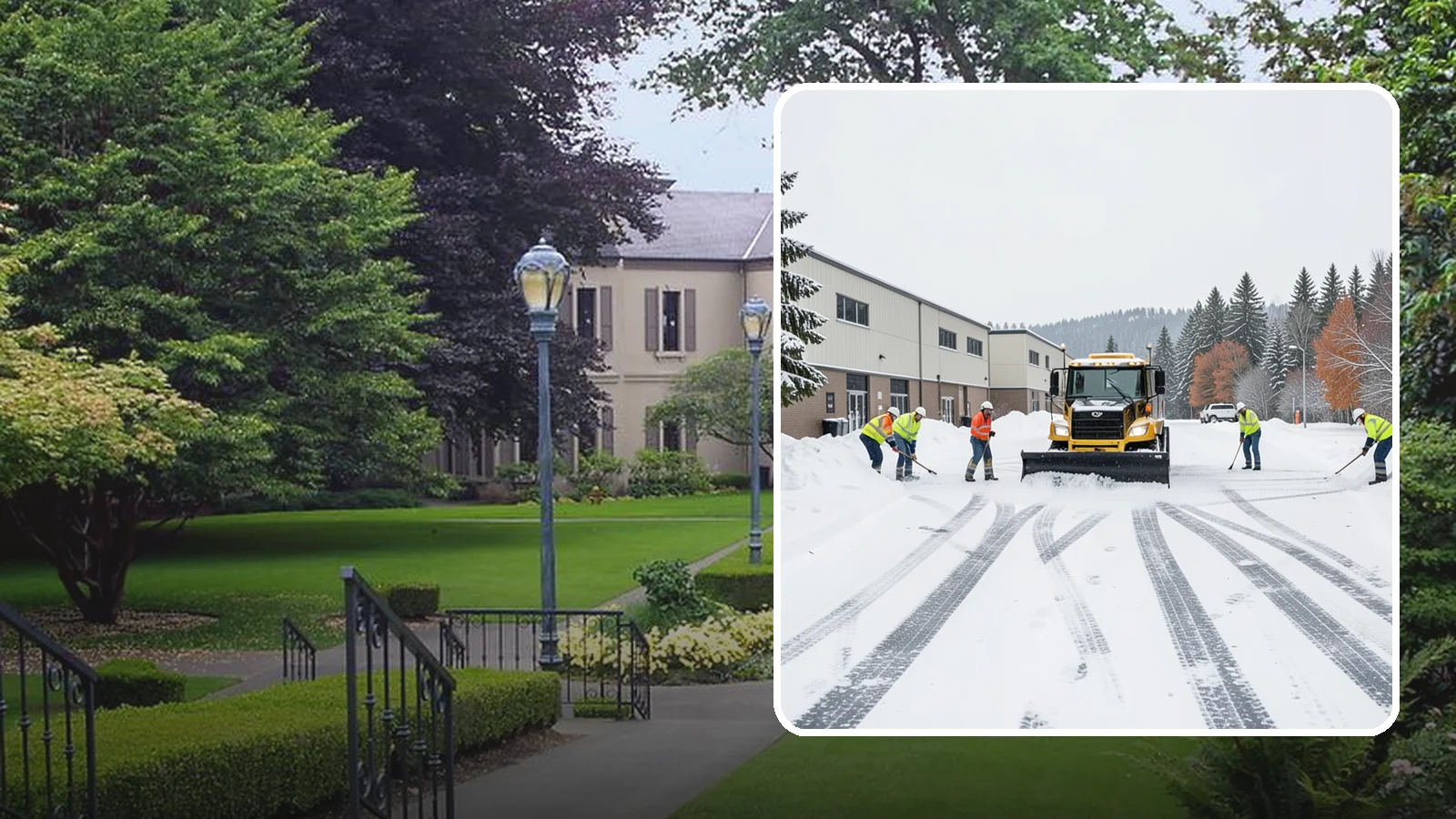
We clear large industrial lots and truck approaches so Western Washington operations keep running through winter weather.
Industrial lots in Woodinville need to stay open for trucks, shift workers and deliveries. Washington Snow Removal plows and treats industrial facility parking lots from our Bothell yard, 17 minutes away. We are licensed, bonded and insured.
Woodinville gets about 8.8 in of snow in an average season, spread over roughly 2.71 plow events. There are 8 industrial sites mapped in the city, including Sienna Technologies. Rates are listed by the hour, with a 2-hour minimum per dispatch.
Woodinville winter workload for property managers
Average snowfall by month in Woodinville
Largest snow totals reported near Woodinville
- Feb 13–14, 2021: Up to 12 in, 5 spotter reports: 1.0 E Maltby 12 in, Woodinville 10.3 in, Woodinville 9.5 in, Kingsgate 9.4 in, Bothell 9.3 in
- Feb 9, 2019: 10.5 in measured by a spotter at 2 E Woodinville
- Feb 4, 2019: Up to 9.5 in, 2 spotter reports: Woodinville 9.5 in, 4 N Redmond 9 in
- Jan 14–20, 2012: 12.2 in total, 4.0 in on the biggest day
Sources: NOAA and National Weather Service records for Woodinville, 2005–2026.
How Snow and Ice Affect Woodinville Industrial Lots
Snow here is infrequent, but it can be heavy when it arrives. Woodinville sees about 2.7 days a year with 1 in or more. Near Woodinville, spotters reported 10.5 in on Feb 9, 2019 and 12 in near Maltby on Feb 14, 2021. Lots that sit unplowed after a storm like that can stall truck traffic fast.
Ice is the more frequent problem. There are 32 freezing nights from Oct to Apr, and about 3.1 light-snow days a year need deicing. Loading docks, drive aisles and employee entrances can glaze over even when nothing needs plowing.
A typical industrial job can include:
- Plowing drive aisles, truck lanes and staff parking with a Ram 3500 at $250 / hour or a Ram 5500 plow and spreader at $325 / hour
- Clearing tight corners and dock areas with a Kubota SCL1000 compact track loader at $175 / hour
- Hand shoveling walkways and entrances at $110 / person-hour
- Salt at $300 / ton applied, or bagged ice melt at $45 / 50 lb bag
A trip charge of $200 per dispatch applies in Woodinville (zone A). Call 206-809-9669 to talk through your site.
Prices in Woodinville
Billed by the hour for the crew and equipment on site, plus materials.
| Plow truck with driver (Ram 3500) | $250 / hour |
| Plow and spreader truck with driver (Ram 5500) | $325 / hour |
| Compact track loader with operator (Kubota SCL1000) | $175 / hour |
| Crew member (shoveling, sidewalks, hand work) | $110 / person-hour |
| Ice melt, bagged | $45 / 50 lb bag |
| Bulk salt, applied | $300 / ton |
| Trip charge for Woodinville (zone A) | $200 / dispatch |
- 2-hour minimum per dispatch.
- Woodinville is 17 minutes from our Bothell yard.
Prices approved Oct 2026.
Industrial sites in Woodinville
There are 8 industrial sites mapped within Woodinville.
- Sienna Technologies
Source: OpenStreetMap contributors, Oct 2026. Named sites are examples of local facilities, not customers.

Service Area
Woodinville
Benefits
Large lots and truck approaches stay open to protect production; semi turning areas and gate approaches are cleared for heavy vehicles; dock ramps are deiced so loaded trailers keep traction; passes are timed around shift changes for every crew; scalable equipment matches the acreage of an industrial site