Large Equipment Snow Removal for Woodinville Properties
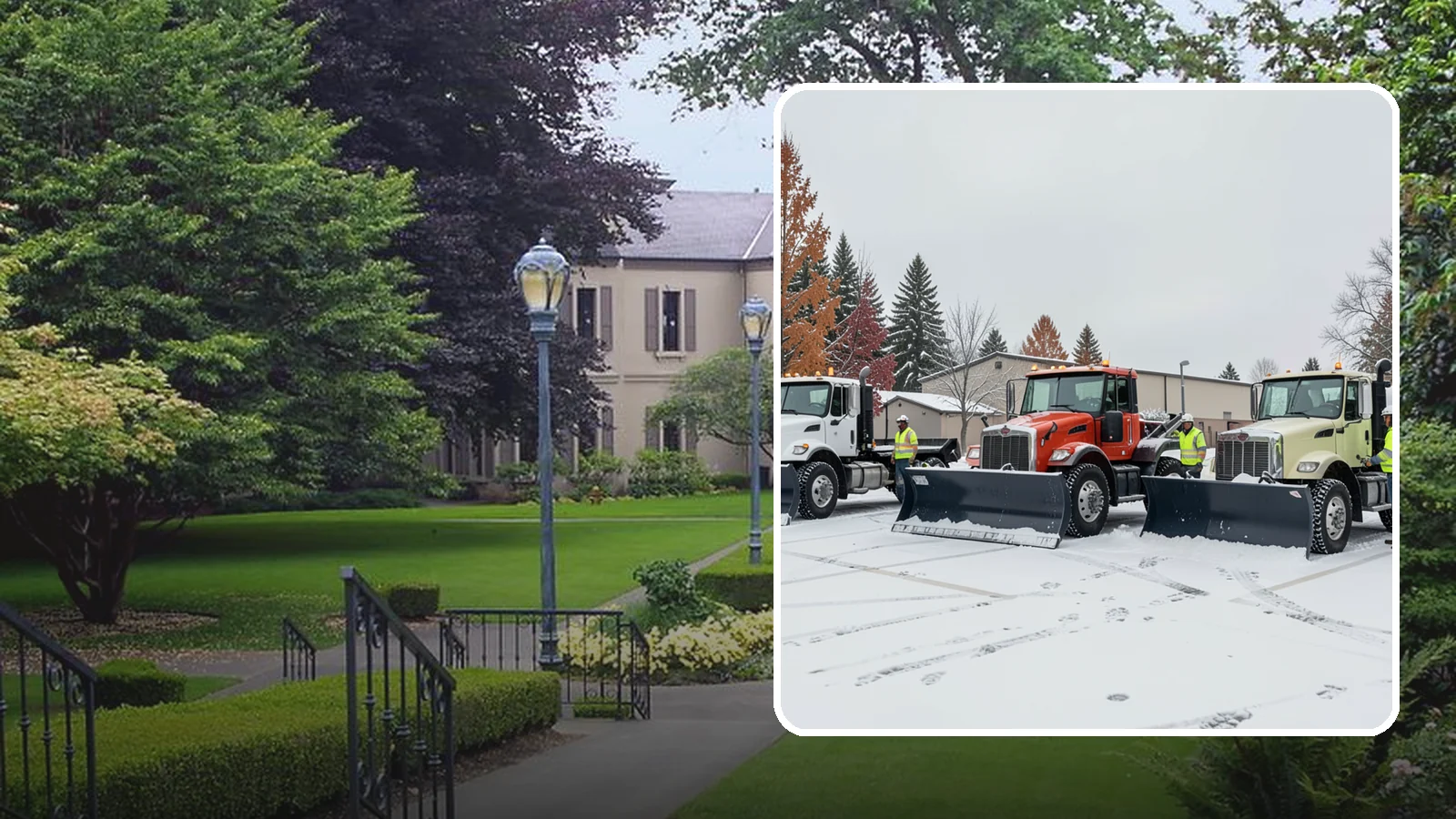
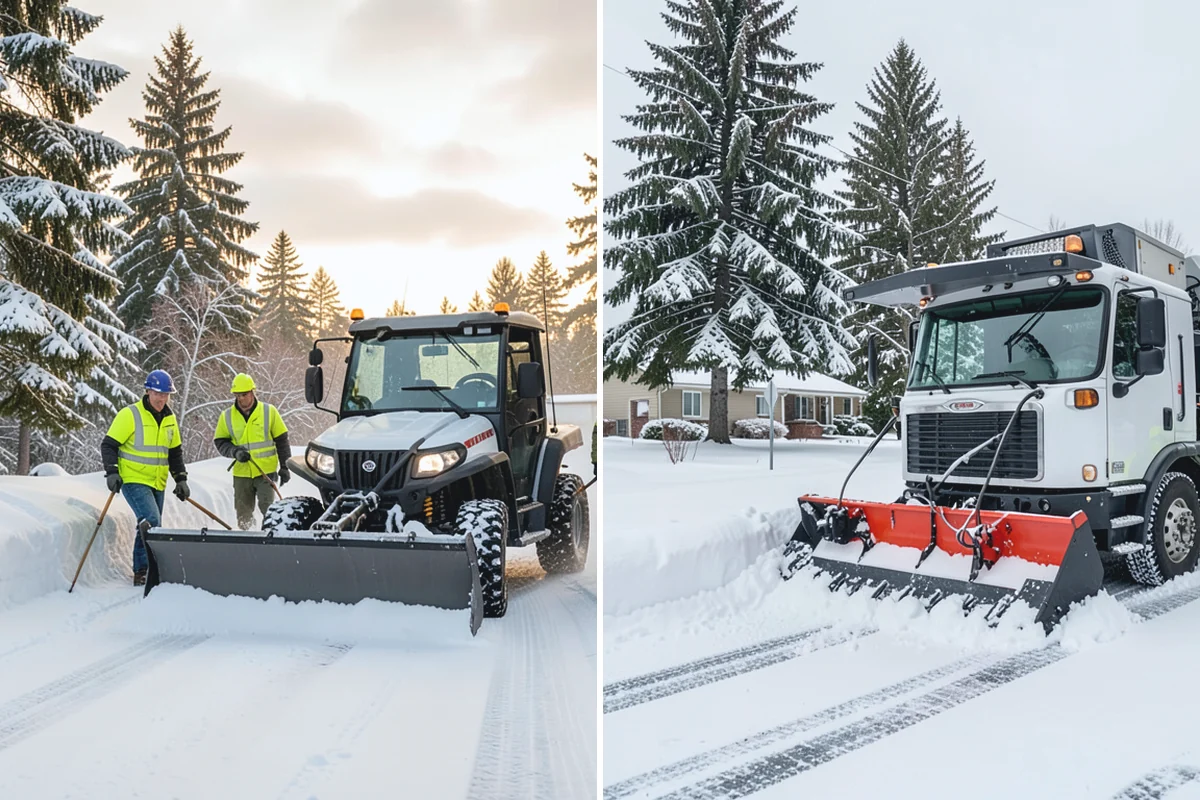
At a larger Woodinville property, the work usually means clearing lots, drive aisles and loading areas, then stacking snow where it will not block parking or drainage. A compact track loader handles tight corners and piling. A plow truck covers open pavement. A plow and spreader truck clears and treats ice in one pass.
The local pattern shapes how we plan. Woodinville sees about 2.7 days a year with 1 in or more of snow, and an average of 2.71 plow events per season. The biggest single day since 2005 brought 7.4 in, and 27 winter storm and heavy snow reports have been logged in that time. Recent events include Feb 4, 2025 (Winter Weather), Dec 1, 2022 (Winter Weather) and Feb 4, 2019 (Heavy Snow).
Ice matters as much as depth. There are 32 freezing nights from Oct to Apr and about 3.1 light-snow days that need deicing. Those days call for spreading, not plowing.
Our rates for Woodinville:
- Compact track loader with operator (Kubota SCL1000): $175 / hour
- Plow truck with driver (Ram 3500): $250 / hour
- Plow and spreader truck with driver (Ram 5500): $325 / hour
- Trip charge for Woodinville (zone A): $200 / dispatch
Each dispatch has a 2-hour minimum.