Keeping You Moving. Beyond Expectations.

Woodinville Snowmelt Flooding Cleanup
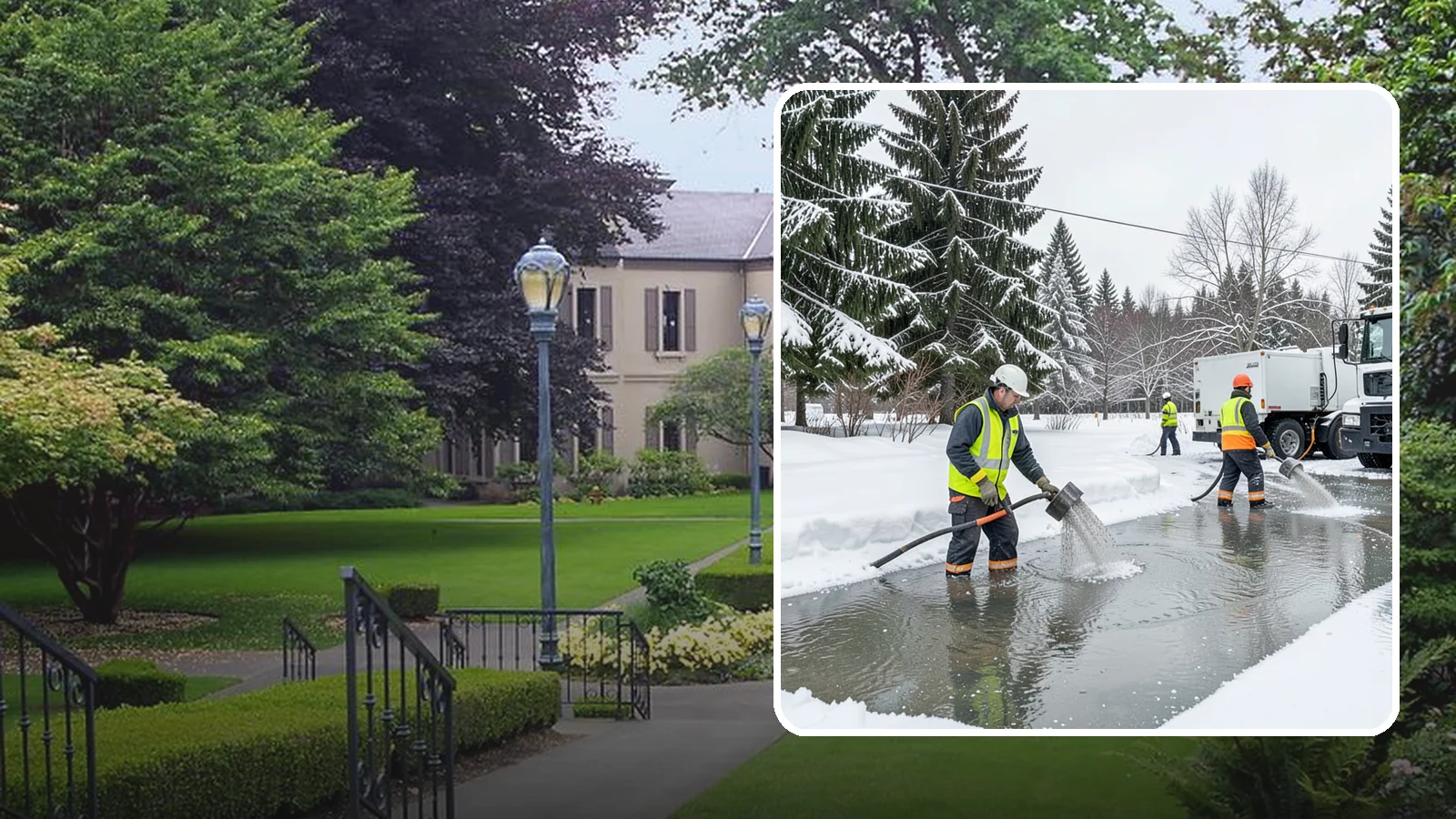
When rapid snowmelt floods your property, we clear the water and treat surfaces before the refreeze sets in.
Snow in Woodinville does not last long, but the melt can still cause problems. When slush and runoff back up at drains, driveways and building entrances, water can pool, then refreeze on freezing nights. Washington Snow Removal clears that water and slush from properties in Woodinville.
We are based in Bothell, 17 minutes from Woodinville, and we are licensed, bonded and insured. Our crews work by hand where needed, including sidewalks and entry points. Call 206-809-9669 to talk through your property and schedule a visit.
How often Woodinville pavement freezes
Average snowfall by month in Woodinville
Recent winter events logged for the Woodinville area
- Feb 4, 2025: Winter Weather
- Nov 29–Dec 1, 2022: Winter Weather; Heavy Snow
- Feb 4, 2019: Heavy Snow
- Feb 5, 2017: Heavy Snow
Sources: NOAA and National Weather Service records for Woodinville, 2005–2026.
Snowmelt Flooding Cleanup in Woodinville, WA
Snowmelt flooding cleanup means moving slush and standing water away from the places people walk and drive. In Woodinville that usually means storm drains, curb lines, walkways, entries and low spots in parking areas. We do this work by hand with shovels and similar tools.
The local pattern shapes the job. Woodinville averages 8.8 in of snow per season and sees 1 in or more of snow on about 2.7 days a year. Those events are short. But there are 32 freezing nights from October to April, so meltwater left on pavement can turn to ice overnight. Recent events in the area include Feb 4, 2025 (Winter Weather), Nov 29, 2022 (Heavy Snow), Feb 4, 2019 (Heavy Snow) and Feb 5, 2017 (Heavy Snow). Two ice storm reports have been logged since 2005.
Property owners also have a duty here. Under WMC 12.06.020, the owner of property next to a public sidewalk must keep it in a safe condition, free of obstructions or defects, including ice and snow, at all times.
Our pricing is simple:
- Crew member (shoveling, sidewalks, hand work): $110 per person-hour
- Trip charge for Woodinville (zone A): $200 per dispatch
Call 206-809-9669 to arrange a cleanup.
Prices in Woodinville
Billed by the hour for the crew and equipment on site, plus materials.
| Crew member (shoveling, sidewalks, hand work) | $110 / person-hour |
| Trip charge for Woodinville (zone A) | $200 / dispatch |
- Woodinville is 17 minutes from our Bothell yard.
Prices approved Oct 2026.
Service Area
Woodinville
Benefits
Rapid clearing of ponded meltwater before it refreezes into sheets; Reopening of blocked drains and catch basins that trap runoff; Removal of lingering snow piles that keep feeding the flooding; Surface treatment that prevents the refreeze glaze after warm-ups