Keeping You Moving. Beyond Expectations.

Yarrow Point Arctic Blast Response
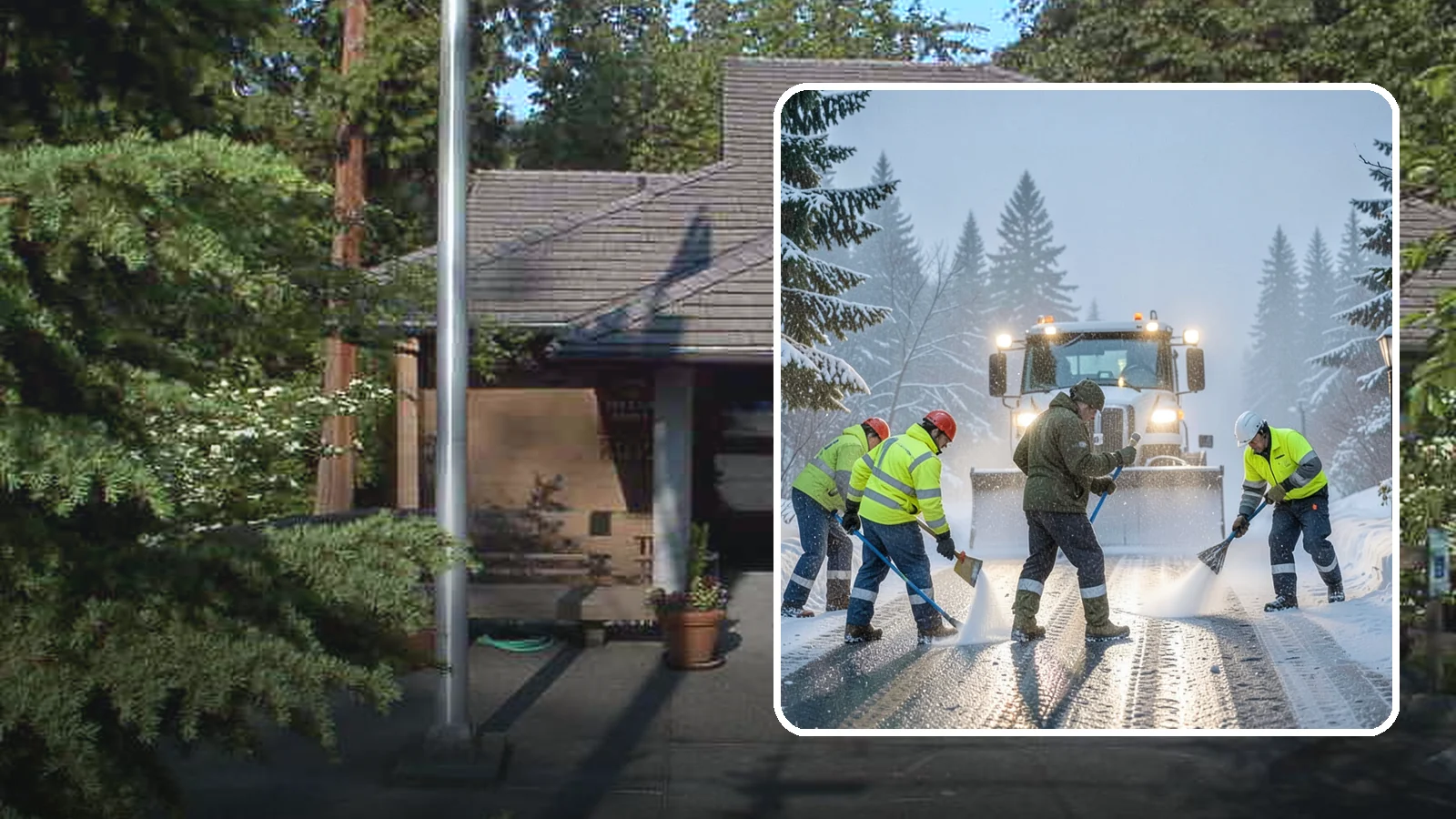
We keep pavement safe during arctic blasts when frigid outflow winds drop temperatures and freeze everything solid.
Yarrow Point averages 5.4 inches of snow a season and only 1.7 days a year with an inch or more. Then an arctic blast arrives and the town is not set up for it. Steep, tree-lined streets and private driveways stay icy long after the snow stops.
Washington Snow Removal is licensed, bonded and insured. We run Arctic Blast Response from our Bothell yard, 25 minutes from Yarrow Point. Call 206-809-9669 to set up a dispatch for plowing, spreading and hand work at your property.
How hard Yarrow Point storms hit
Biggest storms in Yarrow Point since 2005
- Dec 18–22, 2008: 12.1 in total, 3.3 in on the biggest day
- Feb 12–15, 2021: 10.6 in total, 7.1 in on the biggest day
- Feb 8–12, 2019: 10.1 in total, 4.5 in on the biggest day
- Jan 14–20, 2012: 7.0 in total, 2.4 in on the biggest day
Sources: NOAA and National Weather Service records for Yarrow Point, 2005–2026.
How Arctic Blast Response works in Yarrow Point
Big storms are rare here, but they happen. Since 2005 the largest was Dec 18–22, 2008, with 12.1 inches in total. Feb 12–15, 2021 brought 10.6 inches, and 7.1 inches fell on the single biggest day. Feb 8–12, 2019 added 10.1 inches. Each of these built up over several days, so ice and compacted snow became as much a problem as depth.
The area also sees 28 freezing nights from October to April and about 4.29 Winter Weather Advisories a year. Meltwater refreezes overnight on slopes and shaded drives. That is why a blast response usually pairs plowing with salt or ice melt.
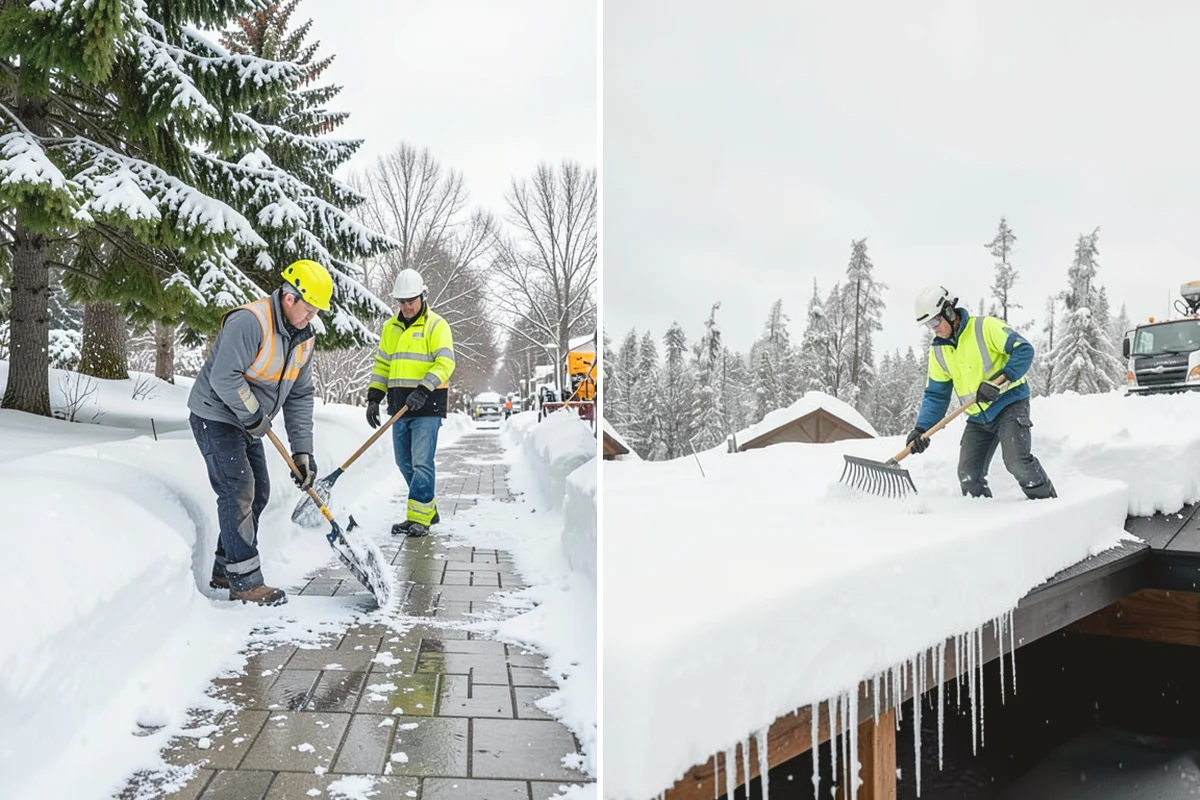
A typical dispatch at a Yarrow Point property may include:
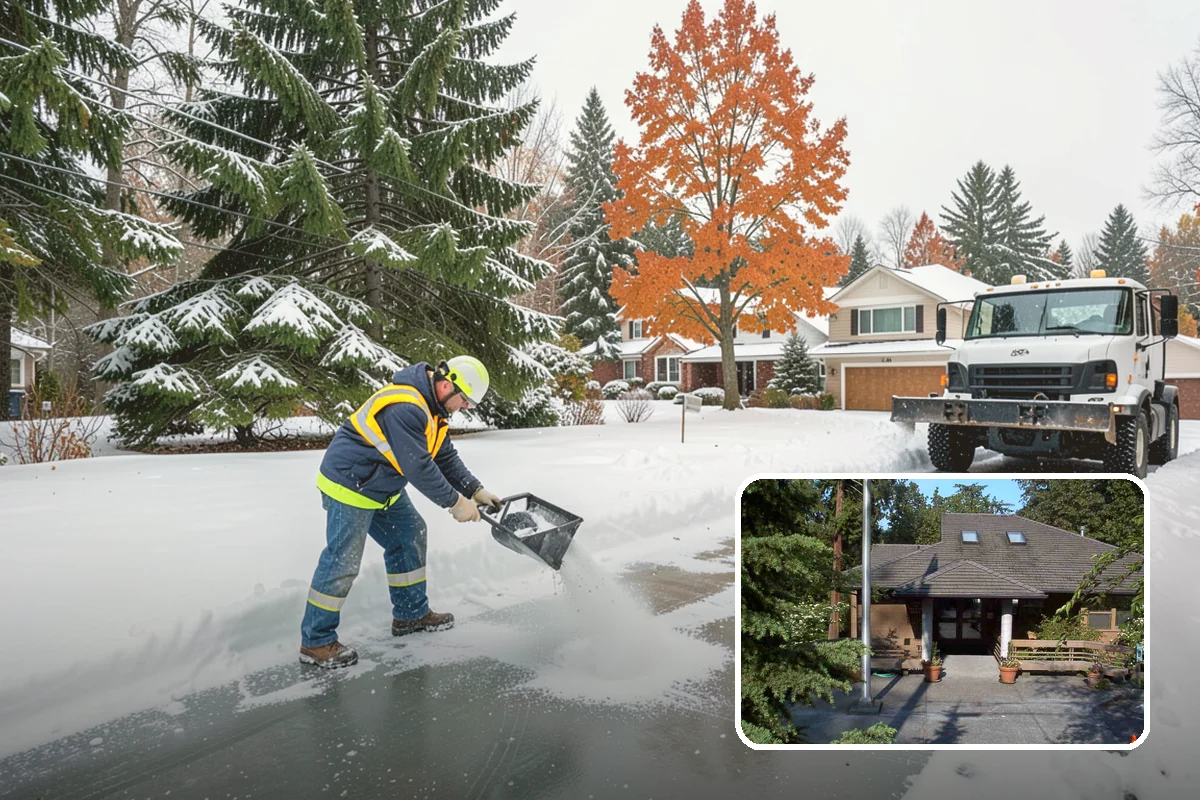
- Plowing driveways and parking areas with a Ram 3500 at $250 per hour, or a Ram 5500 plow and spreader truck at $325 per hour
- Hand shoveling of steps, walkways and entries at $110 per person-hour
- Bulk salt applied at $300 per ton, or bagged ice melt at $45 per 50 lb bag
- A compact track loader with operator at $175 per hour for tight or piled areas
Yarrow Point is trip zone A, with a $200 charge per dispatch. Each dispatch has a 2-hour minimum.
Prices in Yarrow Point
Billed by the hour for the crew and equipment on site, plus materials.
| Plow truck with driver (Ram 3500) | $250 / hour |
| Plow and spreader truck with driver (Ram 5500) | $325 / hour |
| Compact track loader with operator (Kubota SCL1000) | $175 / hour |
| Crew member (shoveling, sidewalks, hand work) | $110 / person-hour |
| Ice melt, bagged | $45 / 50 lb bag |
| Bulk salt, applied | $300 / ton |
| Trip charge for Yarrow Point (zone A) | $200 / dispatch |
- 2-hour minimum per dispatch.
- Yarrow Point is 25 minutes from our Bothell yard.
Prices approved Oct 2026.
Service Area
Yarrow Point
Benefits
Treatment matched to dry, windy cold that refreezes surfaces quickly; Frequent re-checks because outflow gusts strip and refreeze pavement; Attention to wind-exposed lots and corners that ice first; Reliable footing during the sharp temperature drops these events bring