Commercial Stair Clearing in Yarrow Point: What It Involves
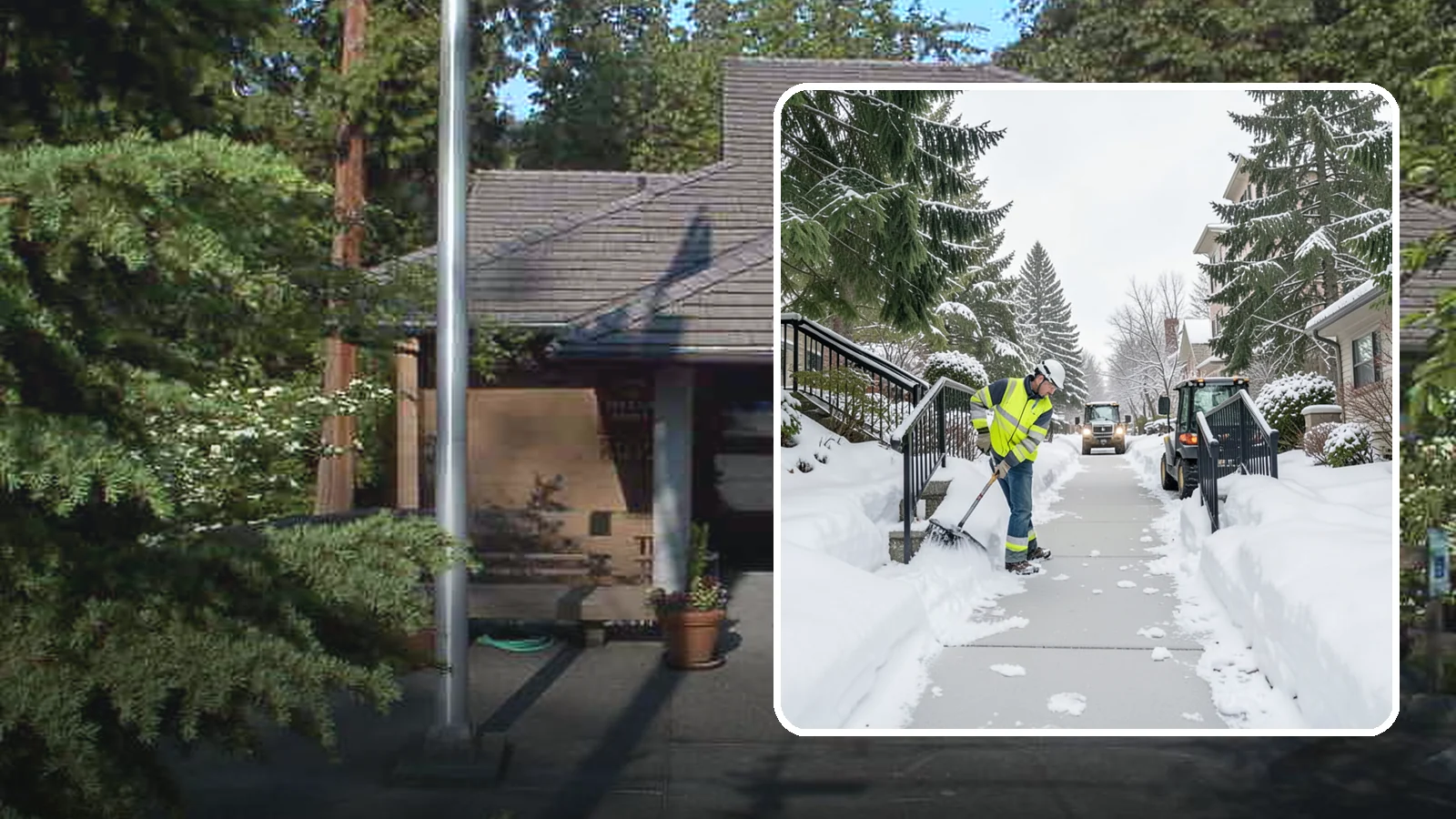
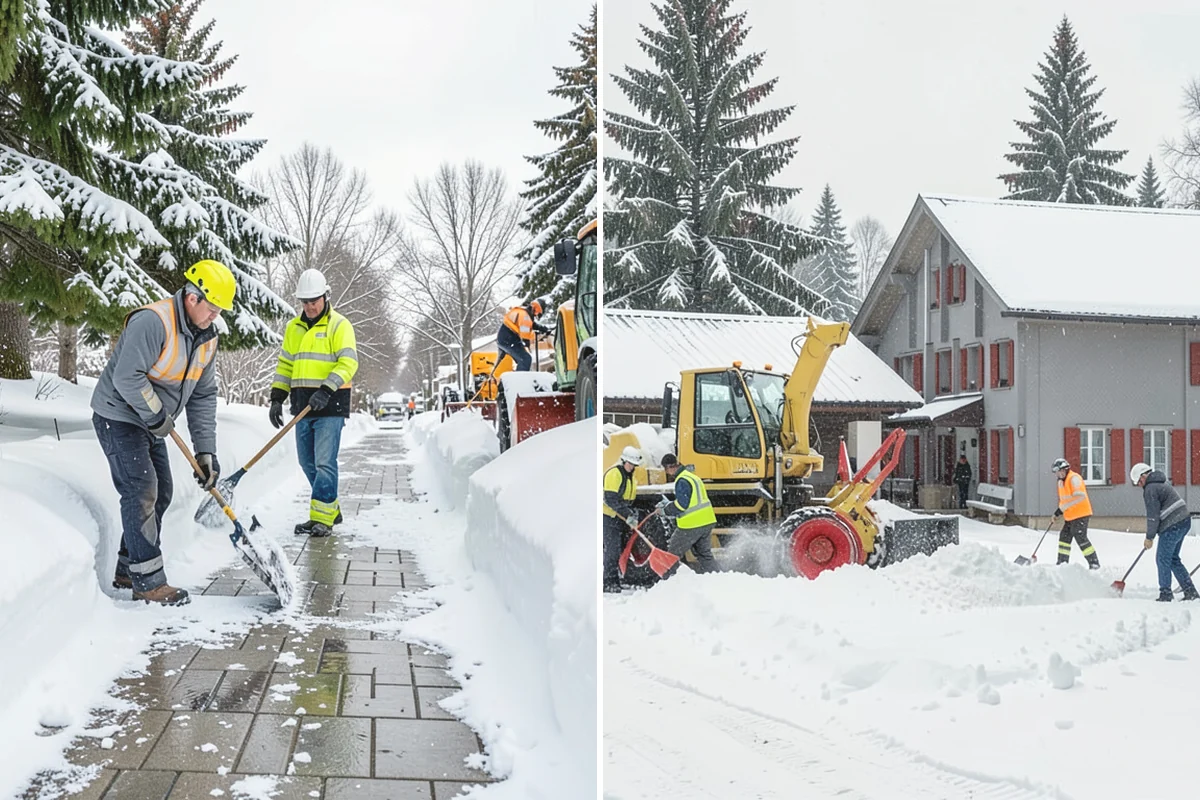
Stair clearing is hand work. A crew member shovels each tread and landing, clears the sidewalk at the base, and spreads ice melt where ice is likely to form. Machines do not fit on steps, so we do not send them for this job.
Yarrow Point sees snow on only 1.7 days a year with 1 inch or more. Still, 67% of winters have at least one such day. Light snow is the more common issue. About 3.22 days a year bring light snow that needs deicing, and 28 freezing nights leave thin ice on shaded steps.
Big storms are rare but real. Feb 12–15, 2021 brought 10.6 inches in total, with 7.1 inches on the biggest day. Dec 18–22, 2008 brought 12.1 inches in total. Stairs buried at that depth need full shoveling before any treatment.
Pricing is based on the work involved:
- Crew member: $110 per person-hour
- Ice melt, bagged: $45 per 50 lb bag
- Trip charge for Yarrow Point (zone A): $200 per dispatch
- 2-hour minimum per dispatch
Call 206-809-9669 and we will talk through your stairs, railings and walkways.