Keeping You Moving. Beyond Expectations.

DuPont Refreeze Prevention
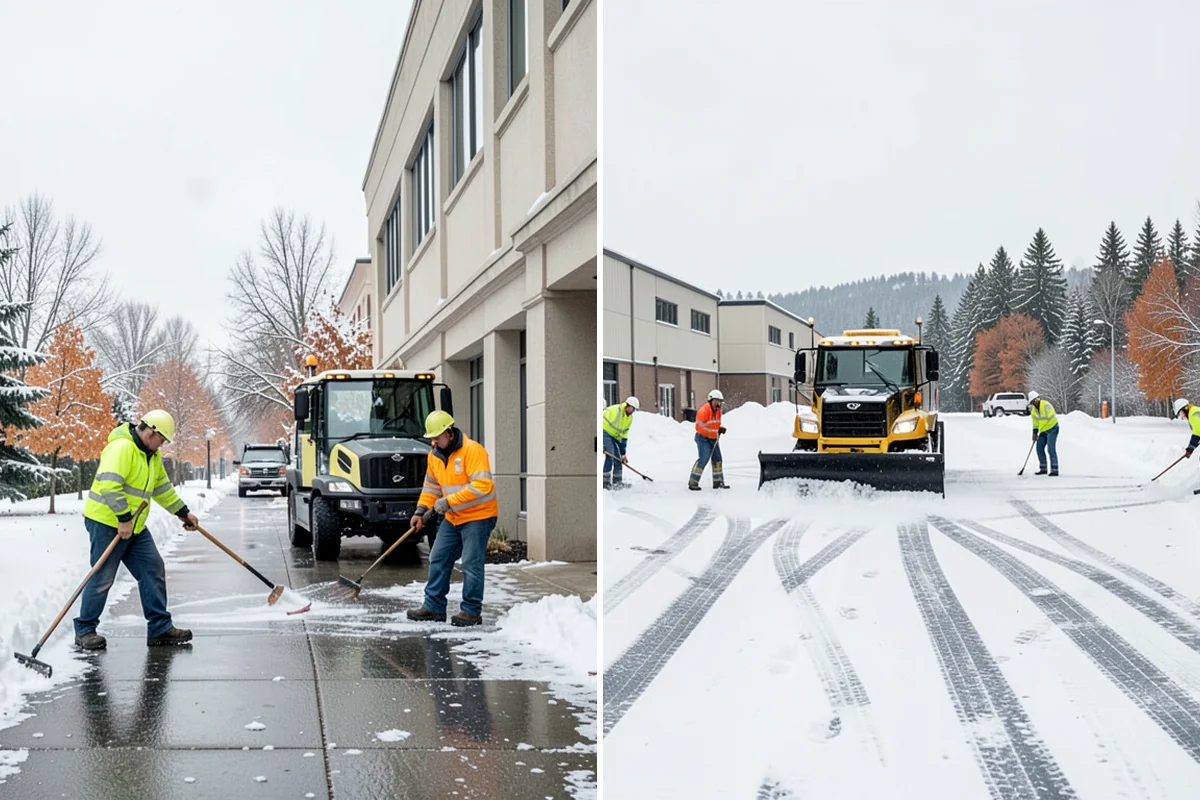
Refreeze prevention stops daytime meltwater from turning back into dangerous ice once temperatures drop after dark.
Refreeze prevention in DuPont is about the nights, not the snow. The city sees an average of 4.6 in of snow per season and only 3 days a year with snow on the ground. But it has 40 freezing nights between October and April. Meltwater and wet pavement can turn to ice after dark.
Washington Snow Removal is licensed, bonded and insured. We treat walks, entries and lots before ice forms, so surfaces stay safe overnight. Call 206-809-9669 to set up a dispatch to DuPont.
How often DuPont pavement freezes
Average snowfall by month in DuPont
Ice storms and freezing rain near DuPont
- Dec 23, 2022: Ice Storm
- Jan 19, 2012: Ice Storm; Freezing Rain reported at 3 NW Lake City; Freezing Rain reported at 5 N Fort Lewis
Sources: NOAA and National Weather Service records for DuPont, 2005–2026.
How Refreeze Prevention Works at DuPont Properties
Refreeze prevention means treating a surface before water on it freezes. In DuPont, that usually means a thin layer of ice melt or salt on walkways, entrances, ramps and parking areas. It does not mean plowing deep snow. Deep snow is rare here, with only 1.4 days a year of 1 in or more.
The local pattern is mostly cold nights and light events. DuPont has 1.76 light-snow days a year that need deicing, and just 1.2 days a year that stay below freezing. Ice storms do happen. Records show one on Dec 23, 2022 and another on Jan 19, 2012, with freezing rain reported north of Fort Lewis the same day.
Property owners also have a duty here. DuPont code DMC 14.02.030 says the owner or occupant of abutting property must keep the sidewalk in front of it free from snow, ice, or obstruction. The code states no deadline.
What a visit can include:
- Bagged ice melt at $45 per 50 lb bag
- Bulk salt, applied, at $300 per ton
- Crew members for walks and hand work at $110 per person-hour
- Plow and spreader truck with driver at $325 per hour
DuPont is 90 minutes from our Bothell yard. Each dispatch carries a $525 trip charge and a 2-hour minimum.
Prices in DuPont
Billed by the hour for the crew and equipment on site, plus materials.
| Plow and spreader truck with driver (Ram 5500) | $325 / hour |
| Ice melt, bagged | $45 / 50 lb bag |
| Bulk salt, applied | $300 / ton |
| Crew member (shoveling, sidewalks, hand work) | $110 / person-hour |
| Trip charge for DuPont (zone D) | $525 / dispatch |
- 2-hour minimum per dispatch.
- DuPont is 90 minutes from our Bothell yard.
Prices approved Oct 2026.

Service Area
DuPont
Benefits
Stops afternoon melt from refreezing into overnight glaze; Targets shaded and low-lying refreeze hot spots; Timed to the afternoon-to-evening temperature drop; Keeps midday-safe surfaces safe after dark