Liquid Deicing for Edgewood Properties
Edgewood averages 6.8 inches of snow per season, and only 2.1 days a year bring an inch or more. Just 1.2 days a year stay below freezing all day. So the usual problem is a cold night after a wet day. Ice forms on parking lots, entries and sloped driveways, often before anyone is awake.
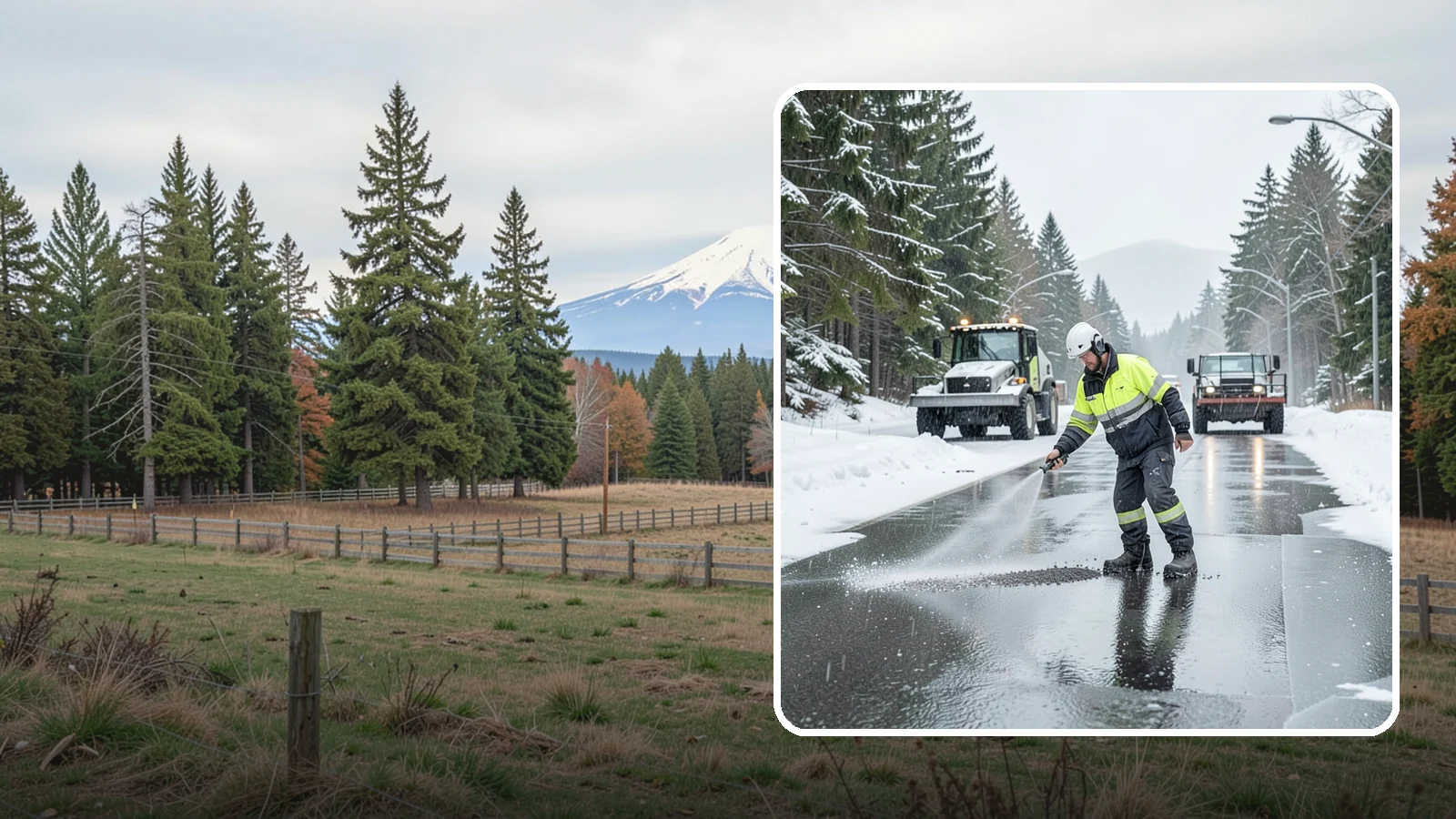
Liquid deicing fits that pattern. We apply it to dry pavement ahead of a forecast freeze. It is not a fix for every storm. Heavy snow still needs plowing, and the area has logged heavy snow on Feb 22, 2018 and Feb 5, 2017. It also logged an ice storm on Dec 23, 2022, and 2 ice storm reports since 2005. Edgewood gets about 3.38 Winter Weather Advisories a year.
What a visit involves:
- Checking the lot, walkways and entries for low spots and shaded areas
- Applying the treatment before the freeze
- Adding bulk salt or bagged ice melt where needed
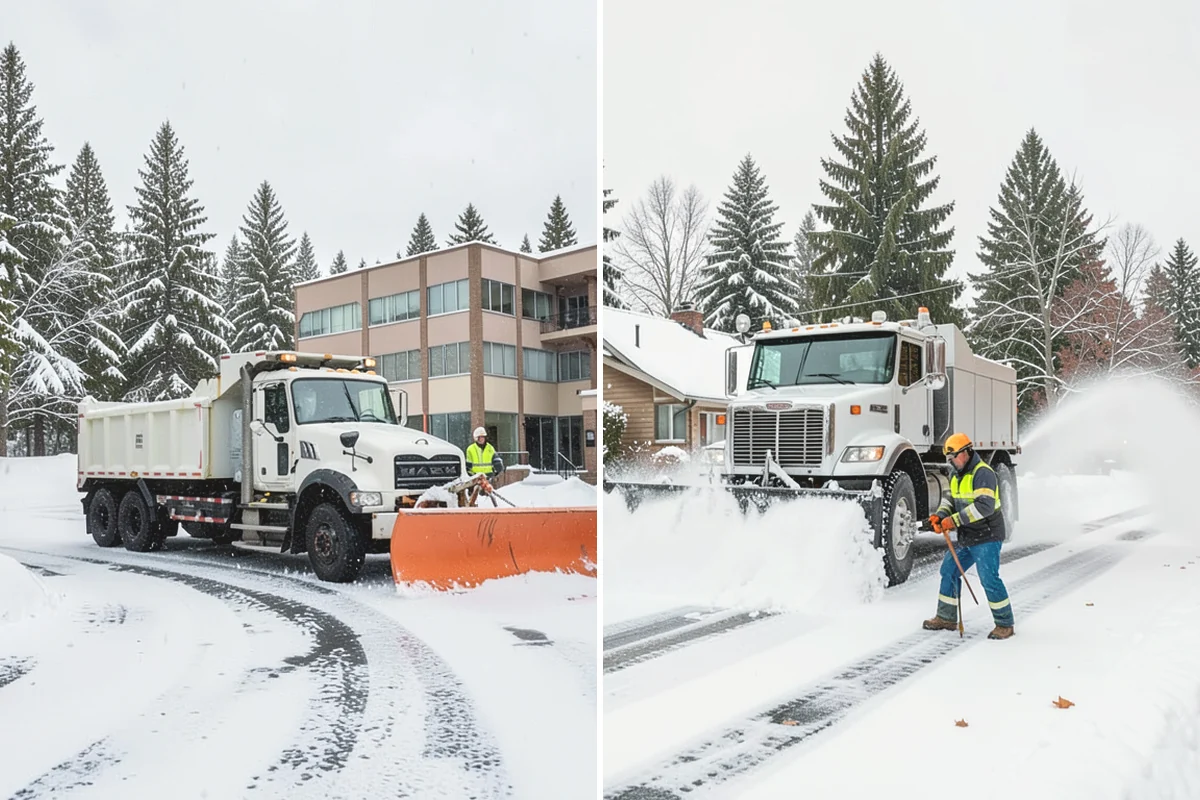
- Crew hand work on steps and sidewalks
Pricing: the trip charge for Edgewood (zone C) is $350 per dispatch, with a 2-hour minimum. Edgewood is 66 minutes from our Bothell yard, so we plan visits around the forecast. Bulk salt applied is $300 per ton. Bagged ice melt is $45 per 50 lb bag. Crew members are $110 per person-hour.