How Beet Juice Deicing Works in Gig Harbor
Gig Harbor does not get much snow. Snow is on the ground about 3 days a year. But about 3.19 light-snow days a year call for deicing, and 31 freezing nights give frost and black ice plenty of chances to form on shaded drives, steep grades and parking areas.
Since 2005, 2 ice storm reports have been logged for the area. Recent events include Heavy Snow on Dec 26, 2021 and Winter Weather on Dec 1, 2022. Short, sharp events like these are where pre-treating helps most.
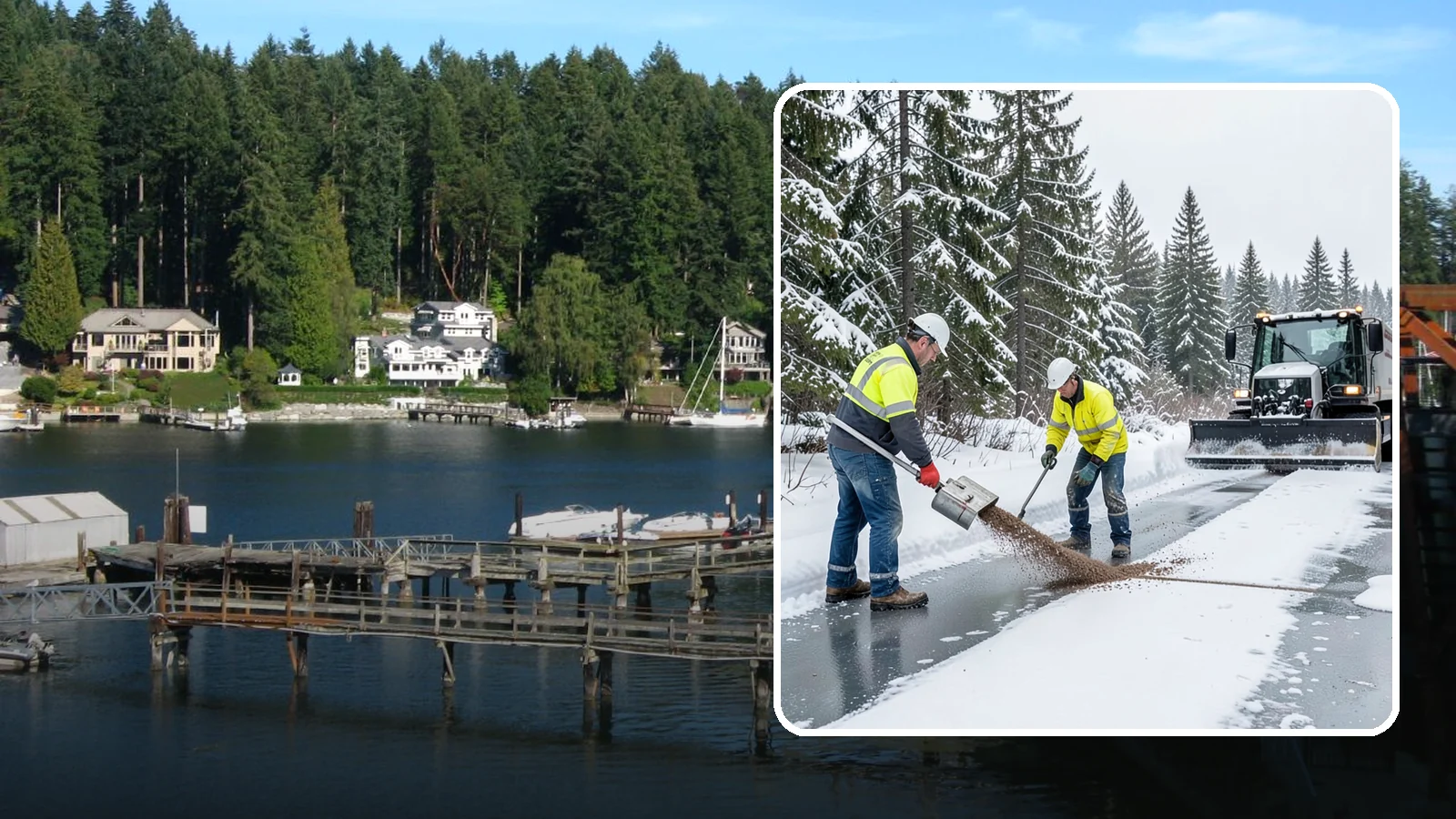
A typical visit at a Gig Harbor property involves:
- Walking the site to find slopes, shade and low spots where ice forms
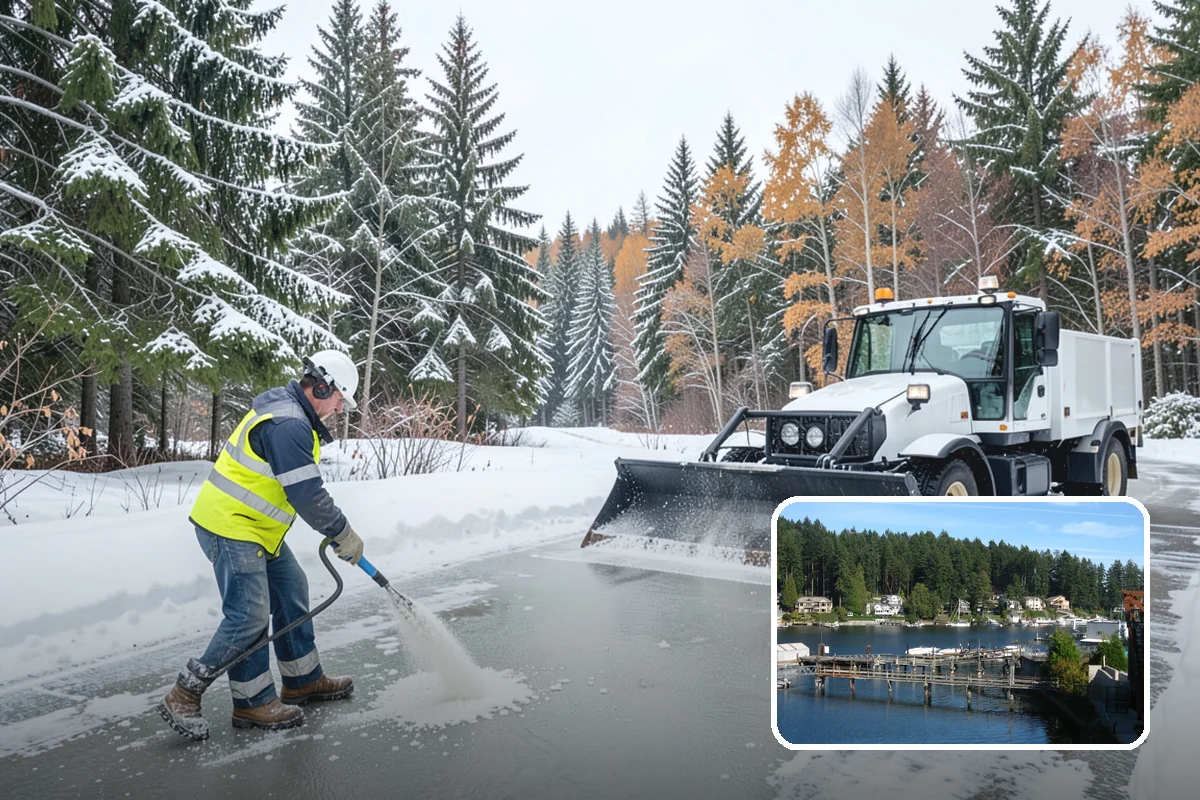
- Applying the liquid to driveways, entries and lots ahead of a forecast freeze
- Adding bagged ice melt or bulk salt where more is needed
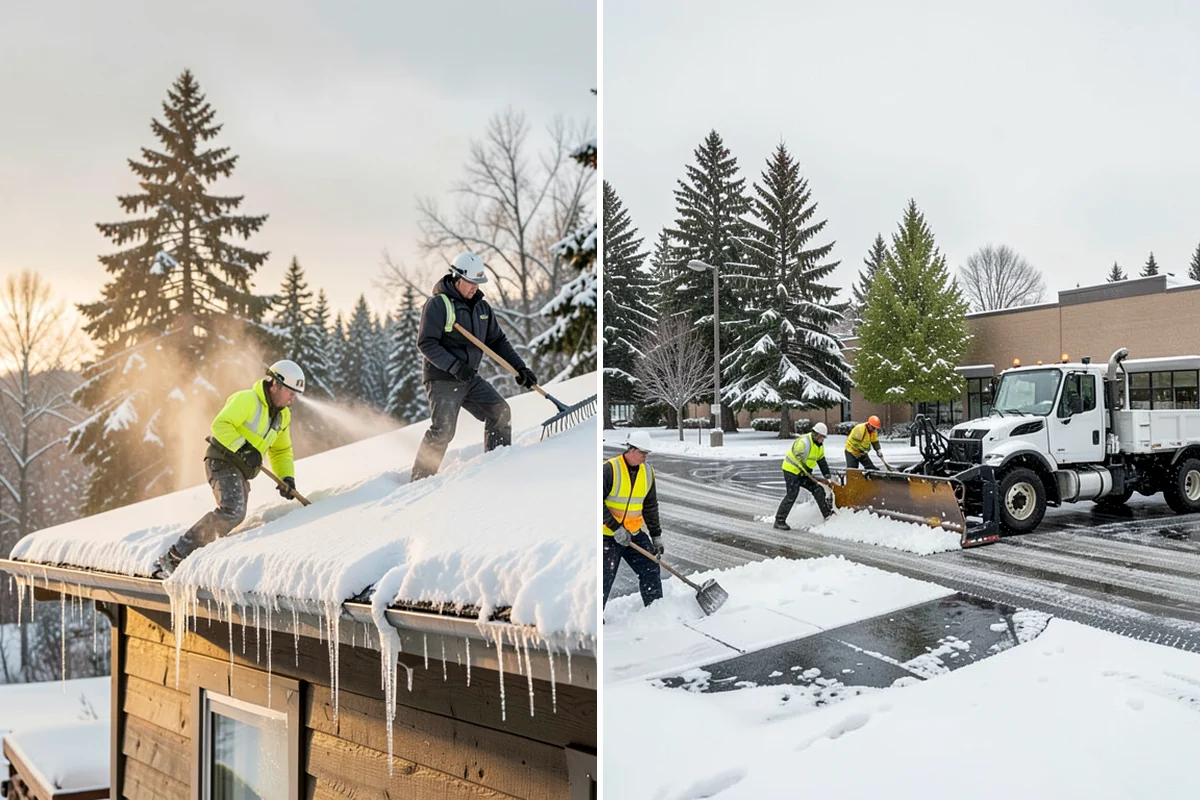
- Hand work on sidewalks and steps with a crew member
Pricing is listed plainly. A trip charge for Gig Harbor (zone C) is $350 per dispatch, and there is a 2-hour minimum per dispatch. Crew members are $110 per person-hour. Bagged ice melt is $45 per 50 lb bag, and bulk salt applied is $300 per ton. A plow and spreader truck with driver is $325 per hour. Gig Harbor is 84 minutes from our Bothell yard, so we plan visits around the forecast.