Keeping You Moving. Beyond Expectations.

Gig Harbor Hydrant Snow Clearing
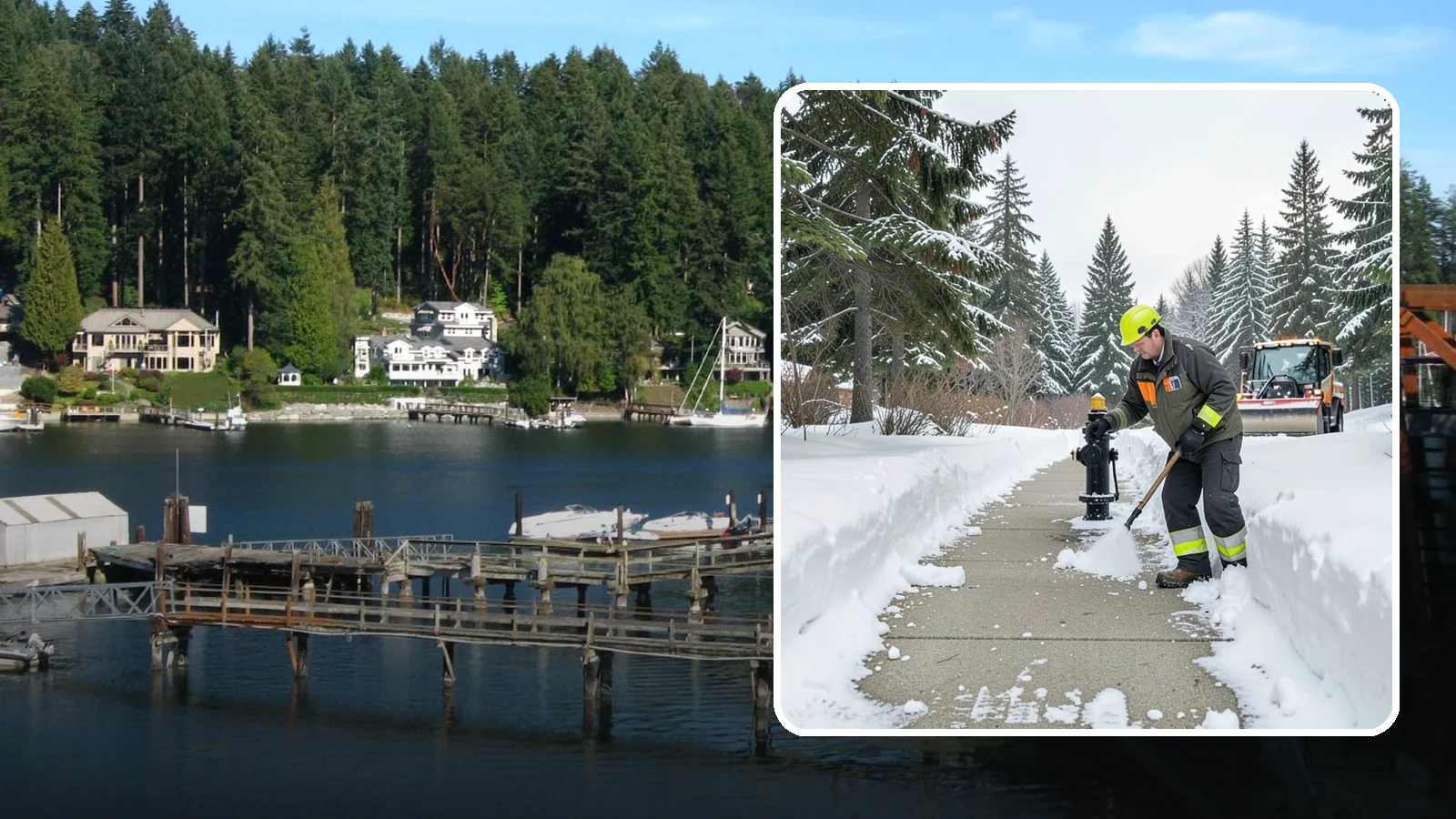
We clear snow and ice from fire hydrants so crews can connect without delay in an emergency.
Fire hydrants disappear fast under plowed snow and drifts. Washington Snow Removal clears hydrants in Gig Harbor so crews can find them and reach the connection. Gig Harbor has 2 mapped fire hydrants, each with lots, walks or entrances to keep clear.
We are based in Bothell, WA, and we are licensed, bonded and insured. Gig Harbor is 84 minutes from our yard. To talk through your hydrant, call 206-809-9669.
Why Gig Harbor walkways freeze
Average snowfall by month in Gig Harbor
Freezing rain and sleet reports near Gig Harbor
- Jan 17, 2024: Freezing Rain reported at 2 ENE Fox Island
- Dec 23, 2022: Freezing Rain reported at Gig Harbor
Sources: NOAA and National Weather Service records for Gig Harbor, 2005–2026.
Hydrant Snow Clearing in Gig Harbor: What the Job Involves
Hydrant clearing is hand work. A crew member digs out the hydrant, opens a path to it from the street or walk, and clears the area around the caps and connections. Where a plowed berm has buried it, we may bring in a compact track loader with operator.
Snow here is infrequent. Gig Harbor averages 5.5 in per season and only 1.5 days a year with 1 in or more. Snow is on the ground about 3 days a year. Still, 62% of winters have at least one 1-inch day, so a hydrant can be buried with little warning.
Ice matters as much as snow. There are about 31 freezing nights from Oct to Apr and 3.19 light-snow days a year that need deicing. Freezing rain was reported at Gig Harbor on Dec 23, 2022, and at Fox Island on Jan 17, 2024. Ice can lock a hydrant cap area or the path leading to it.
A typical visit may include:
- Shoveling the hydrant and a path to it
- Clearing nearby walks or entrances
- Spreading bagged ice melt where ice forms
Pricing: crew member $110 per person-hour, compact track loader with operator $175 per hour, ice melt $45 per 50 lb bag. The Gig Harbor trip charge is $350 per dispatch (zone C), with a 2-hour minimum per dispatch.
Prices in Gig Harbor
Billed by the hour for the crew and equipment on site, plus materials.
| Crew member (shoveling, sidewalks, hand work) | $110 / person-hour |
| Compact track loader with operator (Kubota SCL1000) | $175 / hour |
| Ice melt, bagged | $45 / 50 lb bag |
| Trip charge for Gig Harbor (zone C) | $350 / dispatch |
- 2-hour minimum per dispatch.
- Gig Harbor is 84 minutes from our Bothell yard.
Prices approved Oct 2026.
Mapped fire hydrants in Gig Harbor
Gig Harbor has 2 mapped fire hydrants on the map, each with lots, walks or entrances to keep clear.
Source: OpenStreetMap contributors, Oct 2026. Named sites are examples of local facilities, not customers.
Service Area
Gig Harbor
Benefits
Keeps hydrants visible and reachable for responding crews; Helps property owners meet fire-access clearance rules; Clears plow wash that often reburies hydrants; Maintains a safe working zone around connection points