Wheelchair Ramp Snow Removal in Kirkland, WA
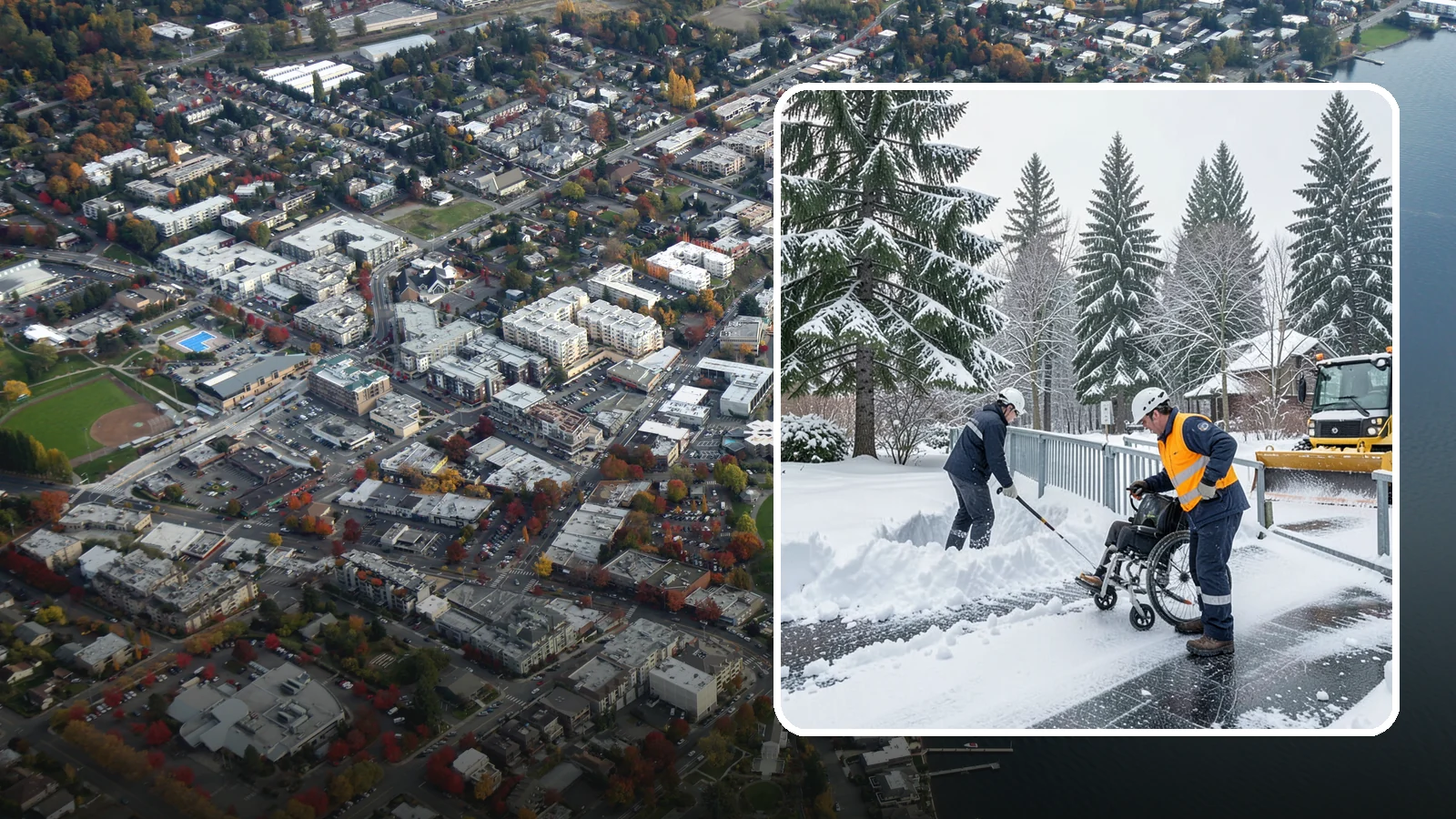
A ramp needs more care than a flat walkway. The surface is sloped, the landings are small, and the handrails and edges must stay clear. Our crew clears these areas by hand so the surface is not damaged and the grade stays usable.
- Shoveling the ramp surface, landings and door approach
- Clearing the path from the ramp to the street or driveway
- Spreading bagged ice melt on the ramp when ice is present
Kirkland does not see much snow. The average is 4.8 inches per season, and snow lies on the ground about 3 days a year. Only 62% of winters have at least one day of 1 inch or more, and the average is 1.6 such days a year. Still, heavy snow has hit the area on Nov 29, 2022, Feb 5, 2017 and Feb 8, 2014.
The bigger risk for a ramp is ice. Kirkland logs 29 freezing nights from October to April, so a thin glaze can form on a ramp with little warning. Ice melt is $45 per 50 lb bag.
Pricing is simple. The Kirkland trip charge is $200 per dispatch (zone A), and crew time is $110 per person-hour with a 2-hour minimum. Property owners should also know that KMC 19.20.020 makes the owner of property abutting a public sidewalk responsible for keeping it safe and free of ice and snow at all times.