Wheelchair Ramp Snow Removal in Redmond, WA
Redmond averages 7.8 in of snow per season and only 2.3 days a year with 1 in or more. Most winters are mild. But the big storms are real. Feb 11–13, 2019 brought 11.2 in, with 7.1 in on the biggest day. Dec 18–19, 2008 brought 10.3 in. A ramp with a slope and a narrow surface needs clearing quickly after storms like these.
Ice is the more common problem. Redmond sees 31 freezing nights between Oct and Apr, so wet ramp surfaces can freeze even when no snow falls. Only 1.1 days a year stay below freezing all day, so melting often happens by afternoon and refreezing happens overnight.
A typical visit includes:
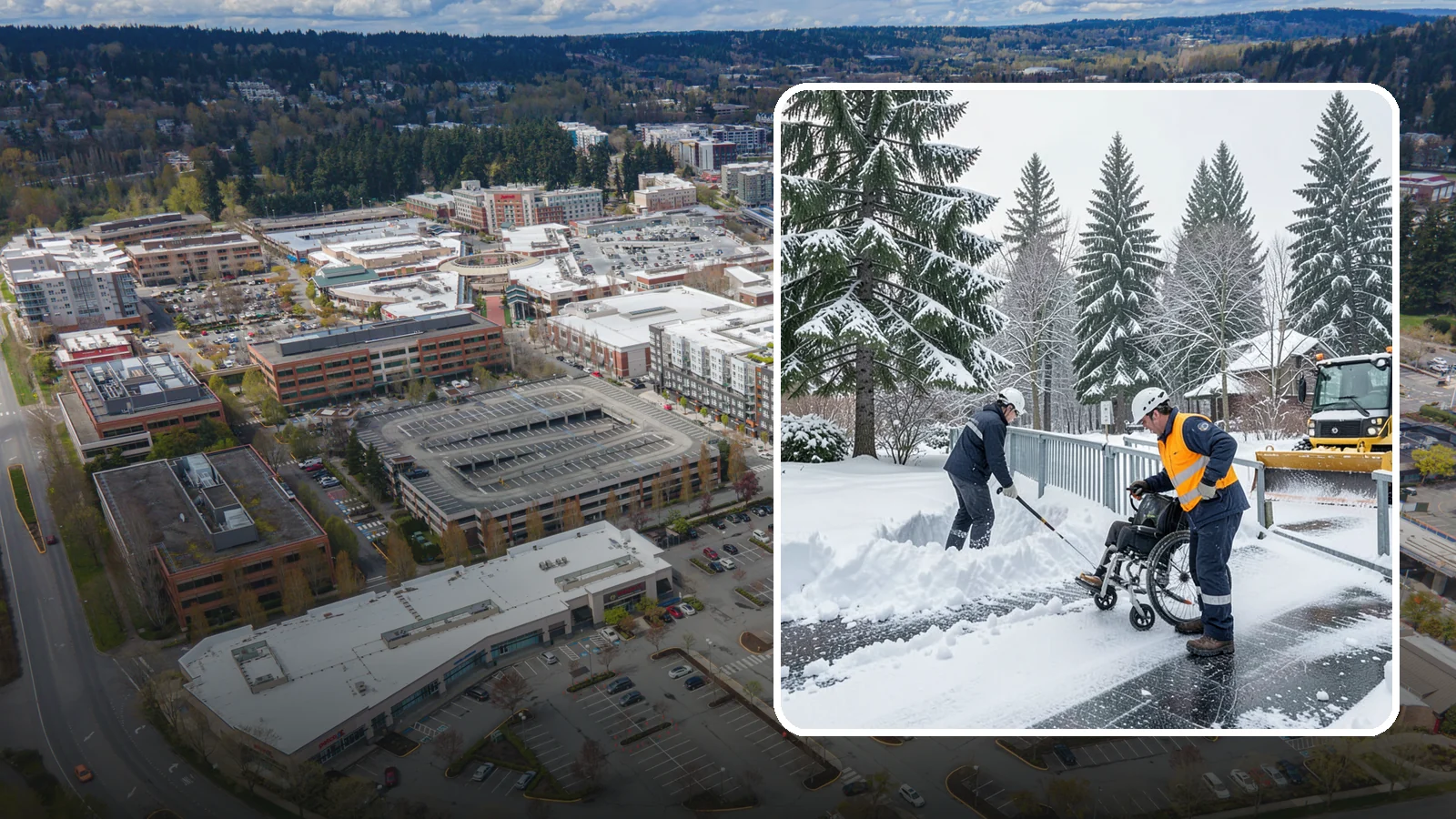
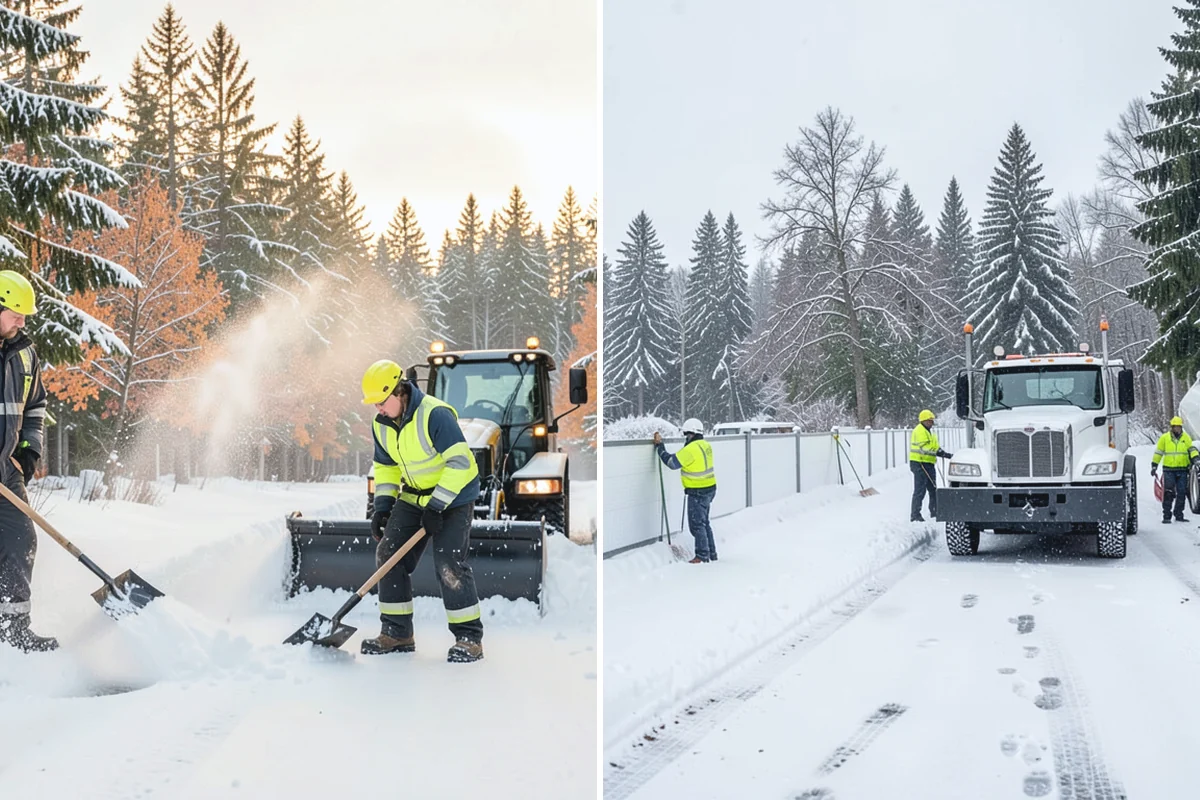
- Shoveling the ramp surface, landings and top and bottom approaches
- Clearing the path to the street, driveway or door
- Applying bagged ice melt where ice forms
- Hand work along rails and edges
Pricing is simple. Crew members are $110 per person-hour. Ice melt is $45 per 50 lb bag. The Redmond trip charge (zone A) is $200 per dispatch, and each dispatch has a 2-hour minimum. If a larger drive or parking area needs clearing too, a Kubota SCL1000 compact track loader with operator is $175 per hour.