Wheelchair Ramp Snow Removal in Sammamish, WA
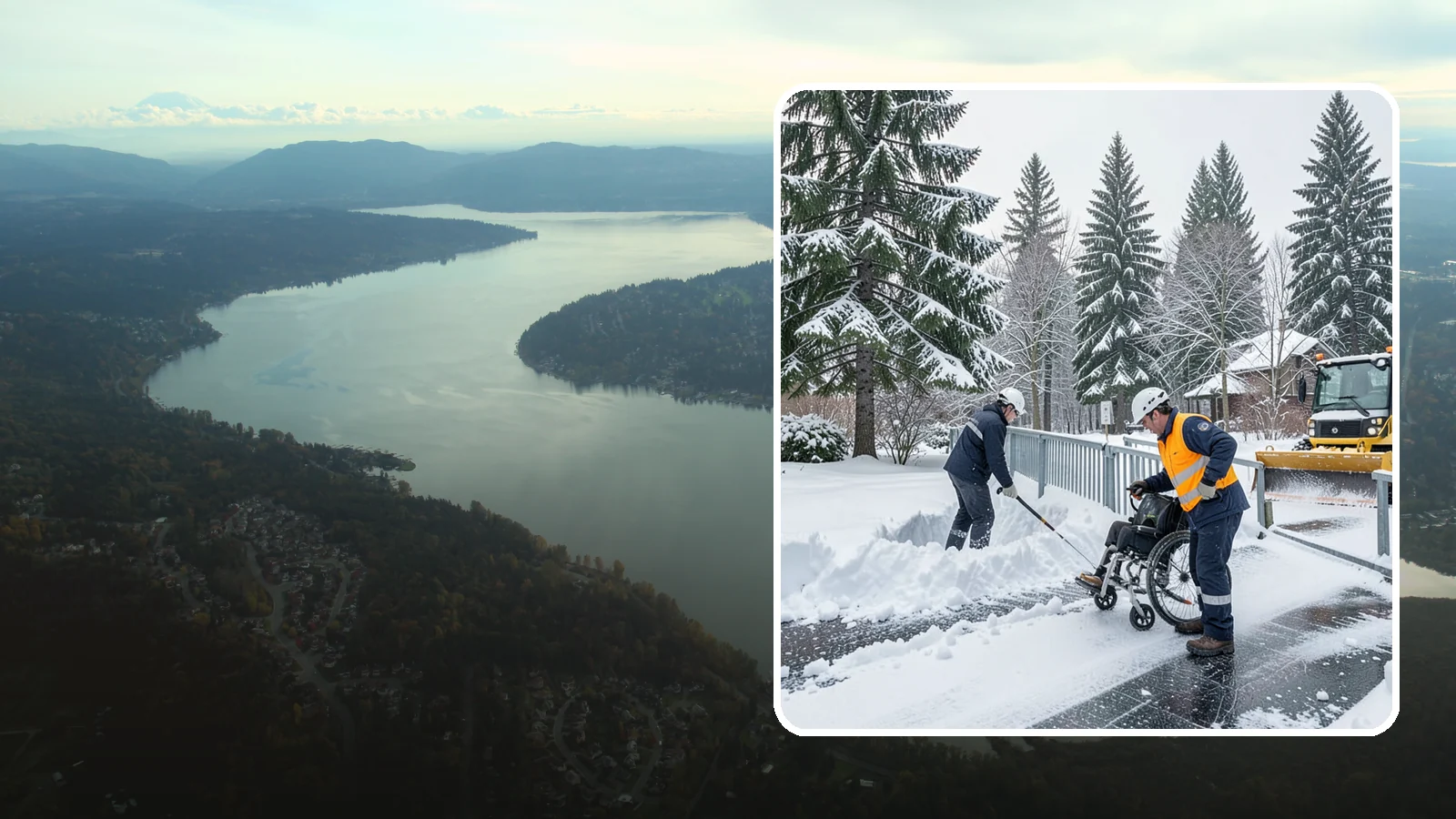
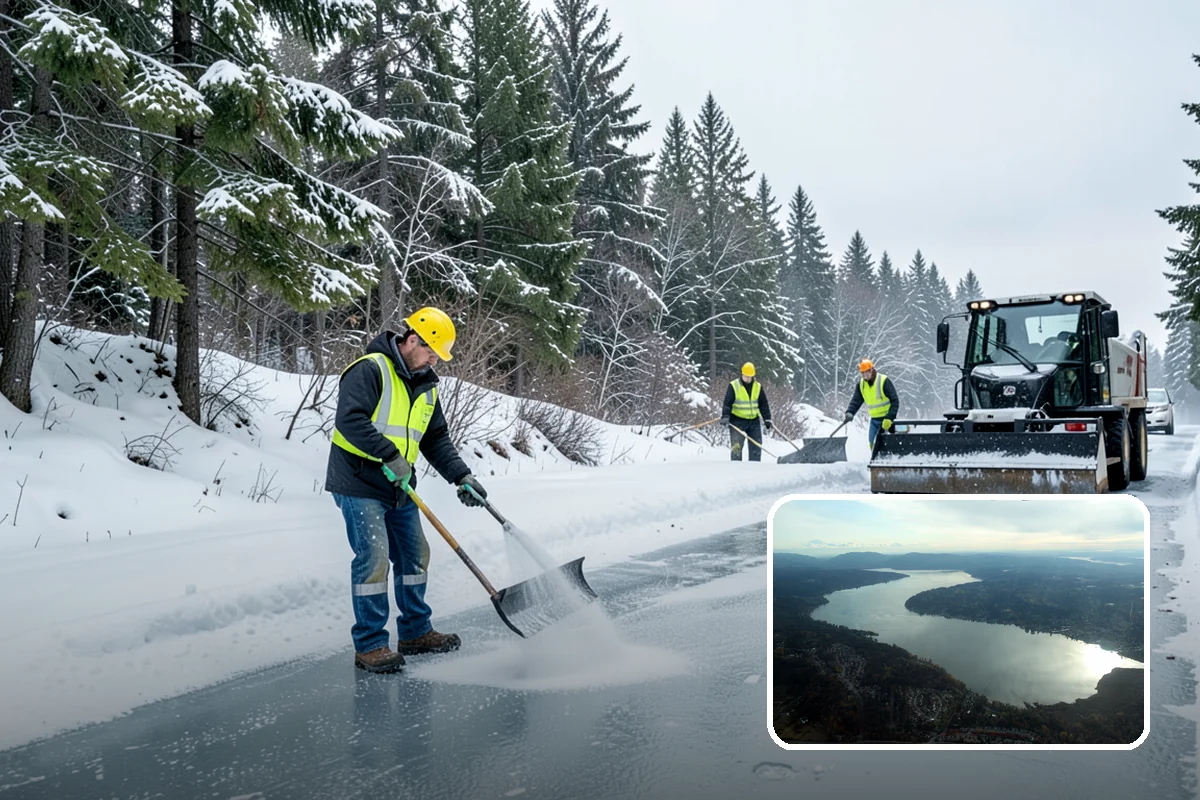
Ramps need different work than a driveway. Machines can damage the surface or the rails, so most of the job is done by hand. A crew member shovels the ramp, the top and bottom landings, and the path to the street or driveway. We then spread bagged ice melt to hold the surface clear.
Sammamish snow comes in short bursts. The area sees 2.7 days a year with 1 in or more of snow, and snow stays on the ground about 6 days a year. About 76% of winters have at least one 1-inch day. Recent events include Heavy Snow on Nov 29, 2022, a Winter Storm on Jan 12, 2020, and Heavy Snow on Feb 4, 2019 and Feb 8, 2014.
The bigger risk is ice. There are 34 freezing nights between October and April. Melted snow can refreeze on a ramp overnight, even when little snow fell.
Sammamish code (SMC 16.25.200(3)) requires walkways, stairs and similar areas to be kept free from hazardous conditions. It states no deadline.
- Crew member, shoveling and hand work: $110 per person-hour
- Ice melt, bagged: $45 per 50 lb bag
- Trip charge for Sammamish (zone B): $275 per dispatch
- 2-hour minimum per dispatch