Keeping You Moving. Beyond Expectations.

Lake Forest Park Commercial Stair Clearing
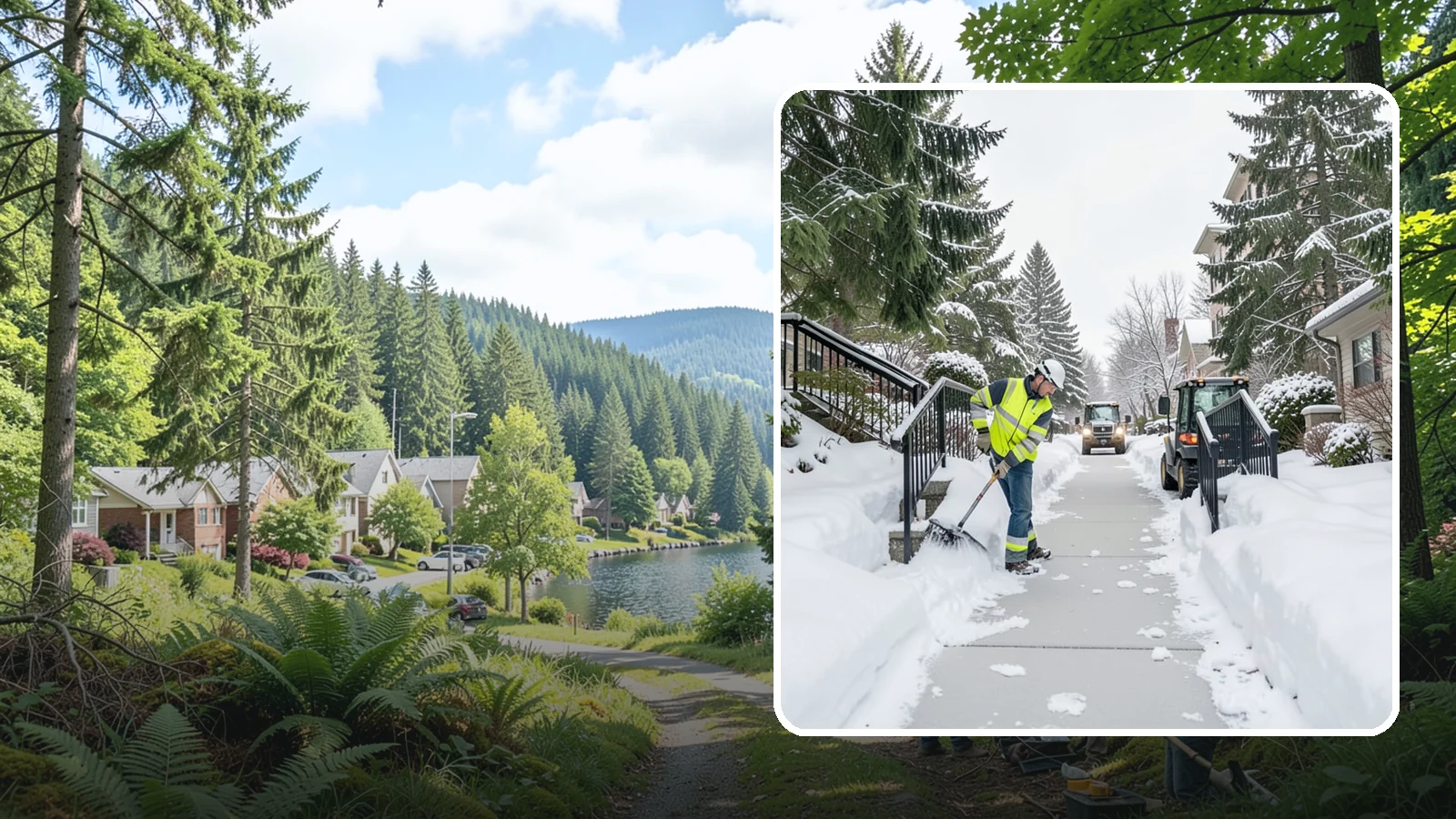
Keep exterior stairs and landings on your commercial property safe and slip-free through Western Washington ice events.
Washington Snow Removal clears snow and ice from commercial stairs in Lake Forest Park. We are based in Bothell, 18 minutes from the city, and we are licensed, bonded and insured. Crews shovel treads and landings, clear handrail areas and apply ice melt where it is needed.
Lake Forest Park gets about 5.3 in of snow per season, but freezing nights are more common than deep snow. Stairs ice over quickly and stay slick in shade. Call 206-809-9669 to set up service for your building.
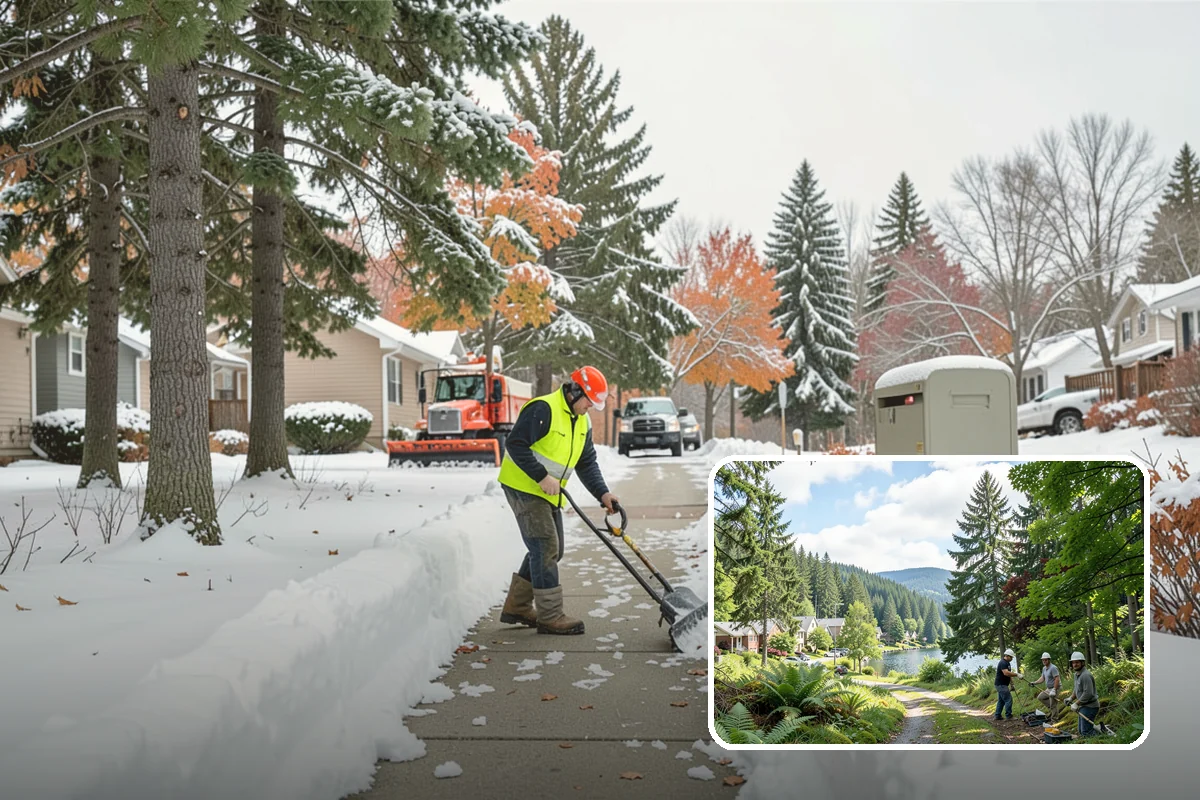
Snow and ice on Lake Forest Park sidewalks
Recent winter events logged for the Lake Forest Park area
- Feb 4, 2025: Winter Weather
- Dec 23, 2022: Ice Storm
- Dec 19, 2022: Winter Weather
- Dec 26–28, 2021: Cold/Wind Chill; Heavy Snow
Sources: NOAA and National Weather Service records for Lake Forest Park, 2005–2026.
Commercial Stair Clearing in Lake Forest Park: What It Involves
Stairs are hand work. A loader cannot reach them, so our crew members shovel each tread, landing and ramp edge, then treat the surface with ice melt. We also clear the path from the parking area to the stair so people do not step into a drift or a frozen puddle.
The local pattern shapes the job. Lake Forest Park averages 1.7 days a year with 1 in or more of snow, and about 67% of winters have at least one such day. Light-snow days that need deicing average 2.52 a year, and there are about 30 freezing nights between October and April. That means many calls are about thin ice, not deep snow. Recent events fit this: an ice storm on Dec 23, 2022, and heavy snow on Dec 26, 2021.
The city sidewalk rule, LFPMC 8.12.040(A), requires snow and ice to be removed from public sidewalks within a reasonable time after it stops being deposited. Clear stairs and walks help you meet that standard.
- Crew member: $110 per person-hour
- Ice melt, bagged: $45 per 50 lb bag
- Trip charge, Lake Forest Park (zone A): $200 per dispatch
- 2-hour minimum per dispatch
Prices in Lake Forest Park
Billed by the hour for the crew and equipment on site, plus materials.
| Crew member (shoveling, sidewalks, hand work) | $110 / person-hour |
| Compact track loader with operator (Kubota SCL1000) | $175 / hour |
| Ice melt, bagged | $45 / 50 lb bag |
| Trip charge for Lake Forest Park (zone A) | $200 / dispatch |
- 2-hour minimum per dispatch.
- Lake Forest Park is 18 minutes from our Bothell yard.
Prices approved Oct 2026.
Service Area
Lake Forest Park
Benefits
Hand-cleared treads and landings on every run; Traction material applied the full length of stairs; Attention to handrails and top-and-bottom transitions; Prevention of high-severity slip-and-fall injuries