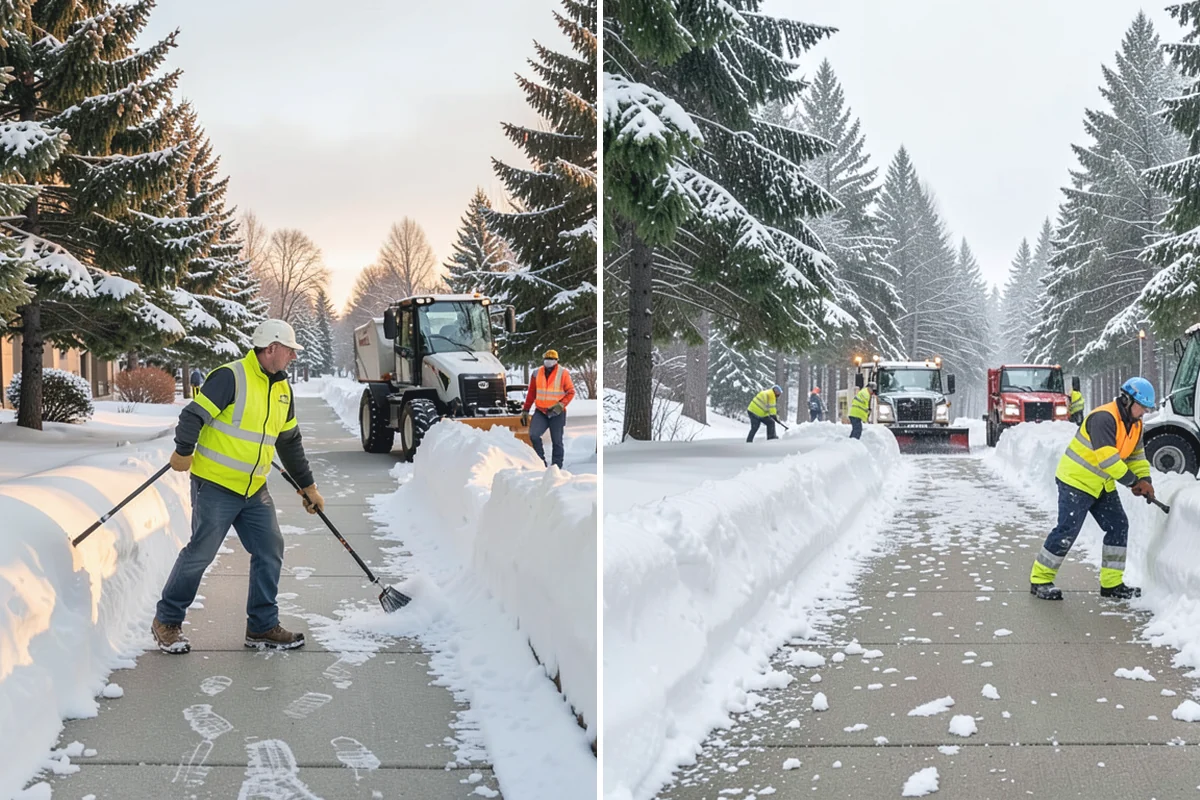
Keeping You Moving. Beyond Expectations.

Redmond Ice Storm Response
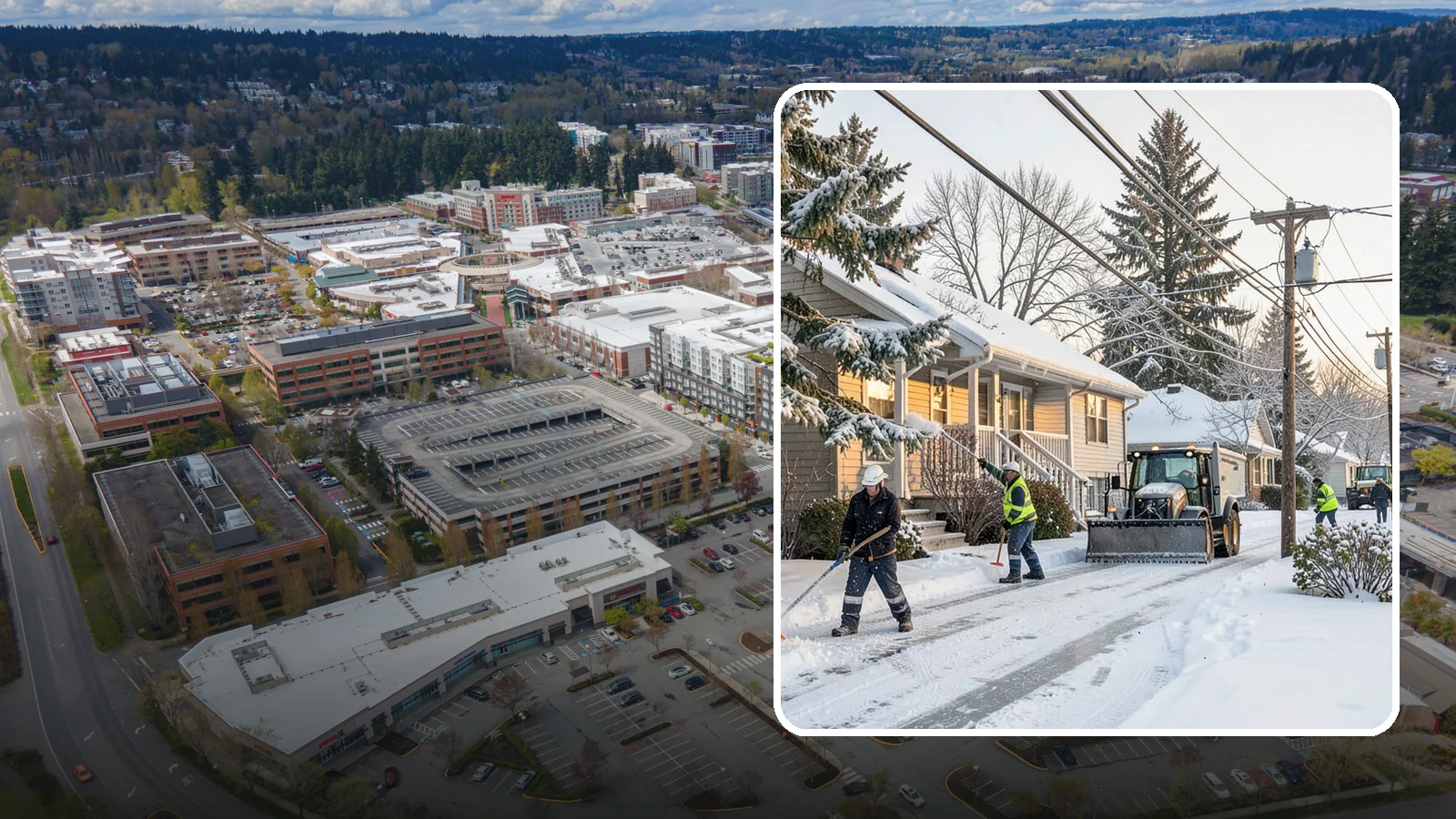
We mobilize fast when a Western Washington ice storm glazes your property in a hard, hazardous shell.
Ice Storm Response in Redmond covers de-icing and clearing for parking lots, driveways, walkways and entrances when ice builds up on the ground. Washington Snow Removal is based in Bothell, WA, and is licensed, bonded and insured. Redmond is 27 minutes from our yard.
Redmond sees 31 freezing nights between October and April. Snow is light on average at 7.8 in a season, so ice often matters as much as depth. Call 206-809-9669 to set up a dispatch.
How hard Redmond storms hit
Biggest storms in Redmond since 2005
- Feb 11–13, 2019: 11.2 in total, 7.1 in on the biggest day
- Dec 18–19, 2008: 10.3 in total, 6.3 in on the biggest day
- Jan 12–14, 2020: 9.0 in total, 6.2 in on the biggest day
- Feb 4–5, 2019: 8.3 in total, 7.9 in on the biggest day
Sources: NOAA and National Weather Service records for Redmond, 2005–2026.
How Ice Storm Response Works in Redmond, WA
Redmond averages 7.8 in of snow a season and only 2.3 days a year with 1 in or more. Winter Weather Advisories are more common, at 4.29 a year, while Winter Storm Warnings come about 1.05 times a year. With 31 freezing nights from October to April, meltwater and wet pavement can refreeze after dark.
Big events do happen. The largest storm since 2005 was Feb 11–13, 2019, with 11.2 in total. The biggest single day was 7.9 in during Feb 4–5, 2019. Ice response at a Redmond property usually means a mix of plowing, spreading and hand work, depending on the site.
- Plowing packed snow and slush with a Ram 3500 or Ram 5500 truck
- Applying bulk salt or bagged ice melt to lots, ramps and walks
- Hand work at entrances, stairs and sidewalks by crew members
- Tight areas handled with a Kubota SCL1000 compact track loader
Pricing is by the hour. Plow trucks run $250 to $325 an hour with a driver, the loader is $175 an hour, and crew members are $110 per person-hour. Bulk salt applied is $300 a ton, and bagged ice melt is $45 per 50 lb bag. Redmond is zone A, with a $200 trip charge per dispatch. Each dispatch has a 2-hour minimum.
Prices in Redmond
Billed by the hour for the crew and equipment on site, plus materials.
| Plow truck with driver (Ram 3500) | $250 / hour |
| Plow and spreader truck with driver (Ram 5500) | $325 / hour |
| Compact track loader with operator (Kubota SCL1000) | $175 / hour |
| Crew member (shoveling, sidewalks, hand work) | $110 / person-hour |
| Ice melt, bagged | $45 / 50 lb bag |
| Bulk salt, applied | $300 / ton |
| Trip charge for Redmond (zone A) | $200 / dispatch |
- 2-hour minimum per dispatch.
- Redmond is 27 minutes from our Bothell yard.
Prices approved Oct 2026.
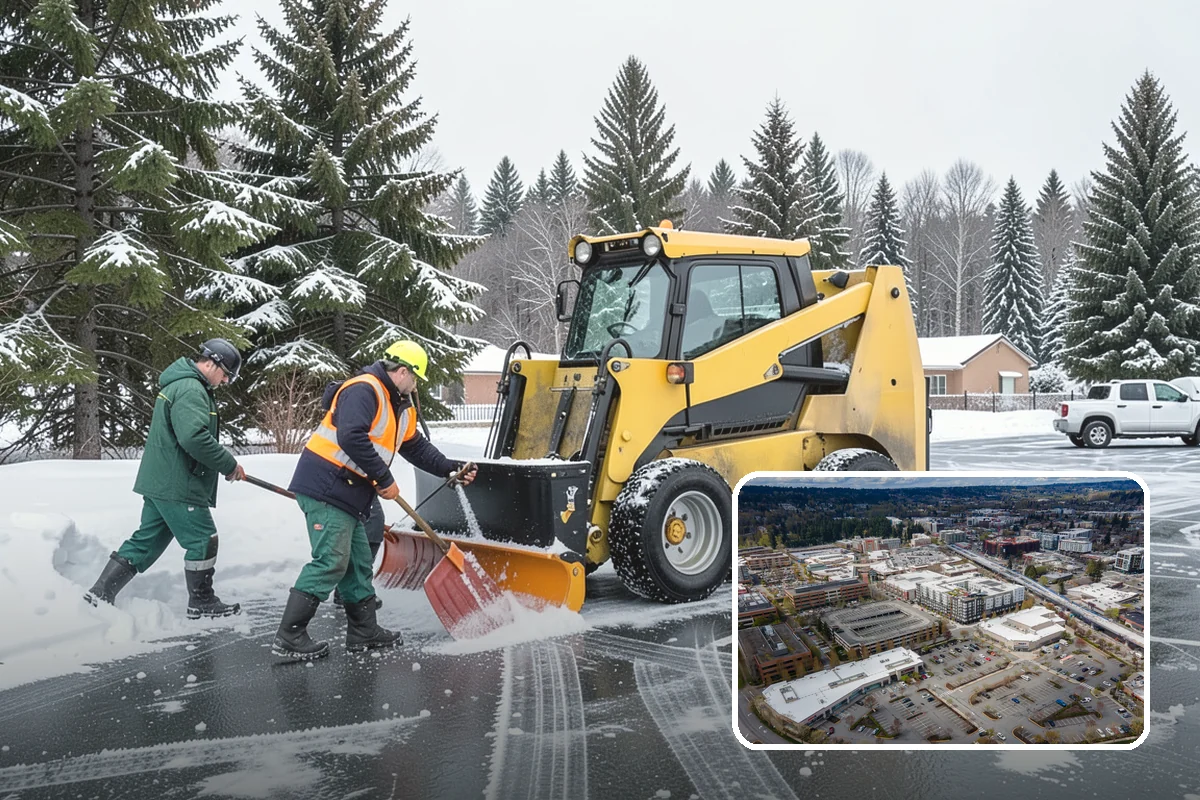
Service Area
Redmond
Benefits
Fast dispatch during active glazing conditions when traction disappears; Deicer chemistry chosen to break the ice-to-pavement bond instead of scraping over it; Priority treatment of high-traffic entrances to cut fall risk; Coordination with limb and debris clearing common to regional ice events