Emergency Snow Removal for Renton Commercial Properties
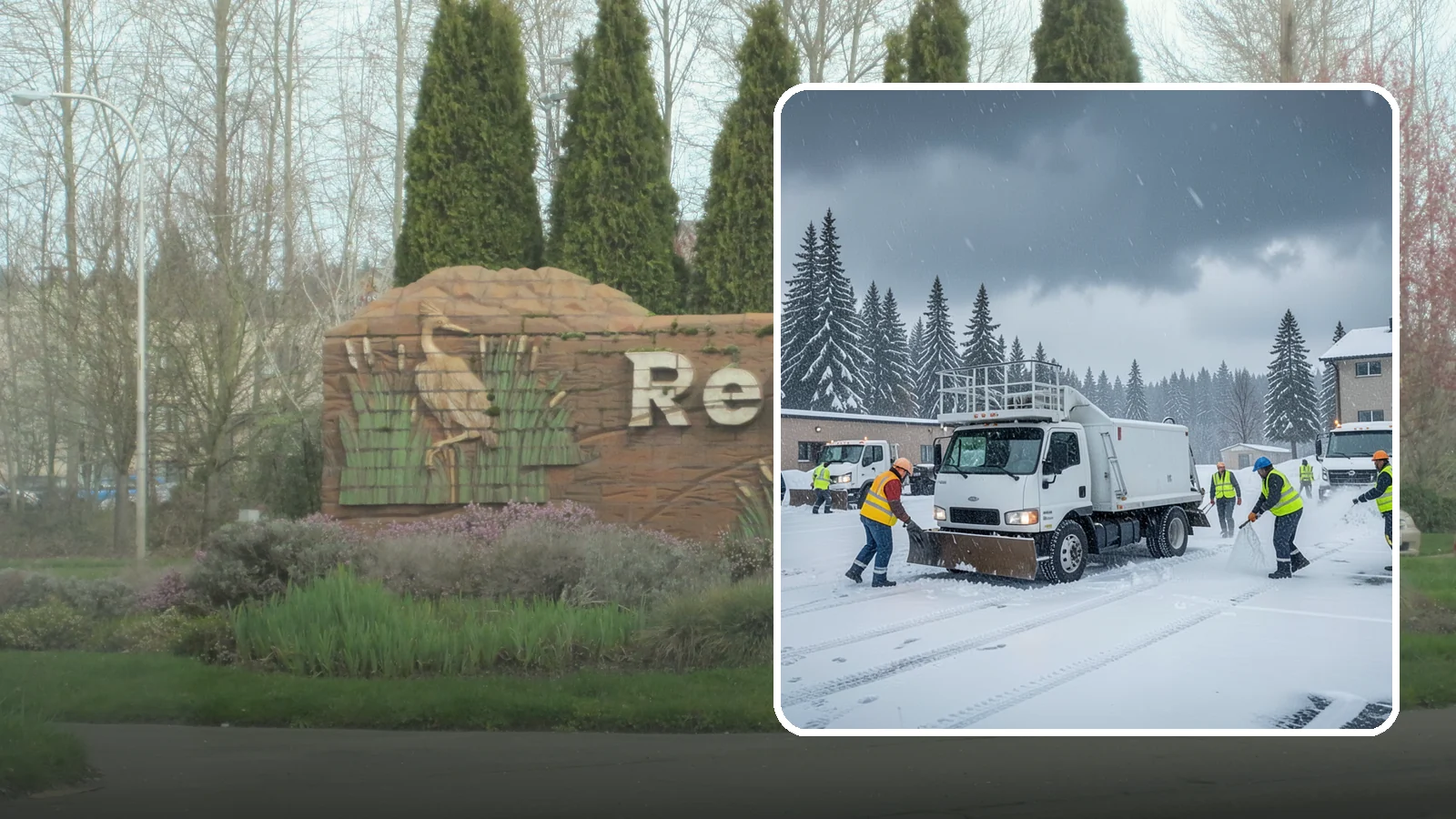
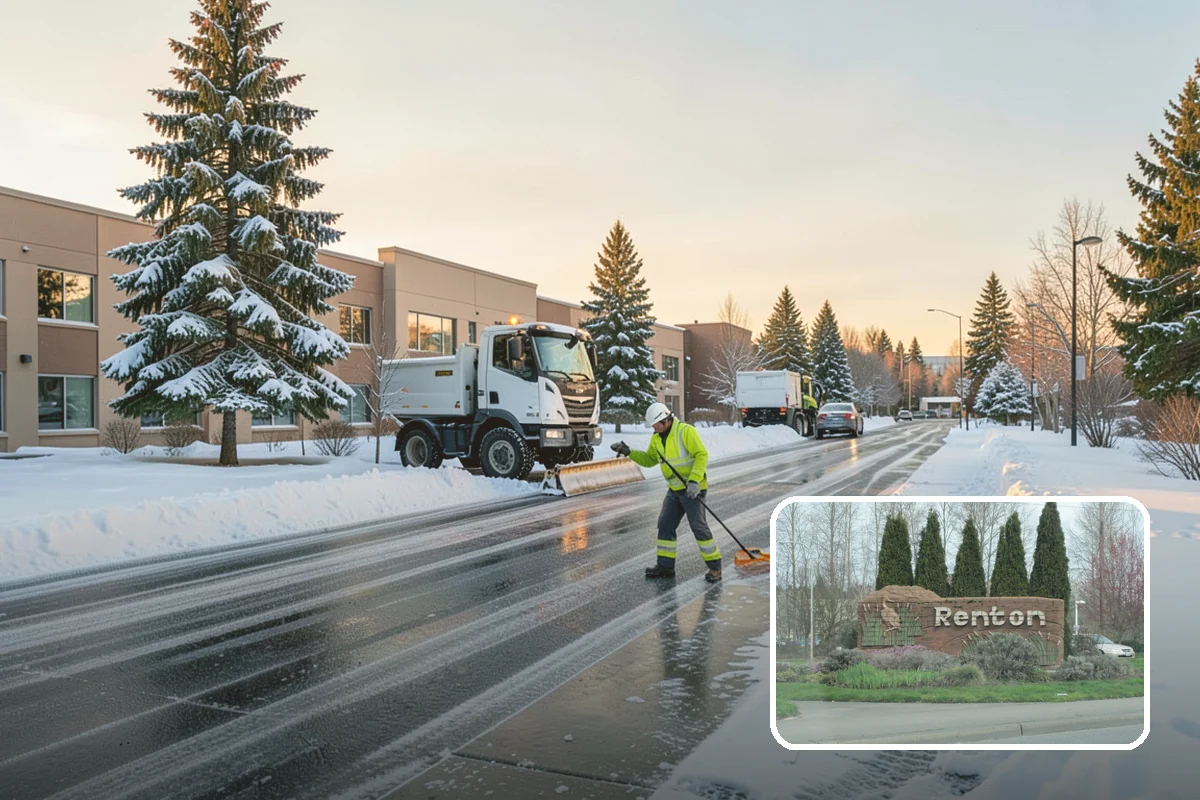
Emergency service means we come to your property when snow or ice has already built up. In Renton that usually means parking lots, loading areas, driveways and sidewalks at offices, retail sites and warehouses.
The local pattern shapes the work. Renton sees about 1.9 days a year with 1 in or more of snow, and 29 freezing nights between October and April. Snow is rare, so many sites have no plan in place. Events like Heavy Snow on Nov 29, 2022 and Winter Weather on Dec 19, 2022 show how it can arrive. Since 2005 there have been 15 winter storm and heavy snow reports, and Winter Storm Warnings average 0.76 a year. Freezing nights also mean melted snow can refreeze into ice, so spreading is often part of the job.
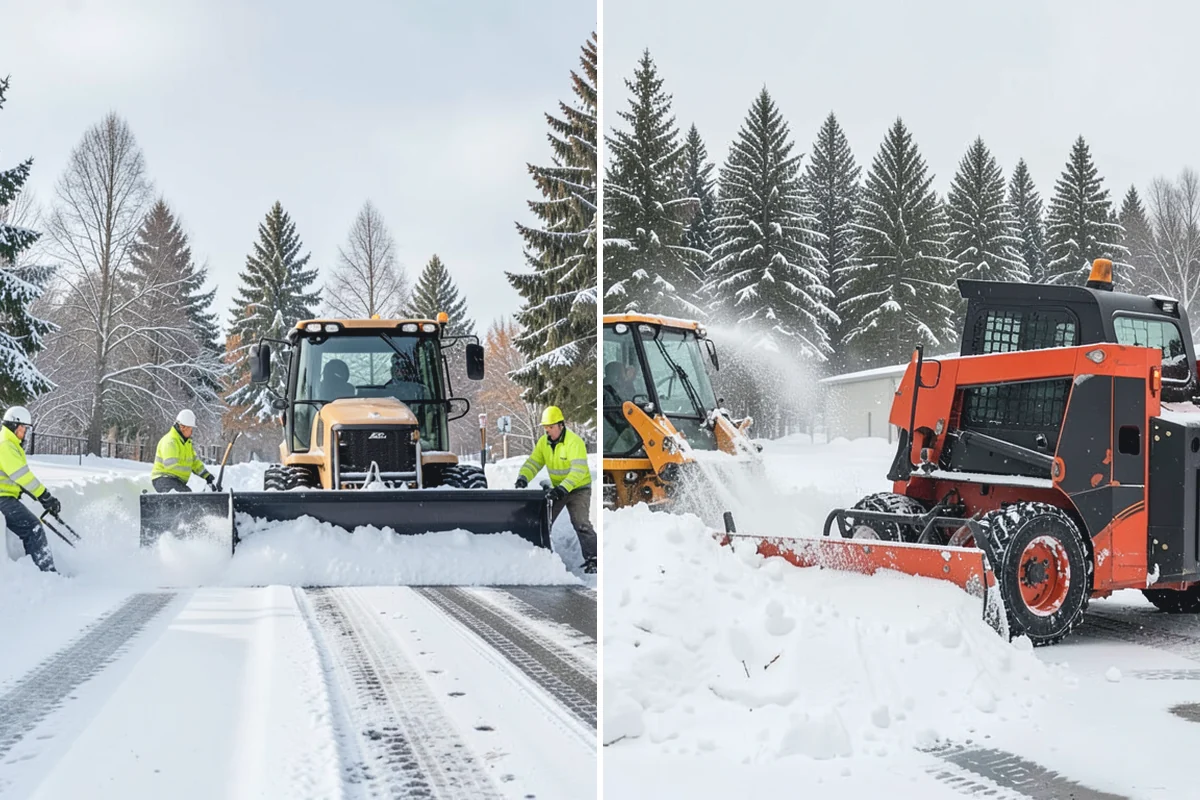
Depending on the site, a dispatch may include:
- Plow truck with driver (Ram 3500), $250 / hour
- Plow and spreader truck with driver (Ram 5500), $325 / hour
- Compact track loader with operator (Kubota SCL1000), $175 / hour
- Crew member for shoveling and sidewalks, $110 / person-hour
- Bagged ice melt, $45 / 50 lb bag, or bulk salt applied, $300 / ton
The trip charge for Renton (zone B) is $275 per dispatch. Each dispatch has a 2-hour minimum.