Black Ice Treatment in SeaTac: What the Service Involves
SeaTac averages only 5.9 inches of snow per season. Snow on the ground shows up about 3 days a year. Yet the area logs 28 freezing nights from October to April, and about 2.29 light-snow days a year need deicing. That mix is where black ice comes from: a damp surface, a cold night, and no visible warning.
Recent events in the SeaTac area include a Winter Storm on Feb 12, 2021, Cold/Wind Chill on Dec 27, 2021, and Winter Weather on Dec 19, 2022. Since 2005, 3 ice storm reports have been logged.
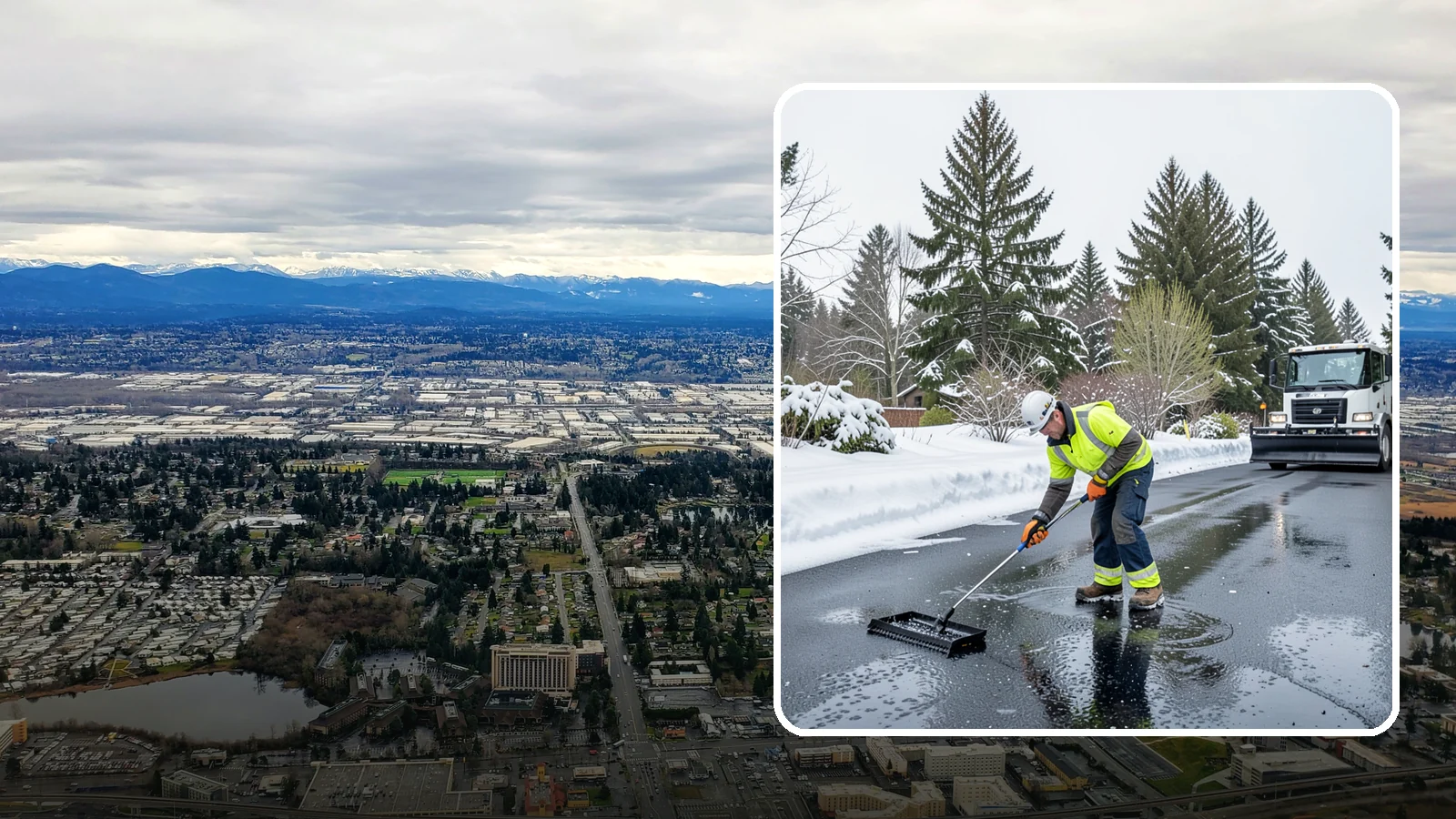
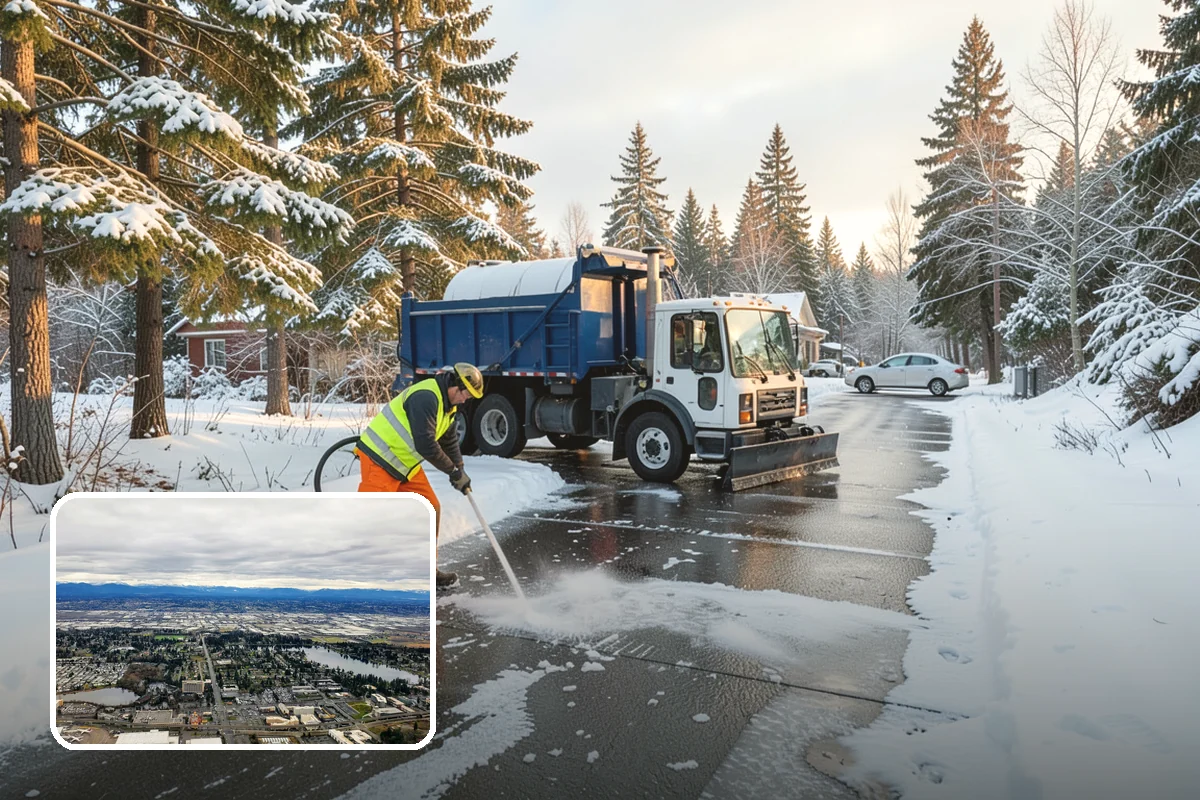
At a SeaTac property, treatment usually focuses on the spots where people and vehicles slow down or turn:
- Parking lot entrances and drive lanes
- Sidewalks and building entries
- Ramps, stairs and loading areas
- Shaded spots and low points where water collects
We apply bulk salt or bagged ice melt, and crew members can handle walkways and hand work. Pricing is listed up front: bulk salt applied is $300 per ton, bagged ice melt is $45 per 50 lb bag, and crew members are $110 per person-hour. A spreader truck with driver (Ram 5500) is $325 per hour. The SeaTac trip charge (zone B) is $275 per dispatch, with a 2-hour minimum per dispatch.