Keeping You Moving. Beyond Expectations.

Seattle Boardwalk Snow Clearing
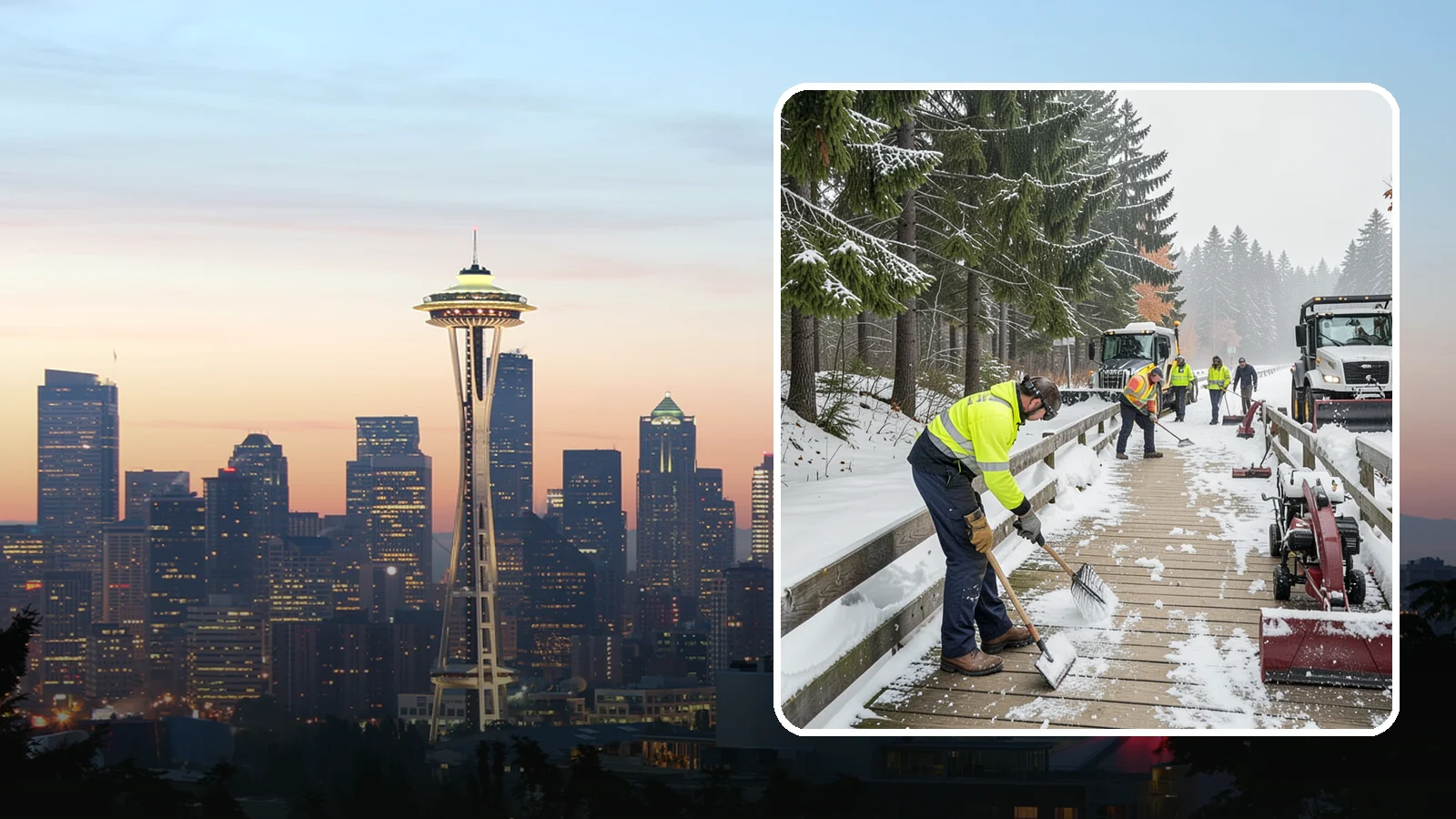
Gentle snow clearing of wood and composite boardwalks where blades and harsh deicers would damage the decking.
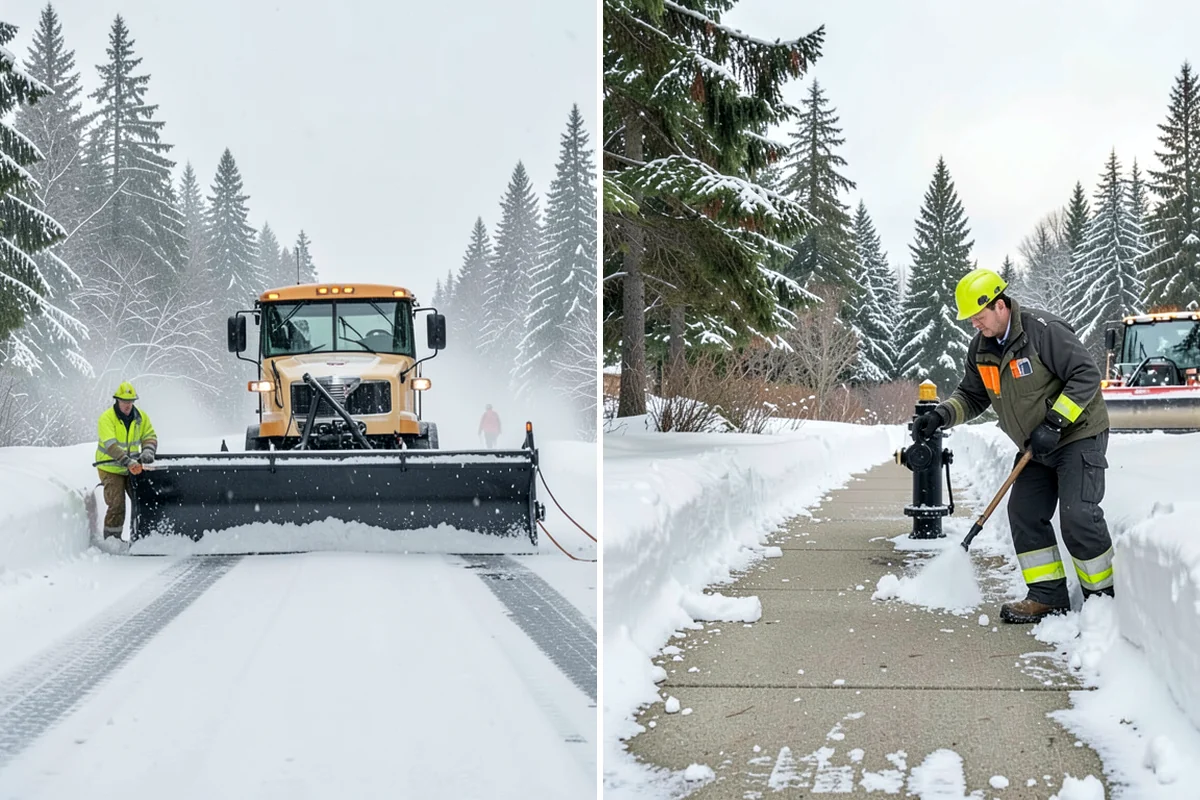
Boardwalks in Seattle are wood, composite or metal surfaces that get slick fast. Waterfront walkways, dock approaches, and walkways at multifamily and commercial sites all need careful hand work. Washington Snow Removal clears them with shovels and ice melt, not heavy blades that can chew up the boards.
We are licensed, bonded and insured, and we dispatch from our Bothell yard, 37 minutes from Seattle. Call 206-809-9669 to set up boardwalk clearing for your property.
Snow and ice on Seattle sidewalks
Recent winter events logged for the Seattle area
- Feb 4, 2025: Winter Weather
- Oct 28, 2023: Cold/Wind Chill
- Nov 29–Dec 1, 2022: Winter Weather; Heavy Snow
- Dec 26–28, 2021: Cold/Wind Chill; Heavy Snow
Sources: NOAA and National Weather Service records for Seattle, 2005–2026.
How we clear boardwalks in Seattle, WA
Boardwalk work is mostly hand work. A crew member shovels the surface, edges and stairs, then spreads bagged ice melt where ice is likely to form. We avoid scraping hard across the boards, since that can damage the surface.
Seattle gets little snow. The average is 5.3 in per season, and only 1.6 days a year bring 1 in or more. Snow is on the ground about 3 days a year. The bigger problem is ice. Seattle has 27 freezing nights between Oct and Apr, and a wet boardwalk can freeze overnight with no snow at all. Recent logged events include Heavy Snow on Dec 26, 2021 and Cold/Wind Chill on Oct 28, 2023.
Because snow is rare, most calls are short and sudden. Seattle code (SMC 15.48.010) makes the owner or occupant responsible for removing snow and ice on sidewalks abutting the property in a timely manner. Boardwalks that serve as public walkways at your property are worth treating with the same urgency.
Pricing is posted openly:
- Crew member: $110 per person-hour
- Ice melt, bagged: $45 per 50 lb bag
- Trip charge for Seattle (zone B): $275 per dispatch
- Compact track loader with operator (Kubota SCL1000): $175 per hour, for larger open areas nearby
Each dispatch has a 2-hour minimum.
Prices in Seattle
Billed by the hour for the crew and equipment on site, plus materials.
| Crew member (shoveling, sidewalks, hand work) | $110 / person-hour |
| Compact track loader with operator (Kubota SCL1000) | $175 / hour |
| Ice melt, bagged | $45 / 50 lb bag |
| Trip charge for Seattle (zone B) | $275 / dispatch |
- 2-hour minimum per dispatch.
- Seattle is 37 minutes from our Bothell yard.
Prices approved Oct 2026.
Service Area
Seattle
Benefits
Protects wood and composite decking from blade damage; Avoids chloride deicers that corrode fasteners; Keeps plank gaps clear for drainage; Uses sand or grit that will not contaminate the water below