Black Ice Treatment in Tukwila: What It Involves
Tukwila does not get much deep snow. The average is 5.4 in per season, and only 1.8 days a year bring 1 in or more. Ice is the bigger problem. The area sees 26 freezing nights from October to April, about 2.62 light-snow days a year that need deicing, and 3.29 Winter Weather Advisories a year. Three ice storm reports have been logged since 2005.
Recent events show how quickly conditions change. The Tukwila area logged Heavy Snow on Dec 26, 2021, Heavy Snow on Nov 29, 2022, and Winter Weather on Dec 1, 2022.
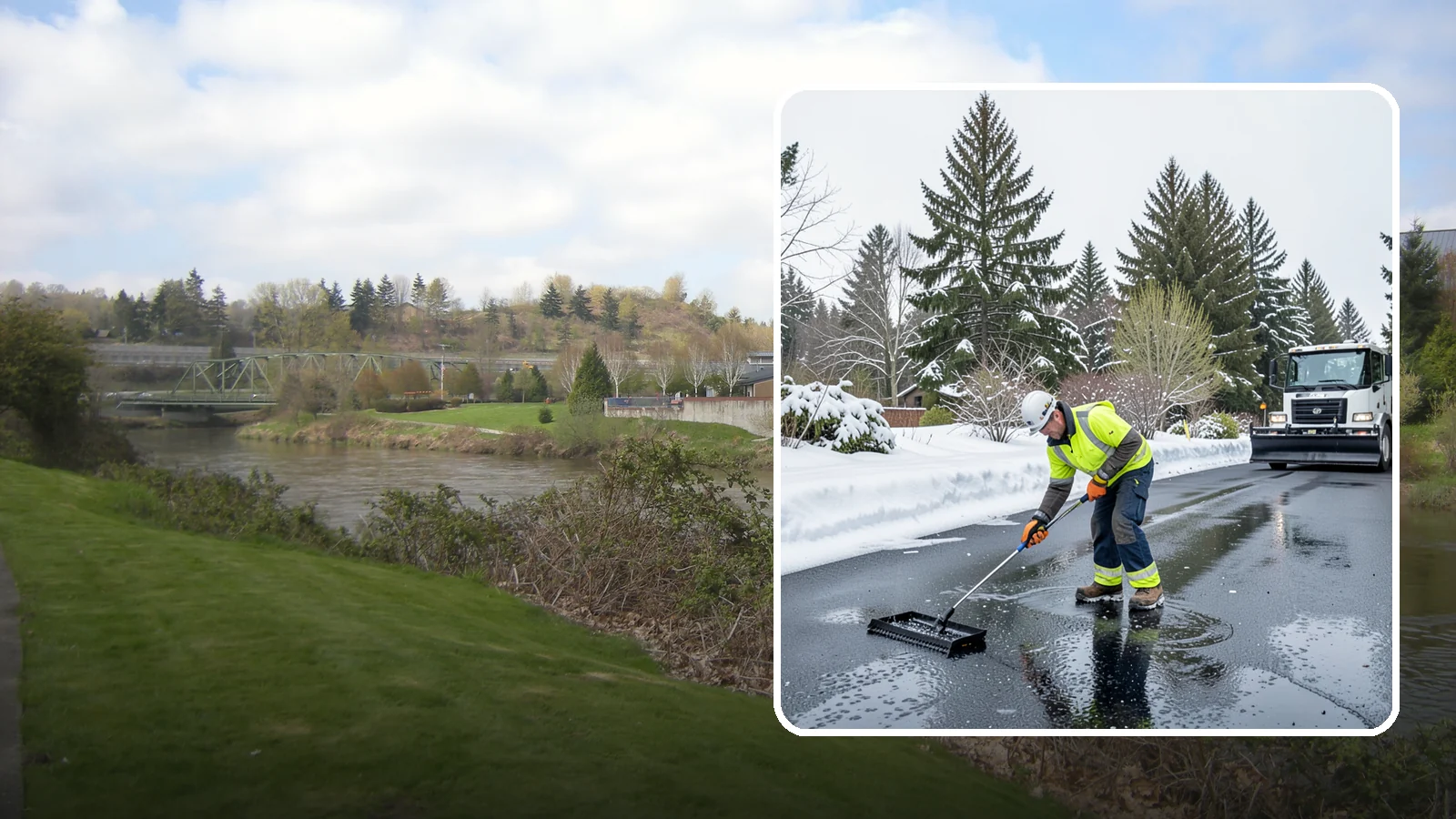
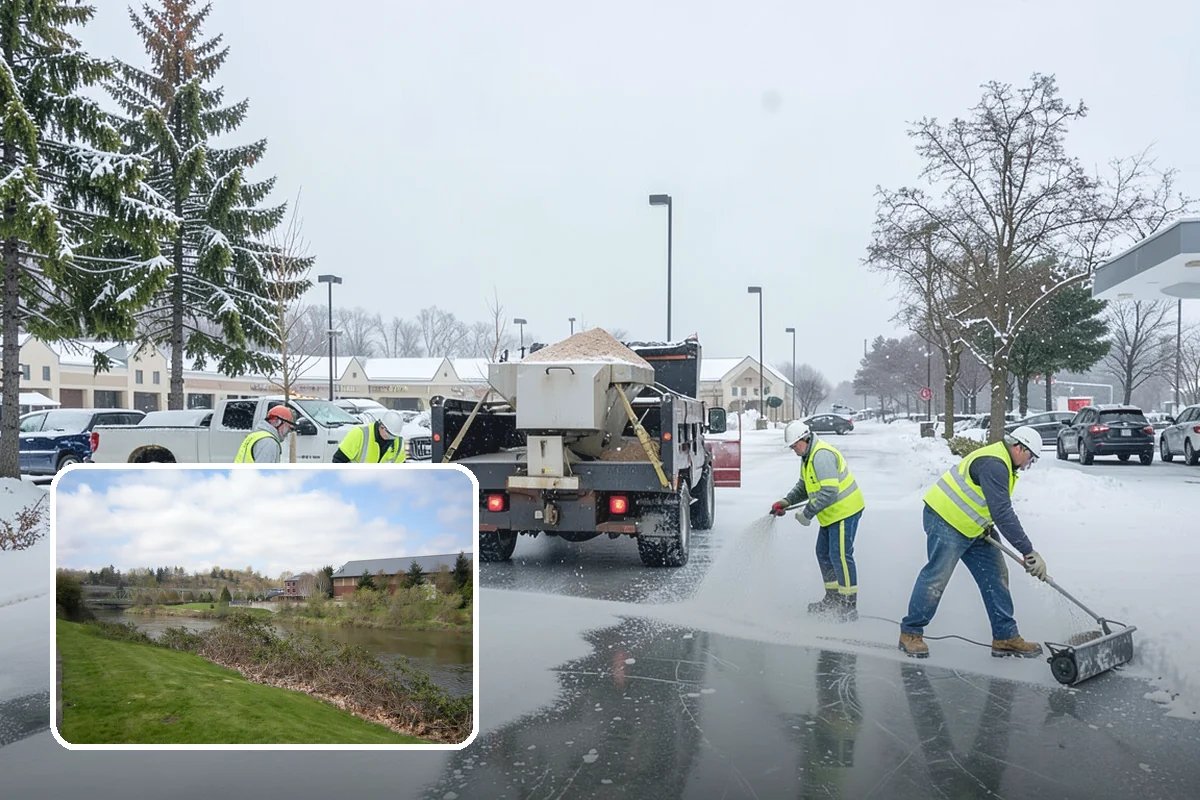
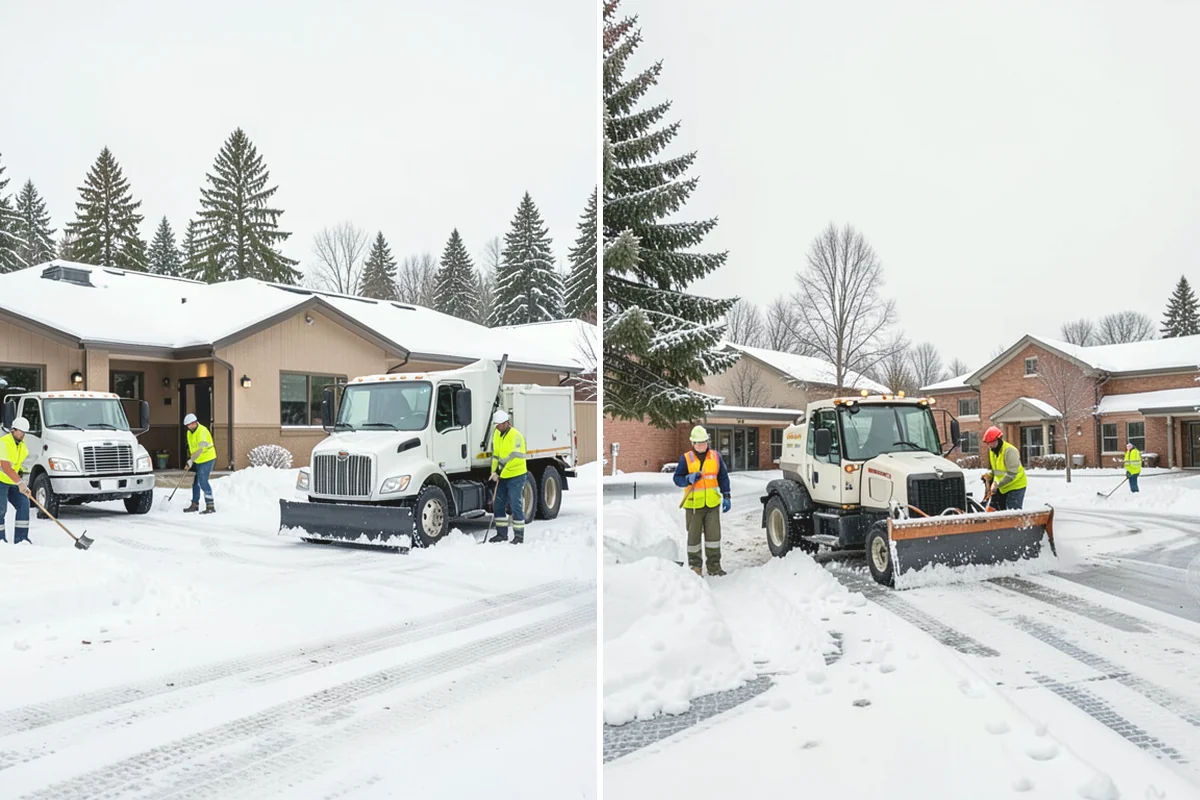
A typical black ice visit at a commercial or multi-unit property covers:
- Spreading salt or ice melt on parking lots, drive lanes and loading areas
- Hand treatment of sidewalks, stairs and building entries
- Extra attention to shaded spots and low points where meltwater refreezes
Pricing is simple. Bulk salt applied is $300 per ton. Bagged ice melt is $45 per 50 lb bag. Crew hand work is $110 per person-hour. A spreader truck with driver is $325 per hour. Tukwila (zone B) has a $275 trip charge per dispatch, and each dispatch has a 2-hour minimum.