Wheelchair Ramp Snow Removal in Woodinville, WA
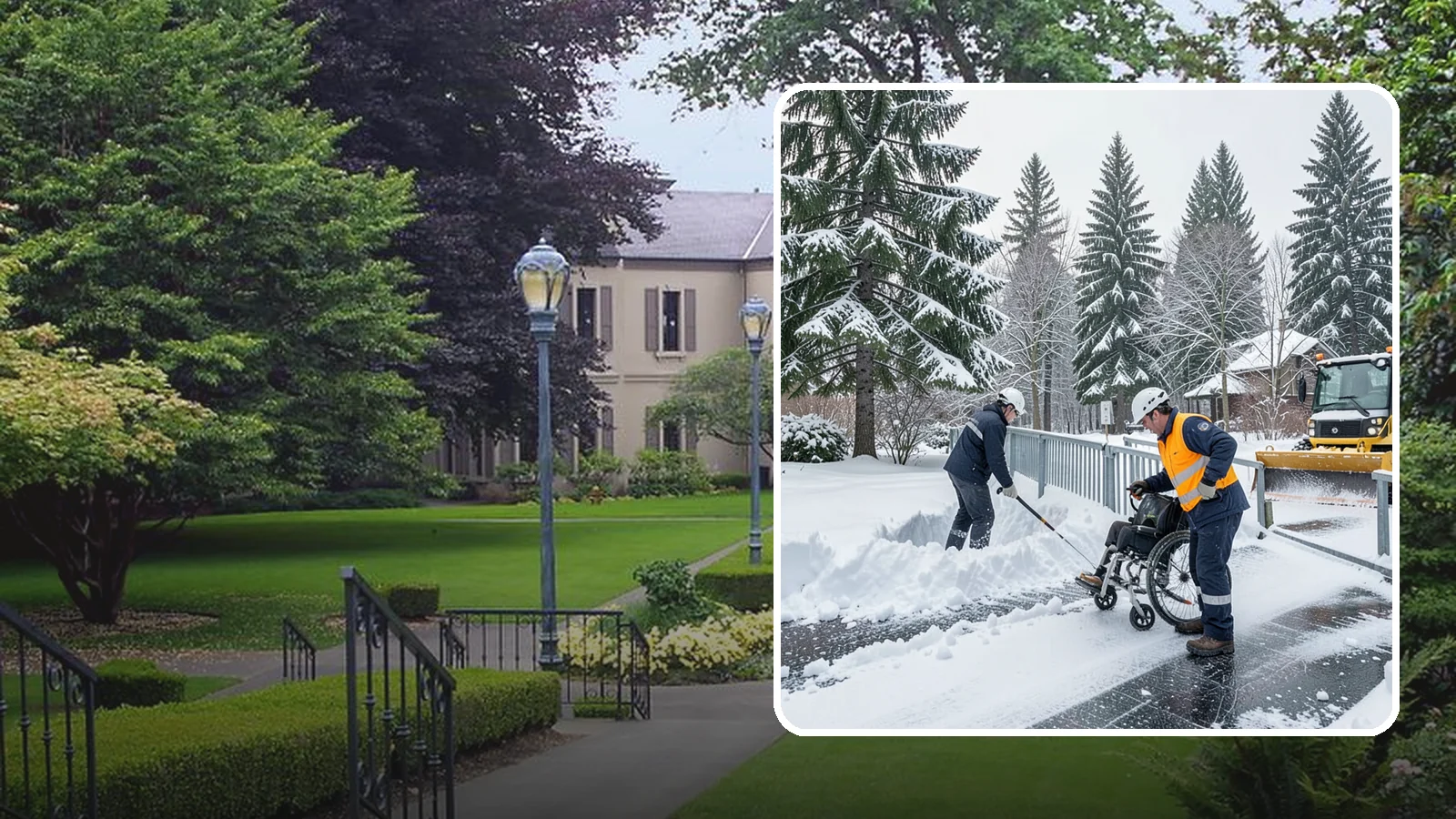
Ramp work is hand work. A crew member shovels the ramp surface, landings, handrail bases and the path to the entrance, then applies ice melt. We do not use a loader on a ramp. Slope and narrow width call for careful shoveling by hand.
Woodinville's pattern makes deicing as important as shoveling. A year averages only 2.7 days with 1 in or more of snow and 7 days with snow on the ground. But 76% of winters have at least one 1-inch day, and light snow days that need deicing average 3.1 a year. With 32 freezing nights, a wet ramp can refreeze overnight. Recent events in the area include the Dec 23, 2022 ice storm and heavy snow on Nov 29, 2022.
Property owners also have a duty. Woodinville code WMC 12.06.020 makes the owner of property abutting a public sidewalk responsible for keeping it safe and free of ice and snow at all times.
Pricing for a typical ramp visit:
- Crew member: $110 per person-hour
- Ice melt, bagged: $45 per 50 lb bag
- Trip charge for Woodinville (zone A): $200 per dispatch
- 2-hour minimum per dispatch
Call 206-809-9669 to arrange service.