Keeping You Moving. Beyond Expectations.

Bellevue Emergency Deicing
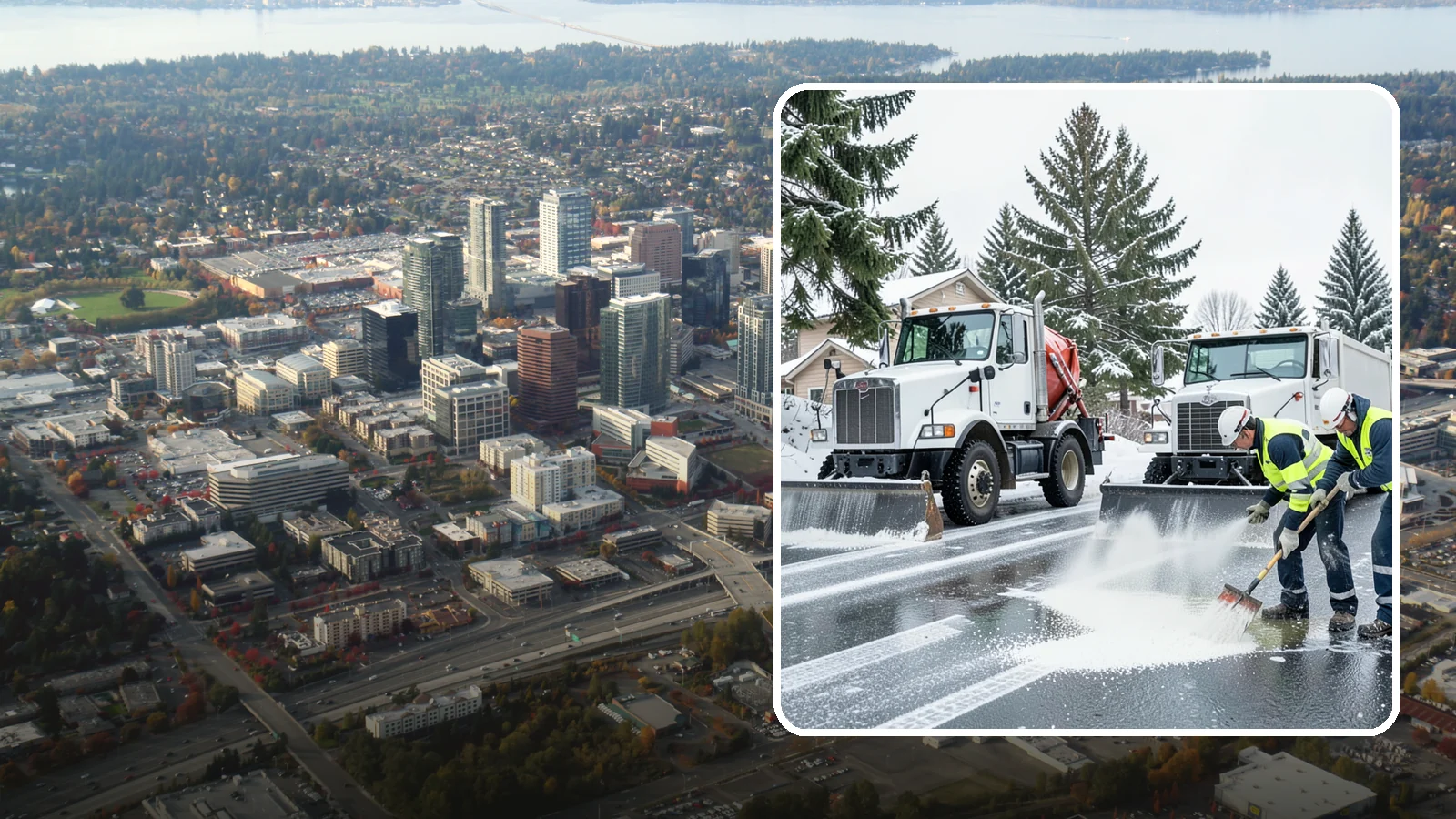
We respond fast across Western Washington to treat icy lots, walks, and entrances when a freeze turns your surfaces into a slip hazard.
Bellevue does not see much snow. The average is 7.2 in per season, and only 2.1 days a year bring 1 in or more. But the city has 30 freezing nights between October and April, and a thin glaze on a driveway or parking lot can be as risky as a deep storm.
Washington Snow Removal provides emergency deicing in Bellevue from our Bothell yard, 31 minutes away. We are licensed, bonded and insured. Call 206-809-9669 to request a dispatch.
How hard Bellevue storms hit
Biggest storms in Bellevue since 2005
- Feb 13–15, 2021: 11.5 in total, 8.1 in on the biggest day
- Dec 18–21, 2008: 9.6 in total, 6.7 in on the biggest day; 8.4 in total, 4.4 in on the biggest day
- Feb 3–5, 2019: 7.5 in total, 6.9 in on the biggest day
- Feb 6–7, 2017: 7.3 in total, 6.7 in on the biggest day
Sources: NOAA and National Weather Service records for Bellevue, 2005–2026.
Emergency Deicing in Bellevue: What the Job Involves
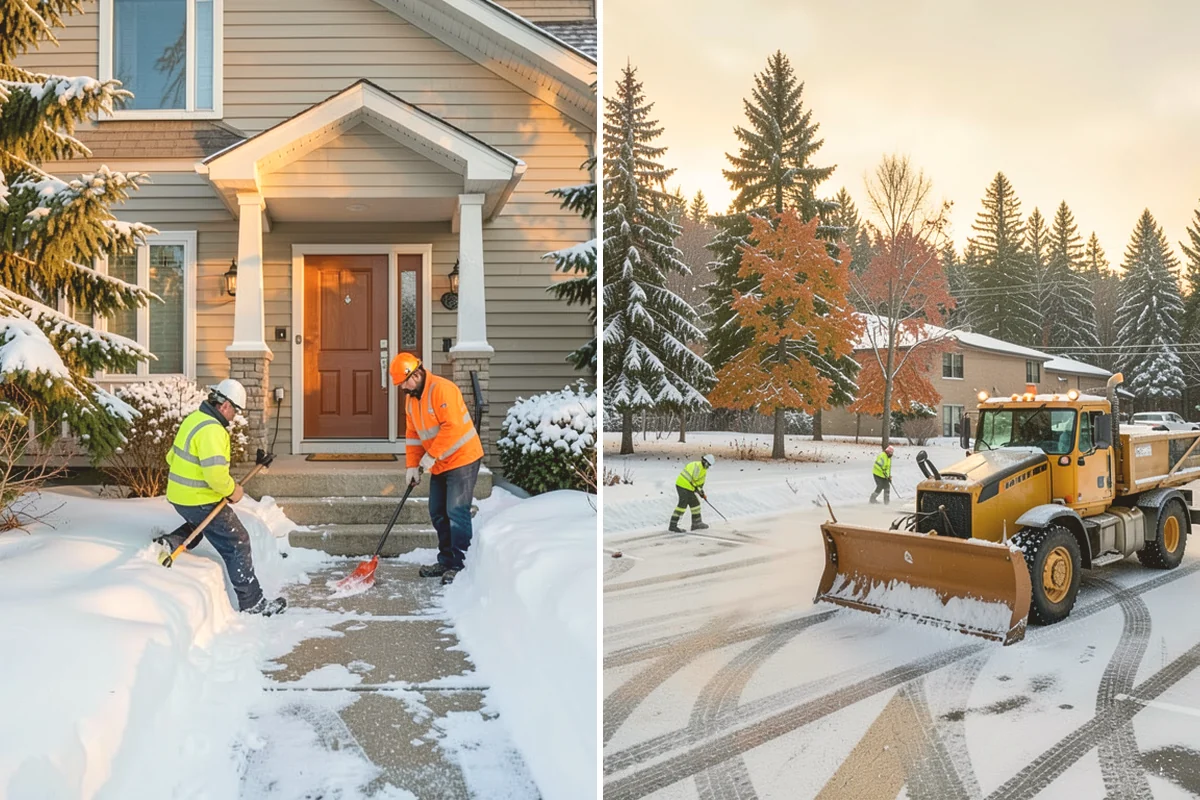
Emergency deicing means getting ice under control on walkways, entrances, ramps, driveways and parking areas that are already slick or about to be. A crew arrives with material and tools, treats the problem areas and clears loose snow or slush that would refreeze.
Bellevue's pattern shapes the work. Heavy-snow days of 4 in or more happen only 0.43 times a year, and Winter Storm Warnings average 1.05 a year. Most properties have no plan in place when a storm hits. Still, big events do happen. Dec 18–19, 2008 brought 9.6 in, with 6.7 in on the biggest day. Feb 3–5, 2019 brought 7.5 in, with 6.9 in in one day. Since 2005, the biggest single day has been 8.1 in.
With 30 freezing nights a season, refreezing is the usual issue. Meltwater from daytime hours turns to ice after dark, especially on shaded walks and sloped drives.
Our rates are listed up front:
- Plow and spreader truck with driver (Ram 5500): $325 / hour
- Crew member for sidewalks and hand work: $110 / person-hour
- Ice melt, bagged: $45 / 50 lb bag
- Bulk salt, applied: $300 / ton
- Trip charge for Bellevue (zone A): $200 / dispatch
Each dispatch has a 2-hour minimum.
Prices in Bellevue
Billed by the hour for the crew and equipment on site, plus materials.
| Plow truck with driver (Ram 3500) | $250 / hour |
| Plow and spreader truck with driver (Ram 5500) | $325 / hour |
| Compact track loader with operator (Kubota SCL1000) | $175 / hour |
| Crew member (shoveling, sidewalks, hand work) | $110 / person-hour |
| Ice melt, bagged | $45 / 50 lb bag |
| Bulk salt, applied | $300 / ton |
| Trip charge for Bellevue (zone A) | $200 / dispatch |
- 2-hour minimum per dispatch.
- Bellevue is 31 minutes from our Bothell yard.
Prices approved Oct 2026.
Service Area
Bellevue
Benefits
Rapid response to sudden ice and freeze events; Deicer matched to temperature and surface type; Targets the highest-traffic slip hazards first; Reduces injury risk and liability from icy surfaces