Ramp Snow and Ice Care in Bellevue, WA
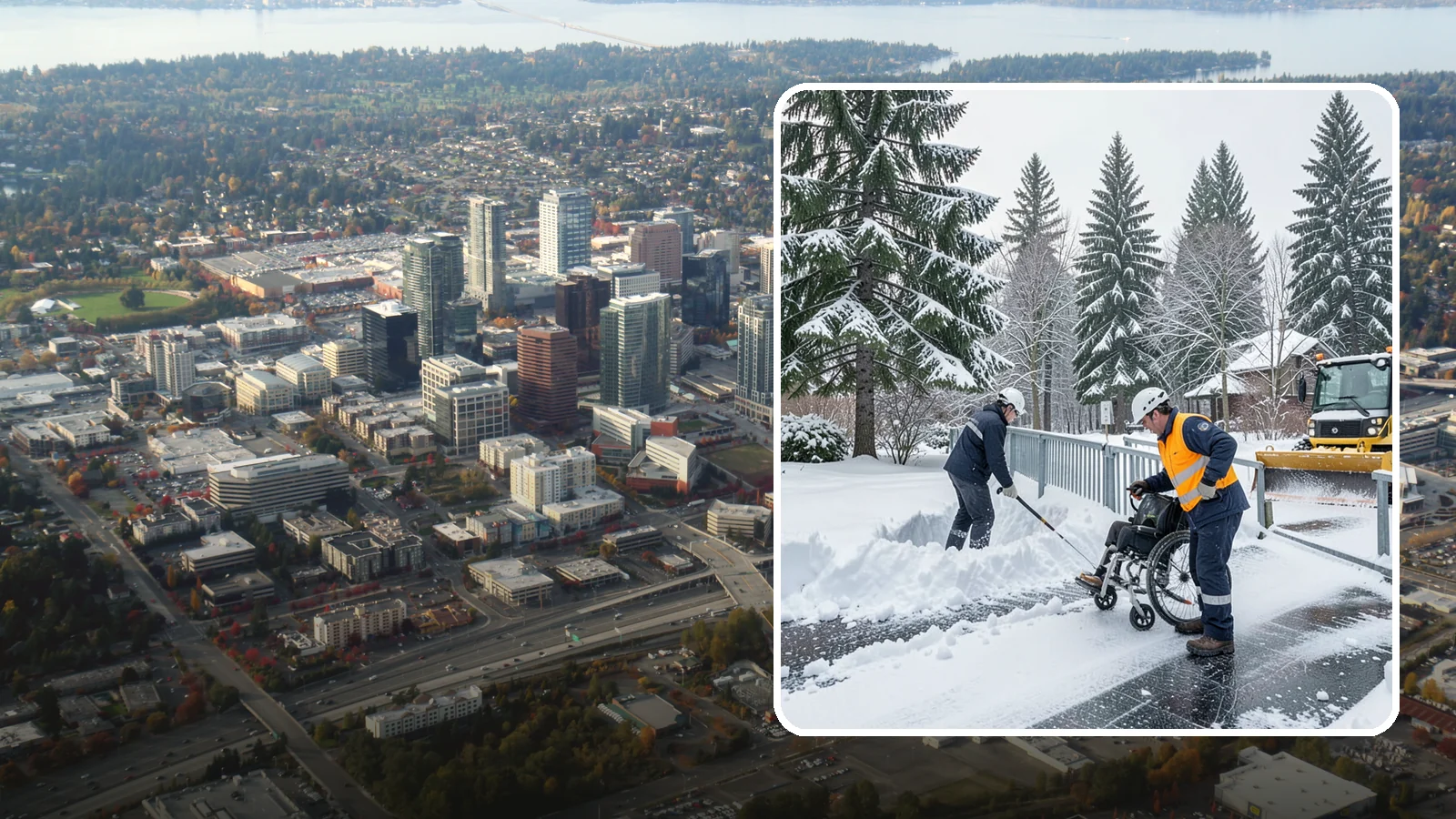
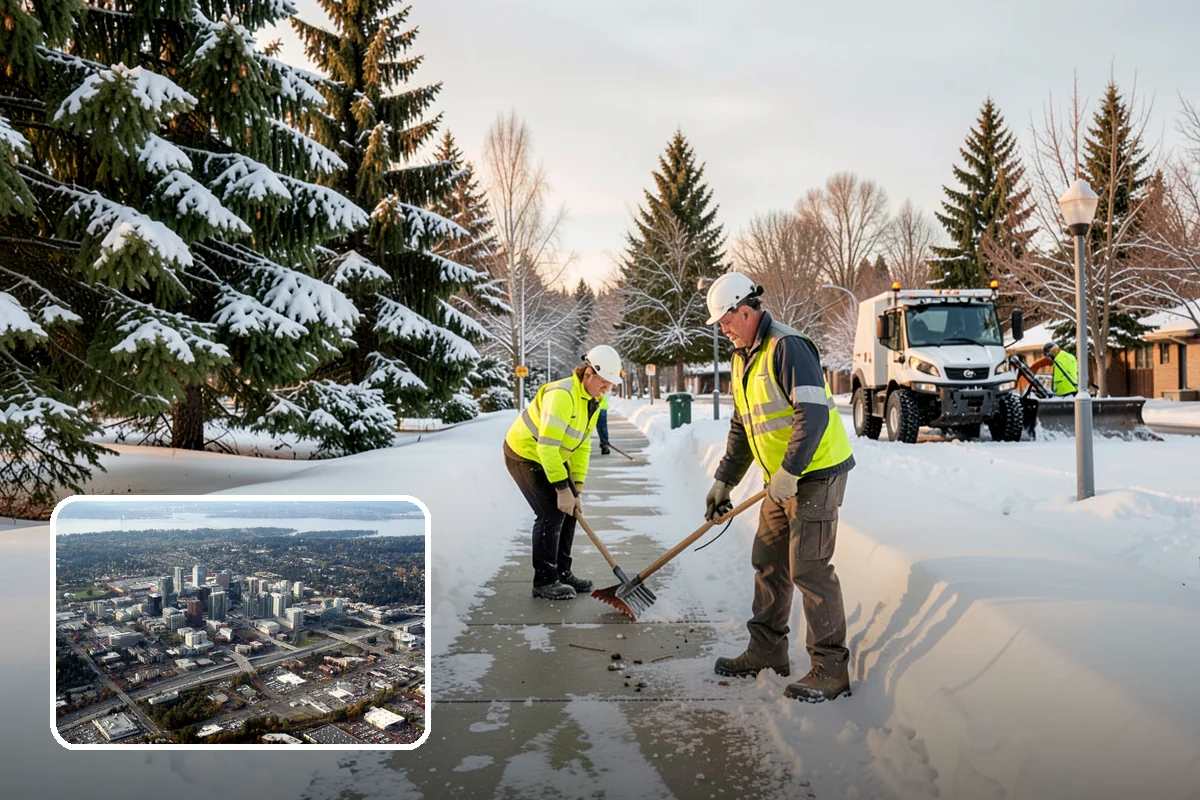
Ramps need careful hand work. We do not push snow onto a ramp with equipment. A crew member shovels the surface, the landing, the turnaround space and the path to the street or driveway. Then we apply ice melt where needed.
Bellevue gets about 7.2 inches of snow per season, and only 2.1 days a year bring 1 inch or more. Snow is on the ground about 4 days a year. Still, 76% of winters have at least one 1-inch day, so a ramp can go from clear to unsafe fast. Freezing temperatures are limited, with 1.2 days a year staying below freezing, but there are 30 freezing nights from October to April. Those nights are when thin ice forms on wet ramp surfaces. About 3.24 light-snow days a year also need deicing.
Recent local events show the range: a Winter Storm on Feb 12, 2021, an Ice Storm on Dec 23, 2022, and Heavy Snow on Feb 8, 2014.
What a visit can include:
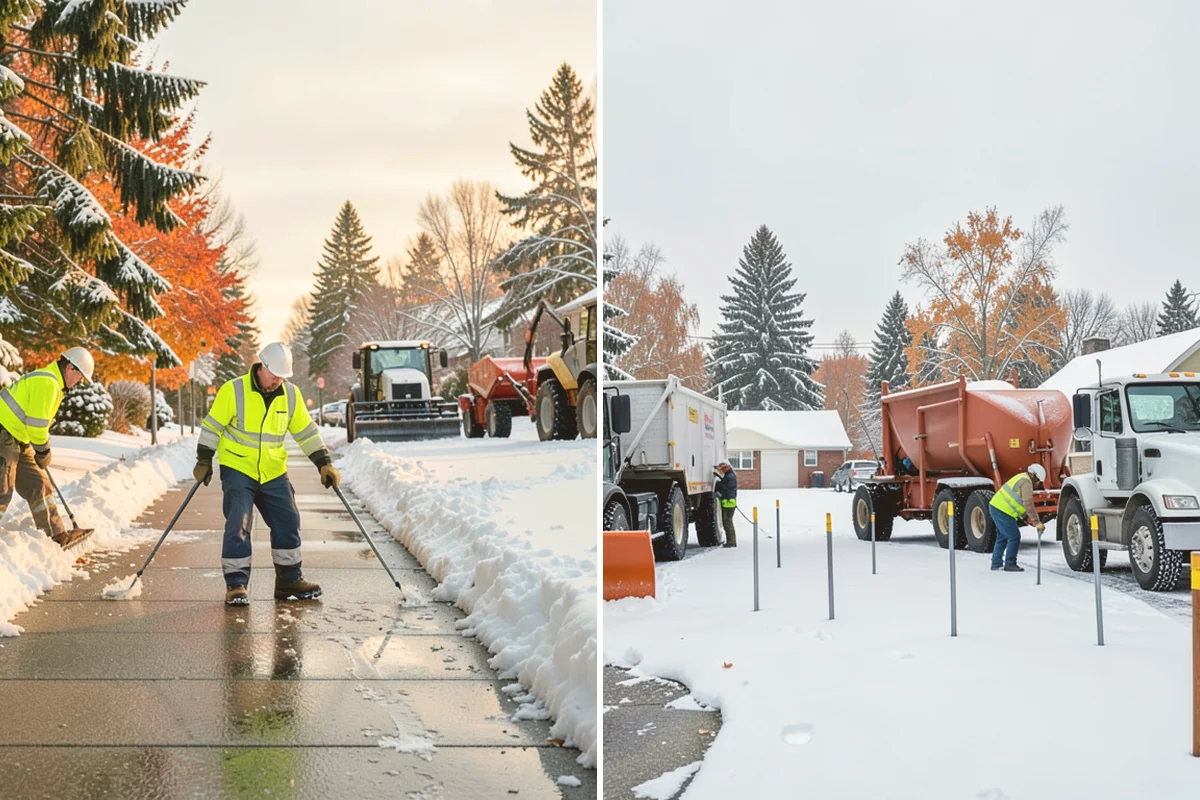
- Shoveling the ramp surface, landing and approach path
- Clearing space at the door and at the bottom of the ramp
- Ice melt applied to the walking surface
Pricing: crew members are $110 per person-hour, bagged ice melt is $45 per 50 lb bag, and the Bellevue (zone A) trip charge is $200 per dispatch. Each dispatch has a 2-hour minimum.