Keeping You Moving. Beyond Expectations.
We clear bus stops, shelters, and boarding pads so transit riders board safely during Western Washington snow and ice.
Bellevue has 500 bus stops on the map. Each one has a pad, a walk or an entrance that people need to reach on foot. Washington Snow Removal clears bus stops in Bellevue, including stops like 100th Ave NE & NE 10th St and 100th Ave NE & NE 14th St.
Snow here is light but it does happen. 76% of winters bring at least one 1-inch day. We are licensed, bonded and insured, and we dispatch from our Bothell yard, 31 minutes away. Call 206-809-9669 to set up service.
Sources: NOAA and National Weather Service records for Bellevue, 2005–2026.
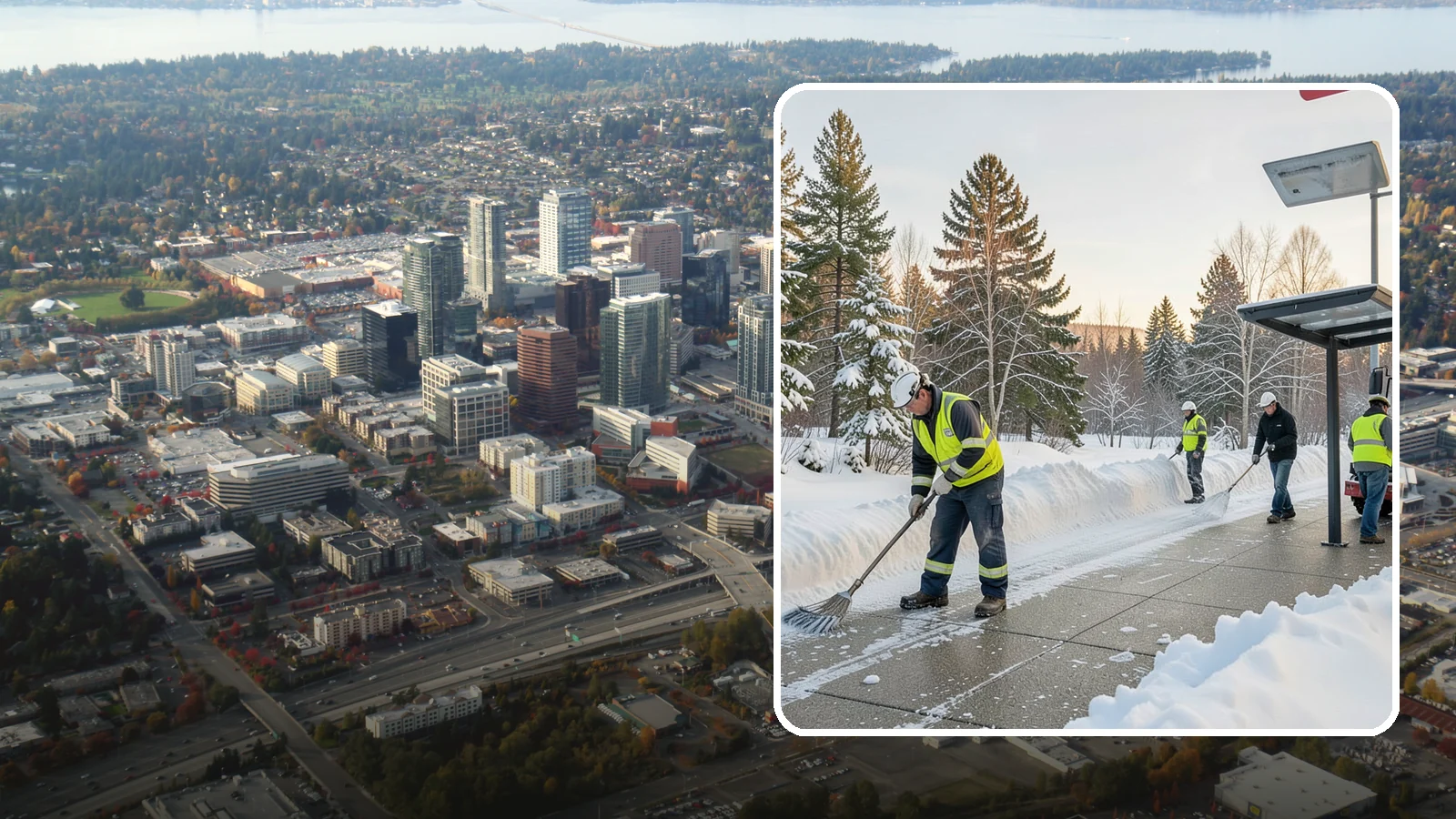
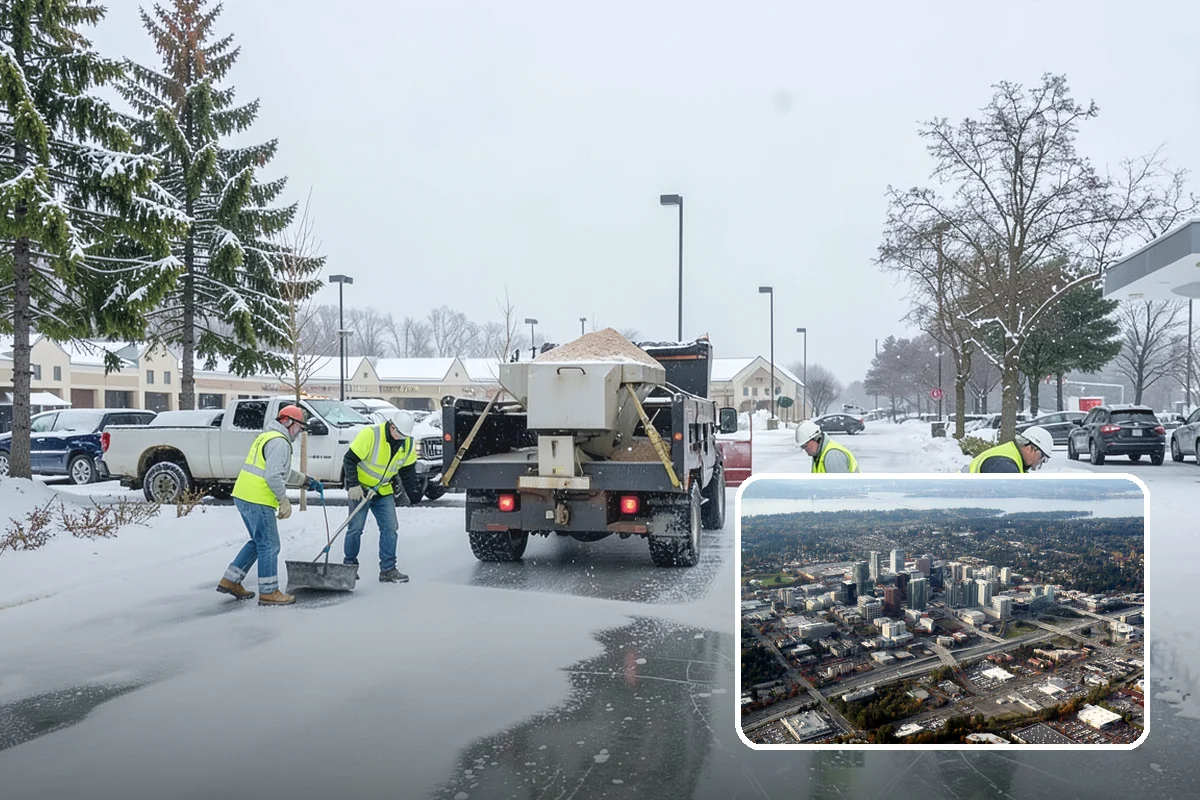
Bus stop work is mostly hand work. A crew member shovels the landing pad, clears a path from the sidewalk to the curb, and spreads ice melt on the surface. We also clear the edges where plowed slush piles up, so riders are not stepping into a bank of snow. Stops near lots, walks or entrances get those areas cleared too, such as the stops along 100th Ave NE at NE 16th Pl and NE 16th St.
Bellevue averages 7.2 in of snow per season, but only 2.1 days a year reach 1 in or more, and snow is on the ground about 4 days a year. The bigger issue is ice. There are 30 freezing nights from Oct to Apr, and about 3.24 light-snow days a year need deicing. Freezing rain was reported near Sahalee on Jan 17, 2024 and in Sammamish on Dec 23, 2022. A thin glaze on a bus pad is hard to see, so deicing matters as much as shoveling.
Pricing for Bellevue:
Call 206-809-9669 for a quote.
Billed by the hour for the crew and equipment on site, plus materials.
| Crew member (shoveling, sidewalks, hand work) | $110 / person-hour |
| Compact track loader with operator (Kubota SCL1000) | $175 / hour |
| Ice melt, bagged | $45 / 50 lb bag |
| Trip charge for Bellevue (zone A) | $200 / dispatch |
Prices approved Oct 2026.
Bellevue has 500 bus stops on the map, each with lots, walks or entrances to keep clear.
Source: OpenStreetMap contributors, Oct 2026. Named sites are examples of local facilities, not customers.
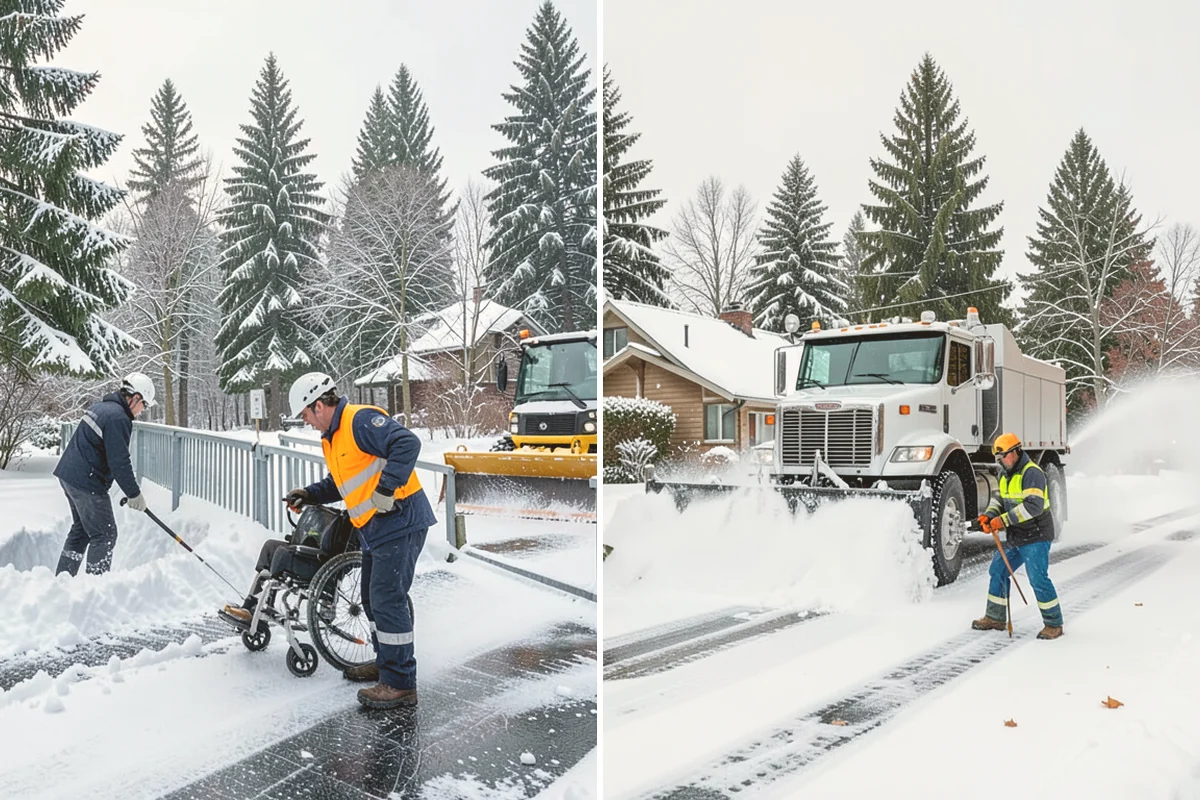
Gives transit riders a safe path to board; Clears plow berms blocking the boarding pad; Treats shaded shelter slabs against black ice; Keeps seating and schedule signage accessible; Supports riders using mobility devices