Generator Access Clearing in Fife: What the Work Involves
A generator that sits unused most of the year can be buried quickly in a storm. Fife's biggest storms since 2005 show the range: 12.4 in total on Jan 15–20, 2012, 8.9 in on Feb 12–15, 2021, and 8.6 in on Feb 8–12, 2019. The biggest single days reached 4.7 in, 5.7 in and 4.0 in.
Most winters bring little snow, but Fife sees 27 freezing nights from Oct to Apr. Light snow and frost can leave slick ground around the unit, so we also treat paths where needed. About 3.29 light-snow days a year need deicing.
- Clear snow from around the generator and its vents and exhaust area
- Open the service side so the unit can be reached and checked
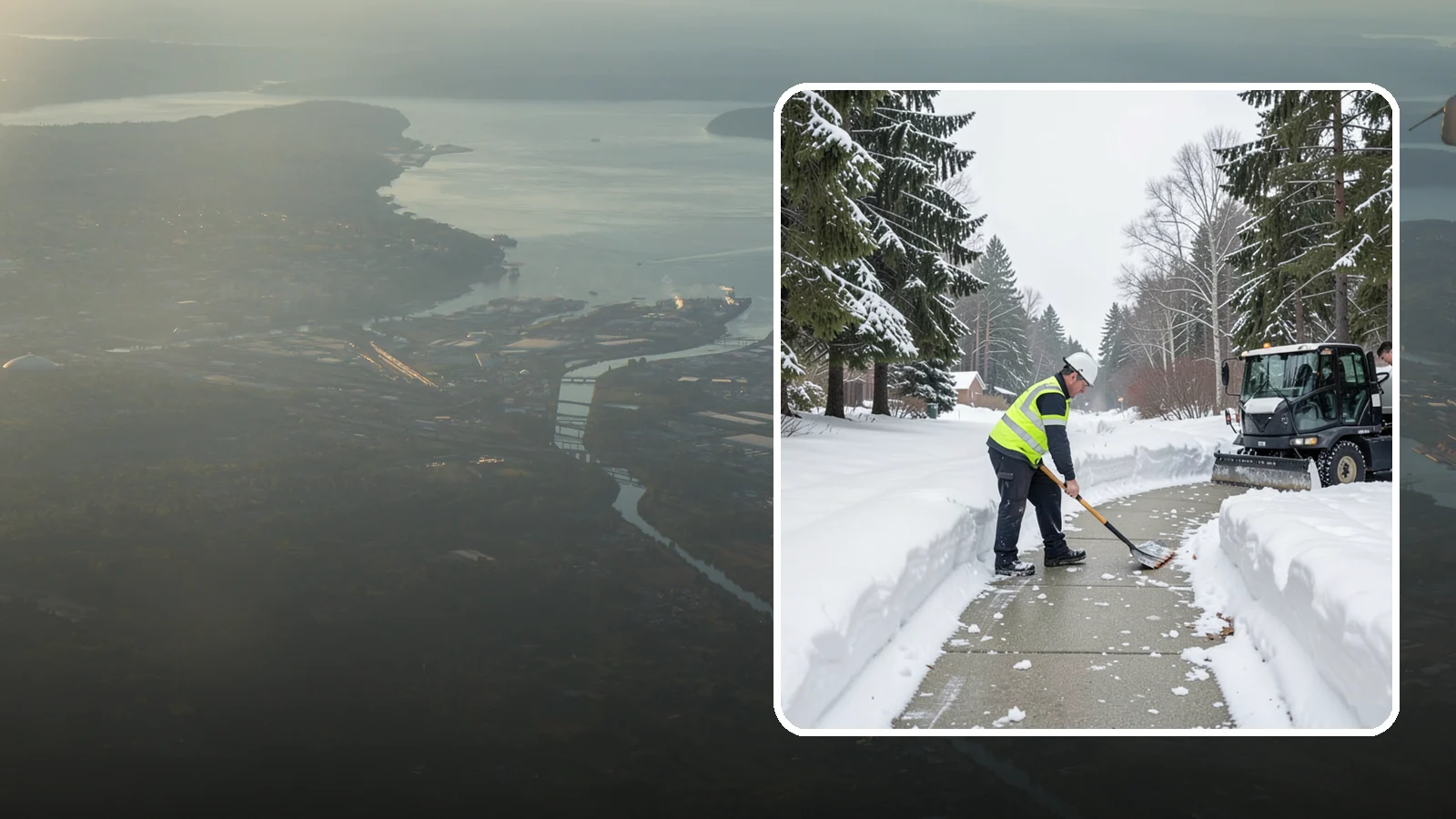
- Shovel a walkable path from the door to the unit
- Apply ice melt to the path if ice is present
Pricing: crew members are $110 per person-hour, and bagged ice melt is $45 per 50 lb bag. A compact track loader with operator (Kubota SCL1000) is $175 per hour if a larger area needs clearing. The trip charge for Fife (zone C) is $350 per dispatch, with a 2-hour minimum per dispatch.