What a Snow Load Assessment Involves in Gig Harbor
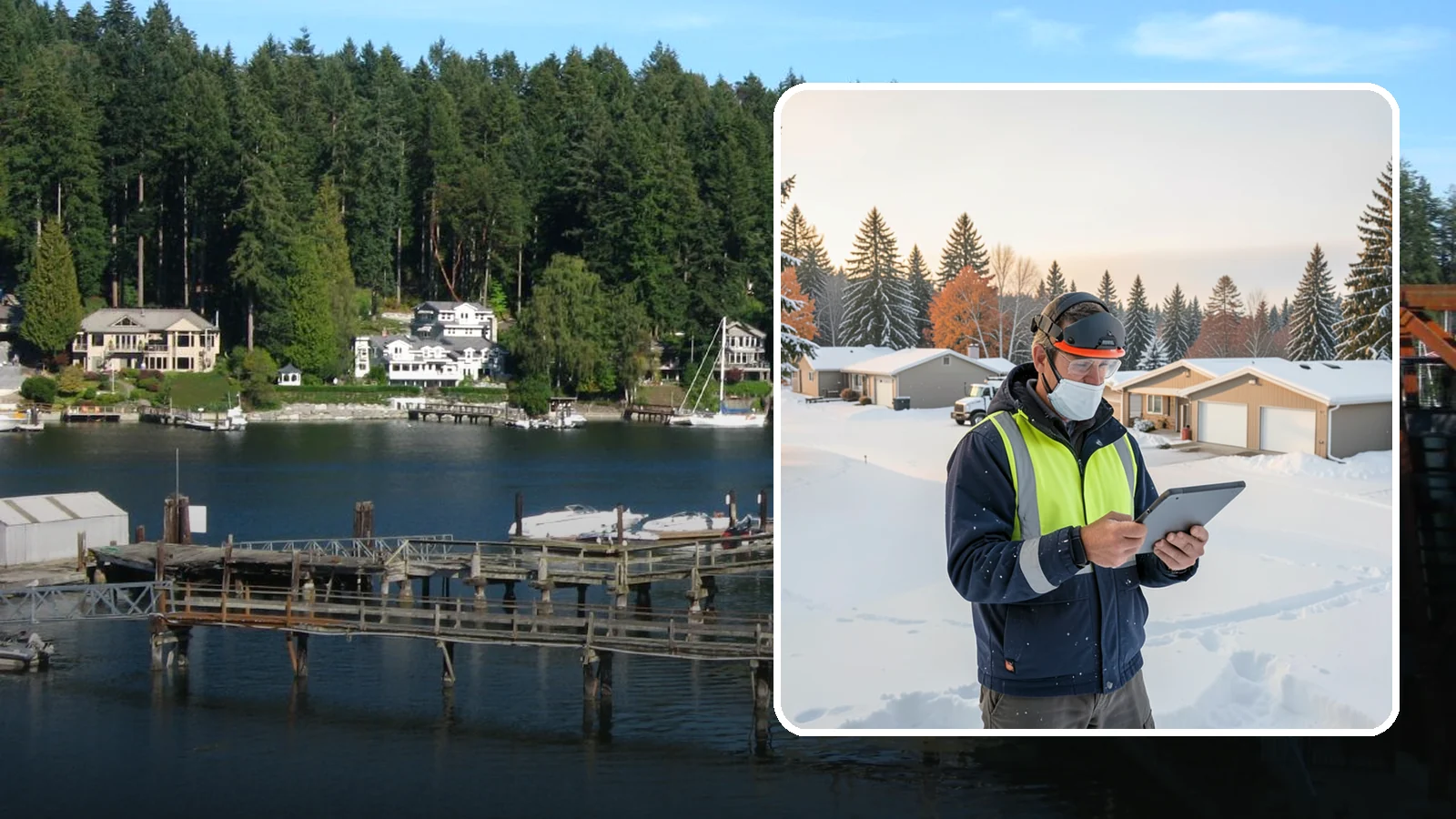
An assessment looks at how much snow is sitting on a roof, deck, carport or other structure, and whether it needs to come off. We look at the snow depth and how it has settled, and we look at the structure itself. Flat roofs, low-slope roofs and covered areas are the usual concerns.
Local weather shapes how we approach it. Heavy-snow days of 4 in or more average just 0.24 a year, so most winters never raise the question. Then a storm like Feb 9–12, 2019 arrives, with 8.4 in on its biggest day and 16.7 in overall. The snowiest season since 2008-09 reached 19.9 in. Buildings here are not always planned around repeated heavy loads, so a big event deserves a careful look.
Freezing nights also matter. Gig Harbor sees 31 between October and April. Snow that thaws by day and refreezes at night can turn dense and heavy.
- Walk the property and check the snow depth on roofs and covered areas
- Note signs of stress, such as sagging or sticking doors
- Advise whether snow removal is needed
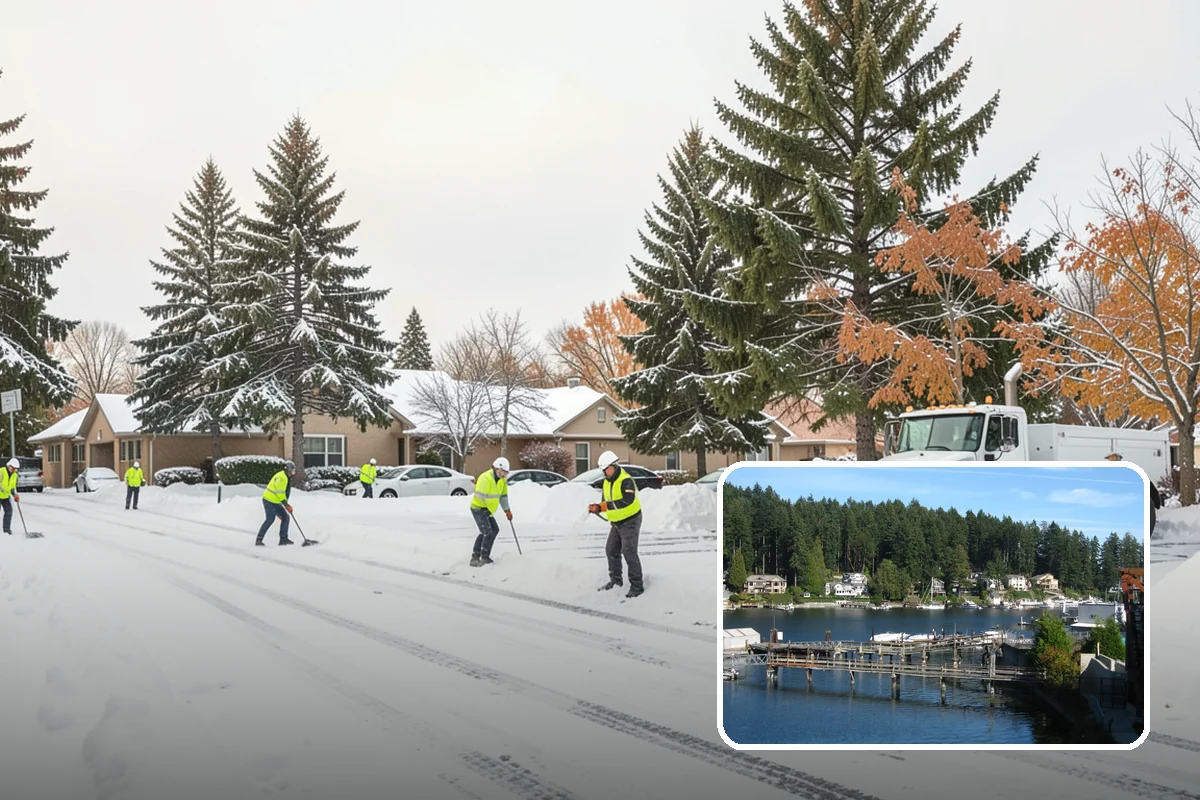
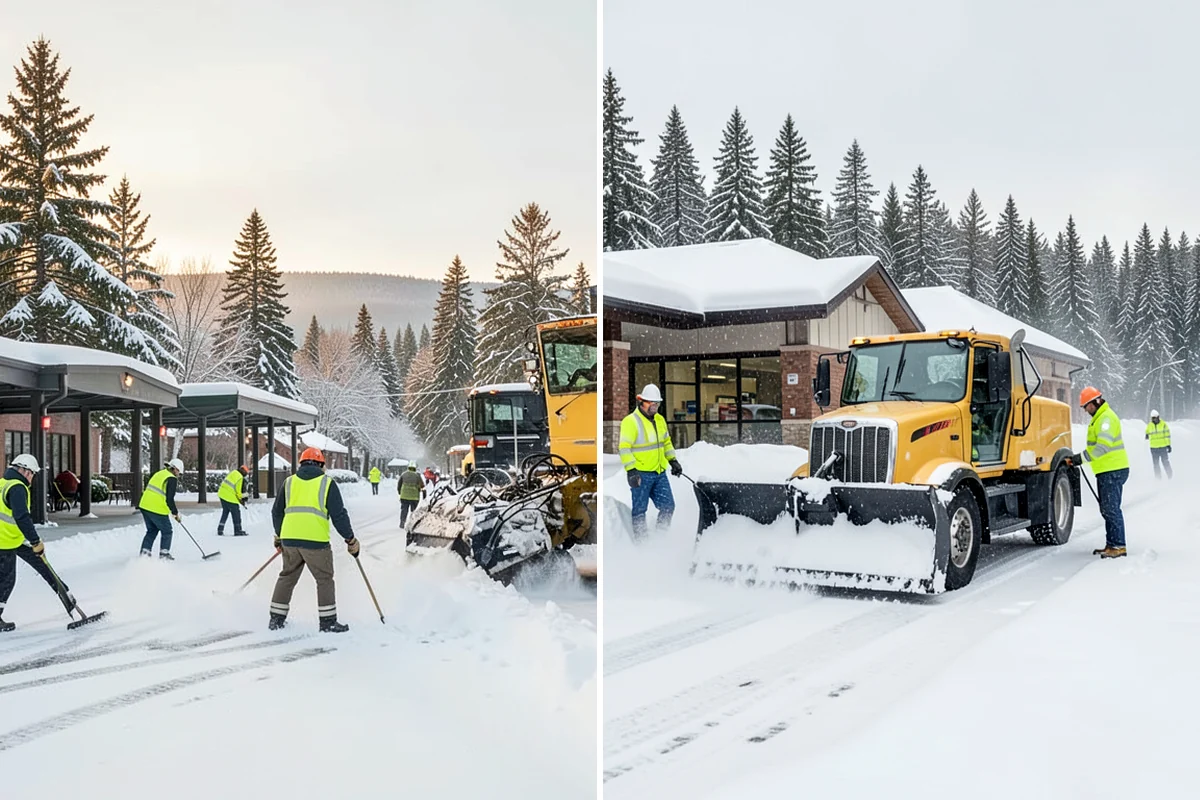
- Provide hand removal with a crew if it is
Pricing is simple. The trip charge for Gig Harbor (zone C) is $350 per dispatch. Crew members for hand work are $110 per person-hour. Our yard is 84 minutes away, so call early when snow is forecast.