What a snow load assessment involves in Lakewood, WA
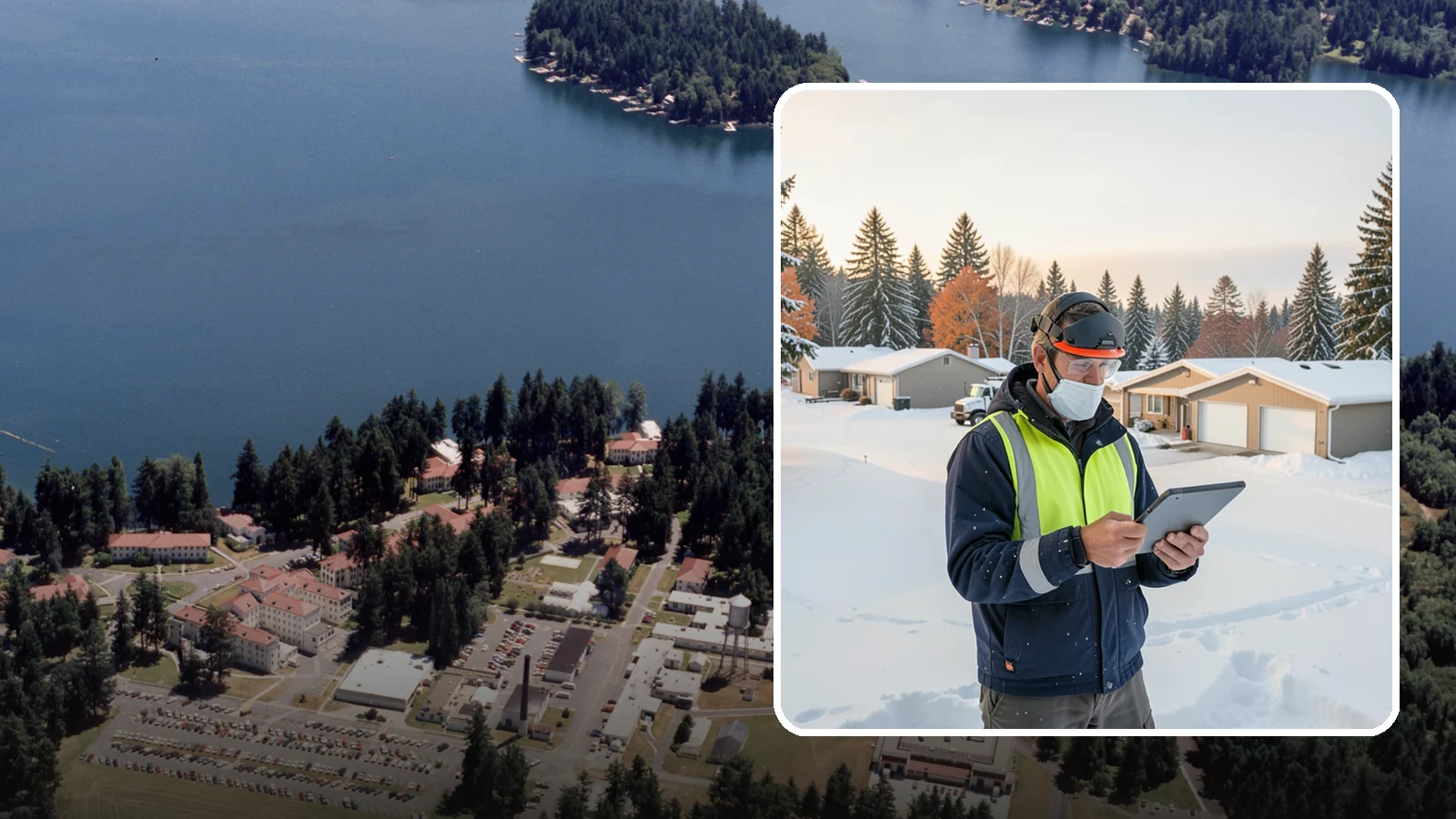
An assessment starts with a walk around the building. We look at roof edges, flat or low-slope sections, drifted areas, and any spots where snow has turned to ice. We also note sagging, sticking doors, or other signs of stress that you may have seen inside.
Lakewood does not get snow often. The city sees 1.6 days a year with 1 in or more, and 35 freezing nights from October to April. That means buildings are rarely tested, and many owners have not thought about snow weight until a storm is already on the way.
When snow does come, it can stack up over several days. The storm of Feb 12–15, 2021 brought 9.3 in in total. The Feb 8–12, 2019 storm brought 6.9 in over five days, with only 2.1 in on its biggest day. Slow accumulation like that, followed by freezing nights, can leave a heavier layer than the daily totals suggest.
- Roof and edge inspection
- Notes on drifting, ice and visible stress
- A plain recommendation on whether removal is needed
Lakewood is 81 minutes from our Bothell yard. The trip charge for Lakewood (zone C) is $350 per dispatch. If removal is needed, crew members doing shoveling and hand work are $110 per person-hour.