Keeping You Moving. Beyond Expectations.
We clear bus stops, shelters, and boarding pads so transit riders board safely during Western Washington snow and ice.
Bus stops in Puyallup are small, but they matter. Riders wait on curbs, pads and short stretches of sidewalk, and a few inches of snow or a skin of ice can make those spots hard to use. Washington Snow Removal clears bus stops in Puyallup with hand crews and ice melt.
The city has 116 mapped bus stops, including 10th Street Southeast & 39th Avenue Southeast and 2nd Street Northeast & 5th Avenue Northeast. We are licensed, bonded and insured. Call 206-809-9669 to talk through the stops you manage.
Sources: NOAA and National Weather Service records for Puyallup, 2005–2026.
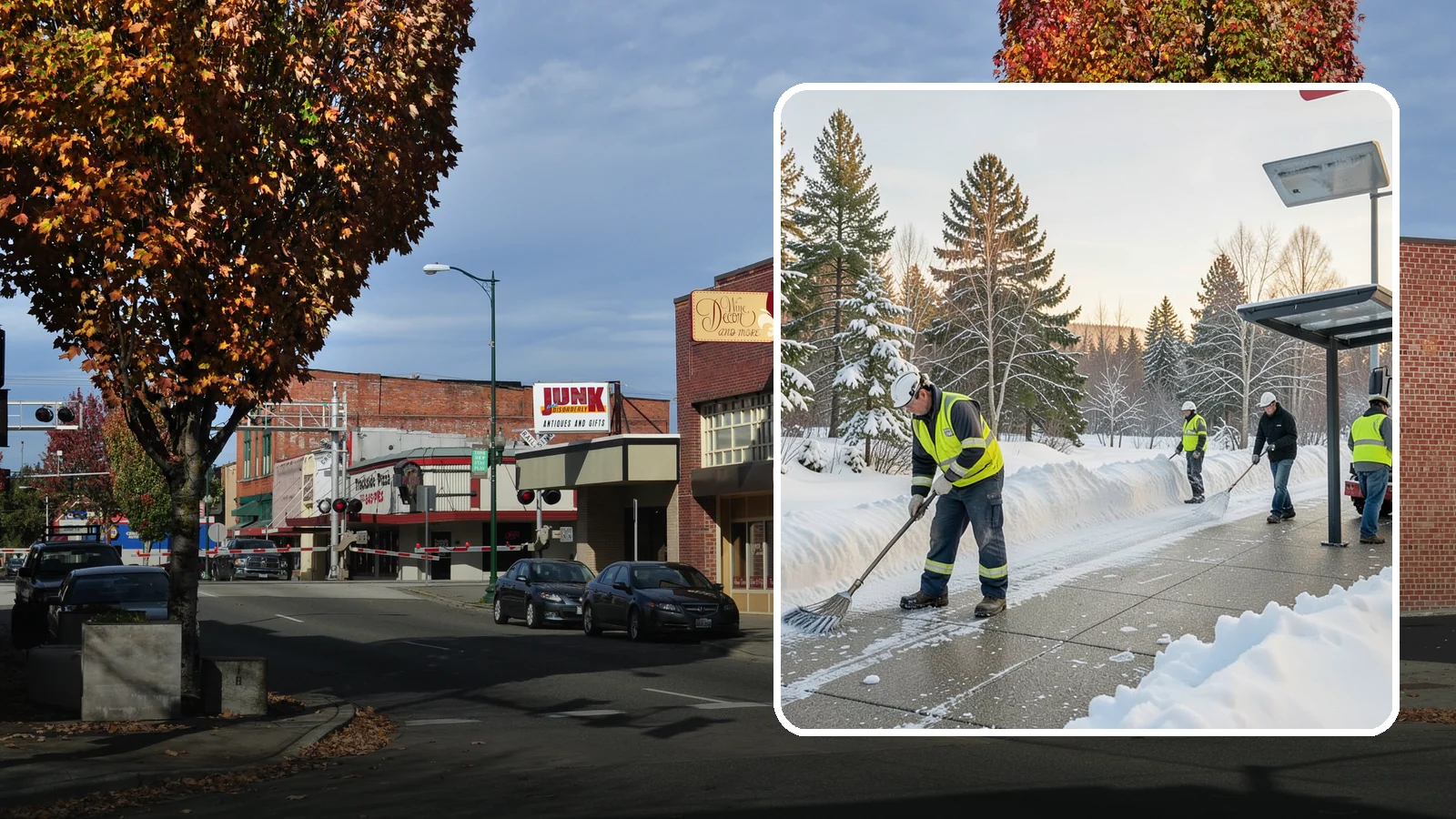
A bus stop is mostly hand work. A crew shovels the landing pad, the path from the sidewalk to the curb, and the edge where riders step on and off. Where plows have pushed a berm against the curb, we cut through it so the boarding area is open. Then we spread ice melt on the cleared surface.
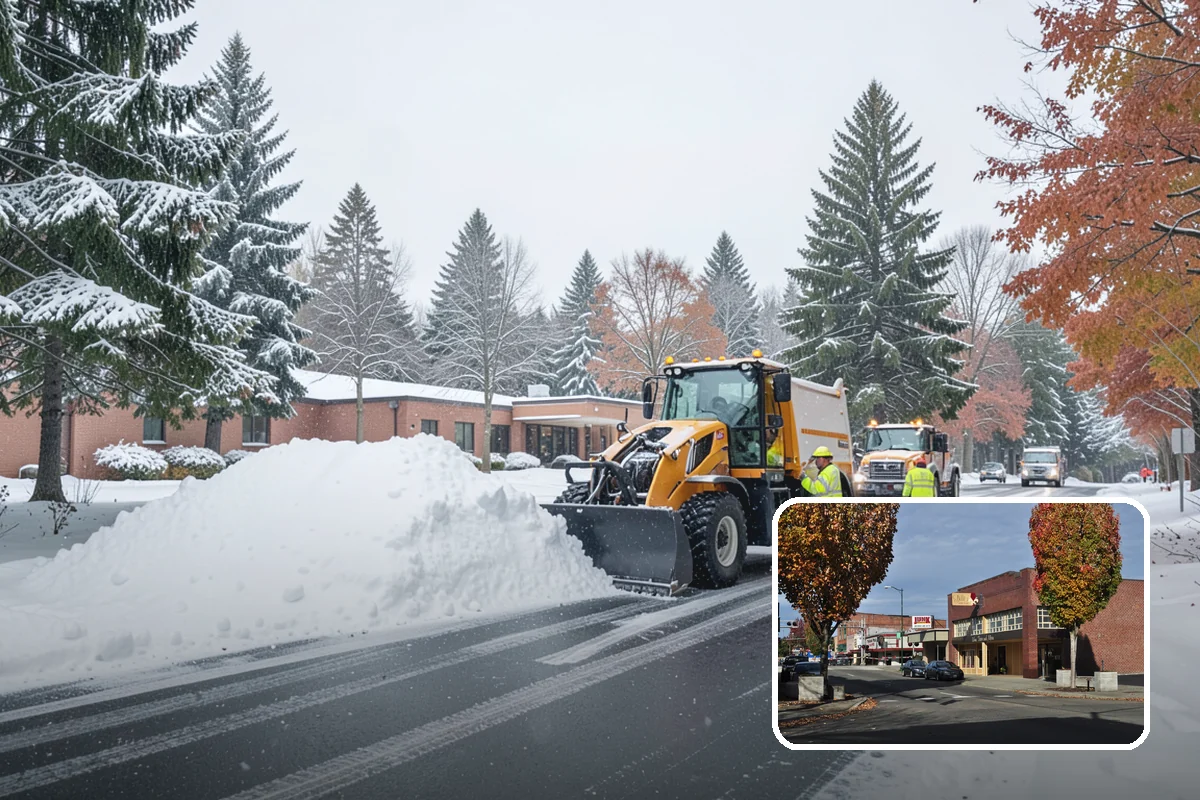
Puyallup gets about 7.8 inches of snow in an average season, and only 2.4 days a year bring 1 inch or more. About 80% of winters have at least one of those days. Most winters are light, but the big ones matter. On Feb 5-6, 2017, the city saw 10.6 inches in total, with 9.0 inches on the biggest day. Stops need clearing fast in a storm like that.
Freezing nights are the other half of the job. Puyallup averages 29 freezing nights from October to April, so thin ice at shaded stops is a regular problem even without snow.
Current rates:
Our yard is in Bothell, 69 minutes away.

Billed by the hour for the crew and equipment on site, plus materials.
| Crew member (shoveling, sidewalks, hand work) | $110 / person-hour |
| Compact track loader with operator (Kubota SCL1000) | $175 / hour |
| Ice melt, bagged | $45 / 50 lb bag |
| Trip charge for Puyallup (zone C) | $350 / dispatch |
Prices approved Oct 2026.
There are 116 bus stops mapped within Puyallup.
Source: OpenStreetMap contributors, Oct 2026. Named sites are examples of local facilities, not customers.
Gives transit riders a safe path to board; Clears plow berms blocking the boarding pad; Treats shaded shelter slabs against black ice; Keeps seating and schedule signage accessible; Supports riders using mobility devices