Keeping You Moving. Beyond Expectations.

Tacoma Refreeze Prevention
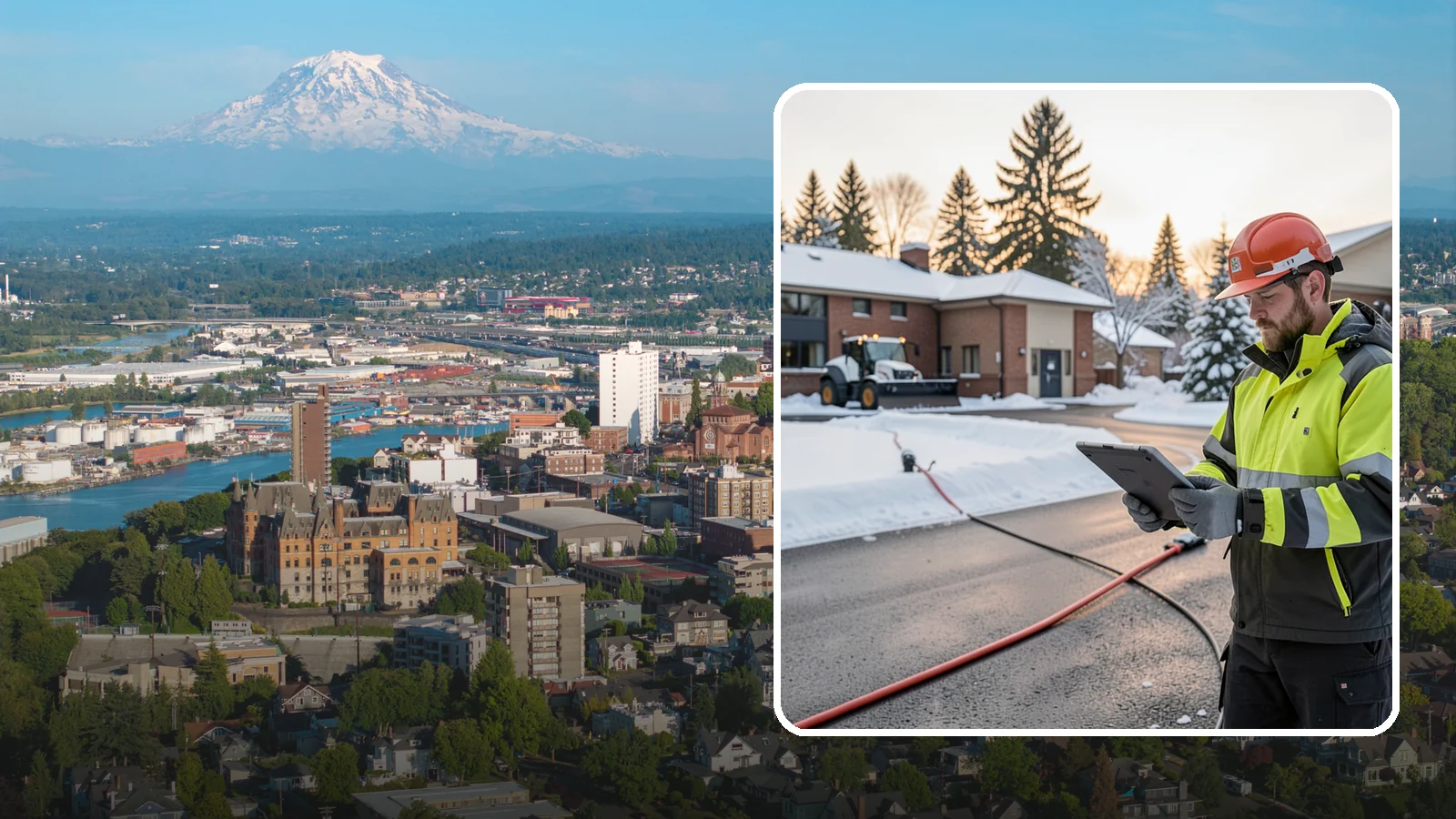
Refreeze prevention stops daytime meltwater from turning back into dangerous ice once temperatures drop after dark.
Refreeze prevention in Tacoma is about the hours after the snow stops. Meltwater from a thawing lot or walkway runs across pavement, then freezes again overnight. Washington Snow Removal treats those surfaces before that happens.
Tacoma averages 5.6 in of snow per season, and only 1.6 days a year bring 1 in or more. But it logs 31 freezing nights from Oct to Apr. Most trouble comes from thin water turning to ice, not deep snow. We are licensed, bonded and insured, and we dispatch from Bothell. Call 206-809-9669.
How often Tacoma pavement freezes
Average snowfall by month in Tacoma
Ice storms and freezing rain near Tacoma
- Dec 23, 2022: Ice Storm; Freezing Rain reported at 1 N University Place
- Jan 19, 2012: Ice Storm; Freezing Rain reported at 4 W Federal Way
Sources: NOAA and National Weather Service records for Tacoma, 2005–2026.
What Refreeze Prevention Involves in Tacoma
Refreeze prevention means applying ice melt or salt to pavement before meltwater turns to ice. We focus on the places where water collects and where people walk or drive: entrances, ramps, sidewalks, parking lot drains and shaded corners.
Tacoma's pattern shapes the work. Only 1.3 days a year stay below freezing, so cold spells are short. Light snow is the bigger driver, with about 3.05 light-snow days a year that need deicing. Ice events are rare but real. Records show an ice storm on Jan 19, 2012 and freezing rain reported near University Place on Dec 23, 2022.
Property owners also have a legal duty. Under TMC 9.16.050, the person in charge of a premises must clear snow or ice from the public walk in front of it, with a 24 hour deadline. Treating early helps keep that walk from icing over.
Our pricing is listed below:
- Bagged ice melt: $45 per 50 lb bag
- Bulk salt, applied: $300 per ton
- Plow and spreader truck with driver (Ram 5500): $325 per hour
- Crew member for sidewalks and hand work: $110 per person-hour
- Tacoma trip charge (zone C): $350 per dispatch
Each dispatch has a 2-hour minimum. Tacoma is 73 minutes from our Bothell yard. Call 206-809-9669 to talk through your property.
Prices in Tacoma
Billed by the hour for the crew and equipment on site, plus materials.
| Plow and spreader truck with driver (Ram 5500) | $325 / hour |
| Ice melt, bagged | $45 / 50 lb bag |
| Bulk salt, applied | $300 / ton |
| Crew member (shoveling, sidewalks, hand work) | $110 / person-hour |
| Trip charge for Tacoma (zone C) | $350 / dispatch |
- 2-hour minimum per dispatch.
- Tacoma is 73 minutes from our Bothell yard.
Prices approved Oct 2026.
Service Area
Tacoma
Benefits
Stops afternoon melt from refreezing into overnight glaze; Targets shaded and low-lying refreeze hot spots; Timed to the afternoon-to-evening temperature drop; Keeps midday-safe surfaces safe after dark