Keeping You Moving. Beyond Expectations.

Yarrow Point Bus Stop Clearing
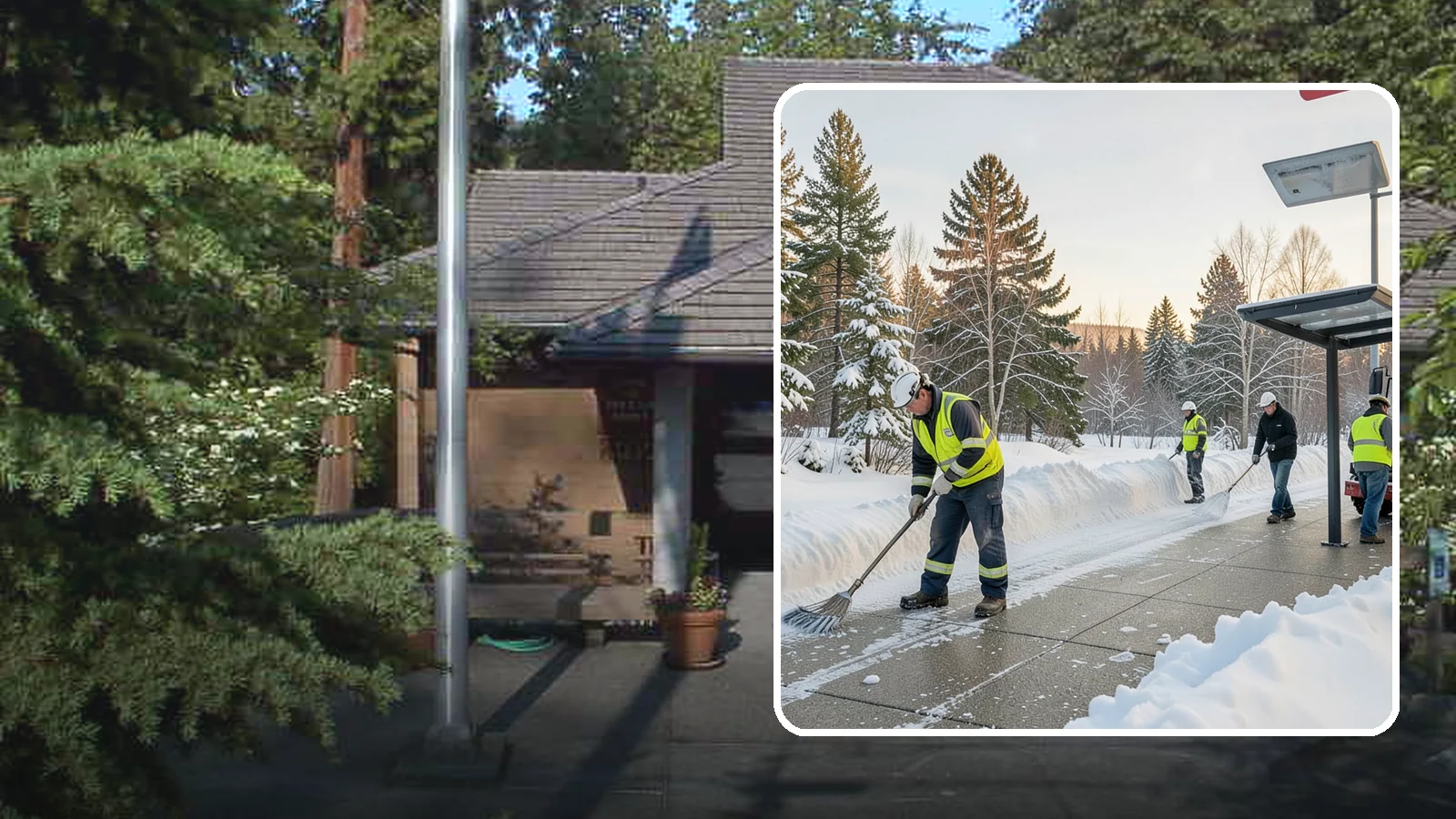
We clear bus stops, shelters, and boarding pads so transit riders board safely during Western Washington snow and ice.
Yarrow Point has 2 bus stops mapped within town, including Sr 520 & 92nd Ave NE. Washington Snow Removal clears them so riders can reach the curb and board without wading through slush or stepping onto ice. We are licensed, bonded and insured, and we work from our Bothell yard, 25 minutes away.
Snow here is light. The average is 5.4 in per season, and only 1.7 days a year bring 1 in or more. When it does come, the work is quick, hands-on and focused on the pad, the curb edge and the path to the stop. Call 206-809-9669 to set up a dispatch.
Yarrow Point walkway conditions in winter
Average snowfall by month in Yarrow Point
Biggest storms in Yarrow Point since 2005
- Dec 18–22, 2008: 12.1 in total, 3.3 in on the biggest day
- Feb 12–15, 2021: 10.6 in total, 7.1 in on the biggest day
- Dec 26–31, 2021: 7.1 in total, 3.0 in on the biggest day
- Jan 14–20, 2012: 7.0 in total, 2.4 in on the biggest day
Sources: NOAA and National Weather Service records for Yarrow Point, 2005–2026.
Bus stop clearing in Yarrow Point: what the work involves
A bus stop is small, but it has to be clear in the right places. We shovel the landing pad, the curb edge where riders step down, and the short path from the sidewalk. We then treat the surface with ice melt so it does not refreeze.
Yarrow Point does not get much snow, so most calls are for thin snow and ice rather than deep accumulation. About 67% of winters see at least one 1-inch day. Light-snow days that need deicing average 3.22 a year, and there are 28 freezing nights between October and April. That means a frost-slick stop is more common than a buried one.
Big storms do happen. Feb 12–15, 2021 brought 10.6 in total, with 7.1 in on the biggest day. Dec 18–22, 2008 brought 12.1 in. For heavier events like those, crews do the hand work and can add a compact track loader with operator if a pullout needs it.
- Crew member, shoveling and hand work: $110 per person-hour
- Compact track loader with operator (Kubota SCL1000): $175 per hour
- Bagged ice melt: $45 per 50 lb bag
- Trip charge for Yarrow Point (zone A): $200 per dispatch
Each dispatch has a 2-hour minimum.
Prices in Yarrow Point
Billed by the hour for the crew and equipment on site, plus materials.
| Crew member (shoveling, sidewalks, hand work) | $110 / person-hour |
| Compact track loader with operator (Kubota SCL1000) | $175 / hour |
| Ice melt, bagged | $45 / 50 lb bag |
| Trip charge for Yarrow Point (zone A) | $200 / dispatch |
- 2-hour minimum per dispatch.
- Yarrow Point is 25 minutes from our Bothell yard.
Prices approved Oct 2026.
Bus stops in Yarrow Point
There are 2 bus stops mapped within Yarrow Point.
- Sr 520 & 92nd Ave NE
- Sr 520 & 92nd Avenue Northeast
Source: OpenStreetMap contributors, Oct 2026. Named sites are examples of local facilities, not customers.
Service Area
Yarrow Point
Benefits
Gives transit riders a safe path to board; Clears plow berms blocking the boarding pad; Treats shaded shelter slabs against black ice; Keeps seating and schedule signage accessible; Supports riders using mobility devices