Refreeze Prevention in University Place, Pierce County
Refreeze prevention means treating a surface before wet pavement freezes. It is different from plowing. In University Place, snow is on the ground only about 3 days a year, and just 1.3 days a year stay below freezing all day. Most ice here comes from a thaw followed by a freezing night, not from deep snow.
The area has logged winter events on Dec 1, 2022 (Winter Weather), Feb 12, 2021 (Winter Storm), Feb 5, 2017 (Heavy Snow) and Jan 18, 2012 (Heavy Snow). With about 3.38 Winter Weather Advisories a year, conditions can change quickly and then settle into a freeze.
At a typical property, the work can include:
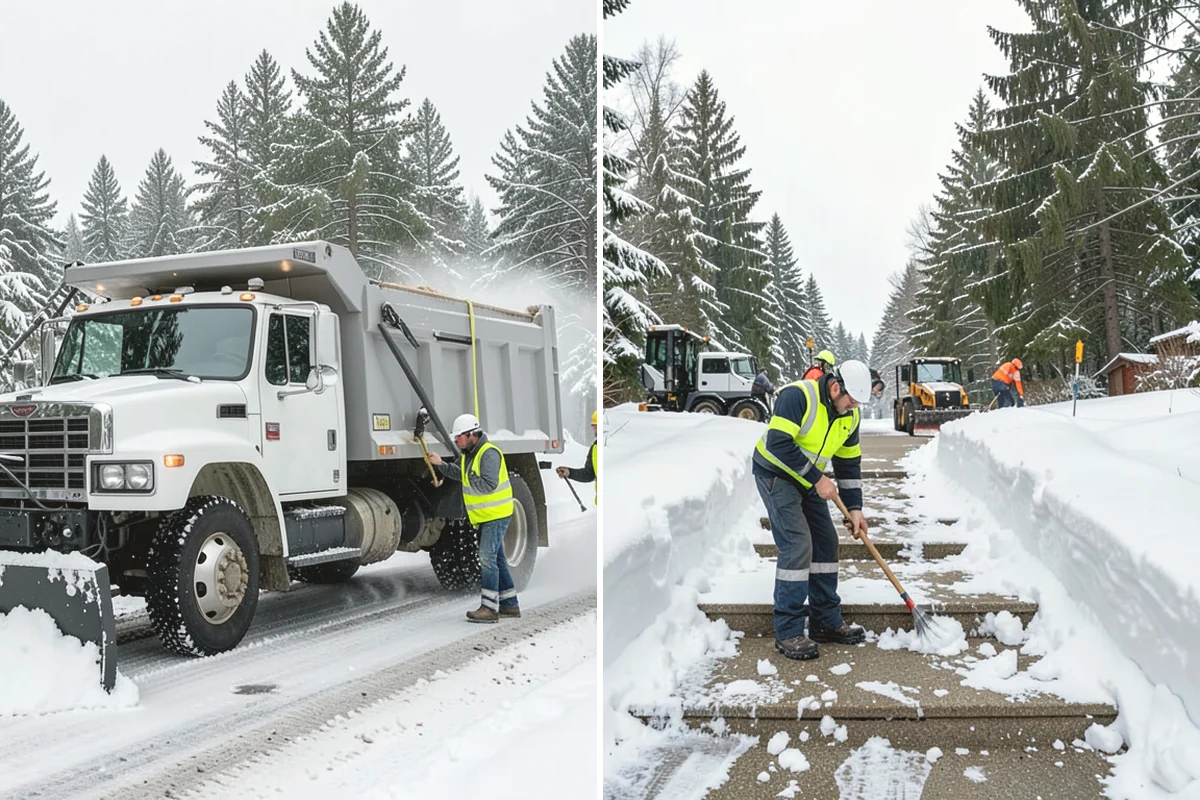
- Applying bulk salt or bagged ice melt to drives, ramps and parking areas
- Hand treating sidewalks, steps and entries with a crew member
- Clearing standing meltwater so it does not refreeze on walking surfaces
Pricing is listed plainly. Bagged ice melt is $45 per 50 lb bag. Bulk salt, applied, is $300 per ton. A crew member is $110 per person-hour. A plow and spreader truck with driver (Ram 5500) is $325 per hour. University Place is zone C, with a $350 trip charge per dispatch and a 2-hour minimum.